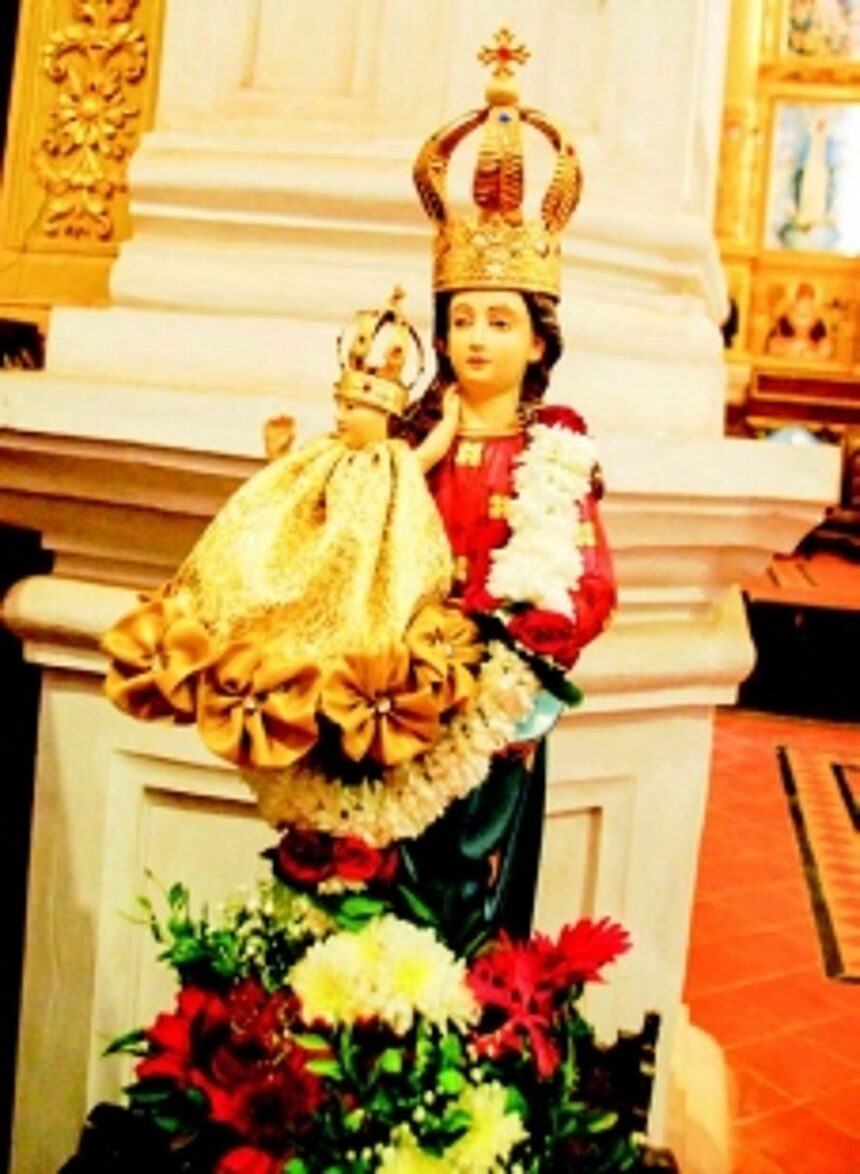
The Feast of the iconic church dedicated to Our Lady of Penha de Franca (Nossa Senhora de Penha de Franca) will be celebrated on December 27. It is a grand double festivity for the villagers as the feast is celebrated in the festive Christmas season, a time for the family, relatives and friends to get united for the festivals amidst glittering starry nights and delicacies to relish.
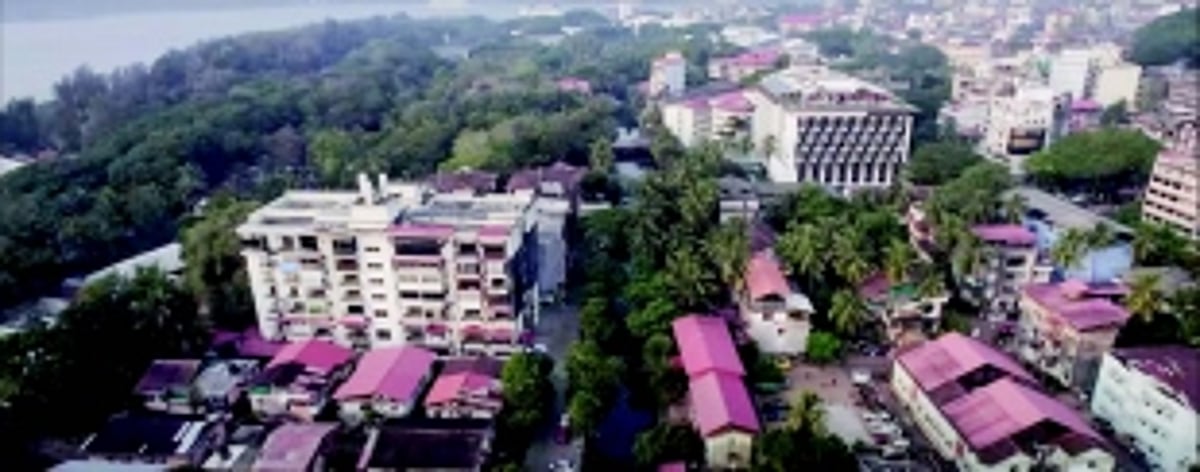
The church is located at one of the most scenic spots in Goa at the confluence of River Mapuca and River Mandovi which can be viewed from Ponte de Linhares Bridge and far away Western Ghats. In the heydays, when River Navigation plied passenger launch service, there was no count of the number of days one passed this imposing shrine while commuting from Britona, Ecoxim, Pomburpa, Carona, Chorao and Aldona with prayers on lips for safety.
This Franciscan church in Goa was founded by a pious noble Portuguese lady Dona Anna de Azavedo, a Sister of the Third Order of the Franciscans in the 17th century who donated land and resources to build the shrine. The devotees revere Our Lady who is known to have protected masses during the plague and also the seafarers.
There is legend behind Our Lady’s origin in Spain. A French monk named Simon Vella in the early 15th century during his deep meditation heard a voice calling him to find the shrine of the Virgin Mary. During his long search and after an arduous trek to reach a hillock called ‘Rock of France’ in Spain, Simon Vella was blessed to find the Virgin Mary holding a beautiful child, the idol of which lay buried in the earth. This was a time in history when desecration of shrines was a very common practice to wipe out other faiths and to protect idols, devotees would hide them from the invaders.
The feast of Our Lady began with Novena on December 17 which continues for nine days of mass and prayers before the grand celebration. On the Feast day, there will be Mass at 7 am followed by the High Mass at 9.30 am. The Parish Priest, Fr Felicidade Mateus Sequeira, SFX informed, “The theme for this year is, ‘Through the Intercession of Blessed Mother, Our Lady of Penha de Franca, let us bear witness to Christ’- May God bless us all. We must always be in communion with one another and live the mission of Christ to the Intercession of Blessed Mother.” December 27, is also the Feast of St John the Evangelist, to whom Jesus revealed that Our Lady was his Mother.
A big crowd throngs the church from far-off places who come to offer their prayers to acknowledge graces and favours. This Goan village was originally part of erstwhile Serula Comunidade, the largest village in Bardez during Portuguese rule, which was later subdivided into three and a half parishes that were necessitated then due to the ever-growing population. The main parish then was of Serula (Shiroda).
In most places, we see a large fair, but one of the unique features of this feast is that there are very few stalls selling varieties of apparel, curios, toys, and sweets in the morning near the church, and the fair then moves to Britona near Penha de Franca panchayat areas in the evening. While the three-days festive fair of the past has ebbed, 50 meters of crowded narrow stretch is what people use to be part of every passing year. The women and children would crowd for festive purchases, and the men folk would try their luck at rings and cards.
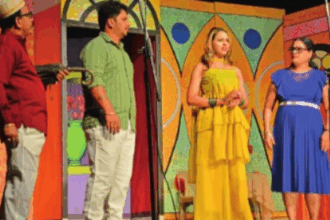
Suzana Mendes from Britona recollects, “The notion of the fair in front of our verandah was overwhelming with excitement and fair being there, made it more significant when I was a kid. In the past, there were hardly any vehicles, but now the fear of traffic has stolen the very excitement.” As usual, the highlight of the evening as in the heydays, people still enjoy the annual Tiatr presentation by the parishioners which is still a big draw.
The church that stands a few meters along the banks of rivers as seen from a far distance has a unique architectural setting and a cynosure of passersby along Panaji-Ribandar road. Historical documents suggest that the church was initially constructed in 1626 but had collapsed within three decades. The present structure showing signs of Franciscan type of architecture in its façade was rebuilt in 1655 through an initiative by provincial Fr Manuel de Lado.
With vagaries of nature and time showing signs of structural damage, the church got a facelift with necessary repairs that were carried out by the then parish priest Fr Adolfo Viegas with financial support from Fundacao Oriente in 1998.
However, the major restoration work in 2014 was taken up by Fr Mathew Fernandes, SFX who received full backing from the parishioners, which not only helped to strengthen the edifice but also to bring it to the level of original grandeur. While most churches in Goa might have seen changes in their original structure and flashy replacement of material and colour code, Our Lady of Penha de Franca is a unique example of how restoration has to be carried out with a multi-disciplinary initiative that stressed on using the original type of materials with a scientific approach.
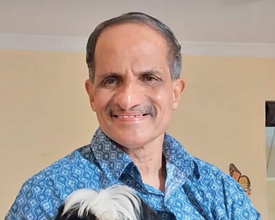
Prof Rabindranath Pinto, former member of the village Parish Pastoral Council mentioned, “For restoration wherever it was needed, similar type of building materials such as laterite, jaggery and lime were used as in the original structure. However, we have to give credit to the parishioners of the village who wholeheartedly supported the project financially as the cost of restoration was around two crore rupees.”
Whenever we visit any historical monument, we marvel over acoustics that were an integral part of such architecture when modern science didn’t exist, but artisans and architects had abundant wisdom. This is one church where acoustic, gilding gold plating of the altar, lime work, wood carving, paintings, and other finery formed part of the restoration process.
While the citadel of Our Lady stands like a rock with its grandeur, the very presence at the riverside calms one’s senses to never leave the shrine and remain blessed till eternity. And, the feast is one time of the year to rejoice with merriment.
Conveying his greetings, Fr Sequeira said, “I wish all the parishioners, especially those who are far and wide a very happy feast and blessing-filled New Year 2024.