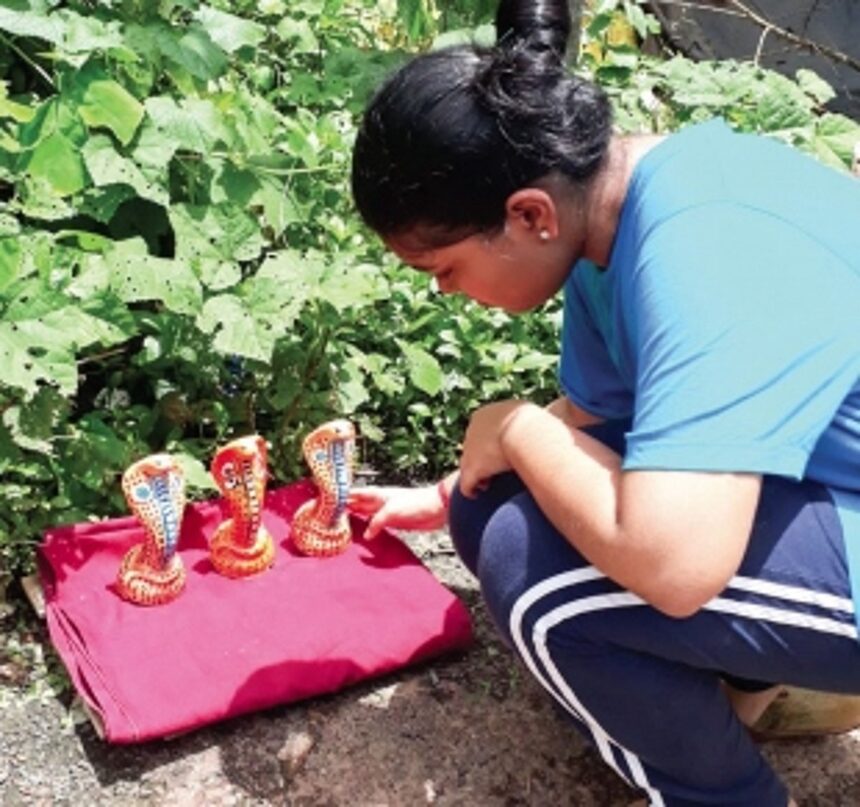
Devotees across the state of Goa celebrated Nagpanchmi, the first major Hindu festival in the month of Shravan. The festival that venerates the serpent god Nag (Cobra) is a unique celebration in the pantheons of Hindu culture and tradition in which nature worship has always been supreme. Devotees performed poojas at home by installing idols of Naga at home and also by visiting Shree Mahadeo temples to protect them from all evils and their crops from pests. Devotees paid their obeisance to the Serpent God by going to the temples in the morning. For many villagers, worshipping an anthill is a tradition as it is considered as the abode of the god. Serpent King Vasuki is considered the king of the netherworld which is coiled around the neck of Lord Mahadeo, who is considered to have drank poison coming out of Vasuki’s mouth during Sagar Manthan to protect all life.
The customs and traditions of Naga pooja are followed in true ritualistic spirit by the family of Pradeep Mhapankar from Taleigao. He says, “Earlier, my father would perform the worship. After placing the idol of Nagdevta in the sanctum sanctorum on a special platform or Paat, first the invocation of Ganesha is done followed by worshipping of the Naga (Cobra). It is similar to other rituals with the offering of flowers, Vastra (clothes) and sacred thread around the idol.”
Monsoon special sweets (Patolyo) and Payas, made out of rice, jaggery and milk were offered as Naivedya. Another dish that is cooked during this festivity is the very popular spicy Alu (Colocasia plant) dish that is prepared in every household. On this day, the outdoor activity of going to the fields are avoided in the fear that one may harm a snake. It is one day in a year when food is only steamed and not fried by the devotees.
While a single image of Nagdevta is worshipped at home and in the temples, there are 12 or nine Nagas who are prayed on this day. They include Ananta, Dhrutrashtra, Kaliya, Kambhal, Shankhapal, Padmanabh, Shesha, Vasuki and Takshaka Nag that protect the world from eight sides, besides the centre, says Satish Nayak, resident of Panjim, who is well versed in Hinduism. Ashvatara, Karkotaka and Pingala forms the other Nagas who are worshipped. Satish informs, “There are various mythical stories behind this festival. On this day, Lord Krishna defeated the five-headed serpent god, Kaliya who was attacking people and spewing venom in the river Yamuna.”
Worshipping clay idols is quite common and safe, but there is a unique custom that is followed in Battis Shirala in Sangli district in Maharashtra where hundreds of live snakes are captured from the wild and worshipped by the people, although it is officially banned against this unnatural practice that causes serious harm to the reptiles.
While the celebrations are a day affair, it takes a pretty long time for the artisans to deliver the beautifully made idols every year to the clients’ satisfaction with whom, they have a long relationhip, that are bound by generations of trust. Raj Suresh Shirodkar, is a Ganesh idol maker from Haliwada, Penha de France, who belongs to the third generation in his family. He makes various sized idols not only Chaturthi but also for Saptah and other festivals. Making images of Nagas is just a minor work during the festival season for them.
Helped by his daughters, Apurva and Darshini in shaping the idols, Raj says, “We make about 150 Ganesha idols and 50 Naga images out of pure clay (Chikat mati) brought from Varkhand in Pernem, which is of fine quality. Earlier, we were getting clay from Tivim. The type of clay which we use is not available anymore.” Though the cost of production has gone high, still the price of idols is kept very affordable to the people. However, the government’s support to artisans can help in the long run, Raj opines.
These festivals are rooted in our customs and traditions that brings smile to our faces, and we have to pass them to the next generation without causing any harm, and festivals like Nagpanchami teaches us how to live with nature. While there are various legends behind every religious festival, we have to carry the message of benevolence to nature and respect for every element around us.