As an eight year old, Dr Savia Viegas, who is now an academician,
researcher and eminent writer, would have never imagined that the tall man who
was so passionate about art, would one day be a topic of research for her. Dr
Viegas had first met Angelo da Fonseca when she was young and was so mesmerized
when she saw him painting his niece, Alice Costa Pereira, who was Dr Viegas’
neighbour in Carmona. “A tall and quiet man and a maverick, he was a man
passionate about his art. But he was loved by his family and it was always
Angelo this and Angelo that, so the man and his persona was always in the air,”
says Dr Savia Viegas, who has completed her documentation on the life of Angelo
Da Fonseca.
Jose Nicolau Angelo Antonio da Fonseca was
born in 1902 to Louis Bonaparte Albuim da Fonseca and Maria Delfina Isabel
Fernandes. He lived his early life at St Estevam in the company of ten
siblings, including his sister, Olinda and two brothers, Anthony and Cajetan,
who were also artistically gifted. For his education, he traveled to St
Vincent’s Boys High School, Poona and J J College of Art, Mumbai but he was
highly inspired by his travel to Calcutta where he spent time with
Abanindranath and Rabindranath Tagore. He even did their portraits. After
returning to Goa for a short while, he decided to live in Poona with his new
family, wife Ivy and daughter Yessonda. He died at the age of 67 leaving behind
over 1,000 paintings and a whole new Indian dimension to Catholic art.
Dr Savia Viegas was in for a rude shock 14 years ago when she
presented a paper ‘The Semiotics of Archival Trajectories’ for an international
conference at MS University, Baroda, Gujarat and as she swiped through his
paintings, she noticed that even art greats didn’t know about this Goan artist.
In 2010, she was granted Rs 1 lakh by India Foundation for the Arts, Bangalore,
to do ground research on Angelo da Fonseca.
“I graduated in history from Elphinstone College, Bombay. One is
aware of the limitations one works with at the level of museums and state
archives with their damp climate, ephemeral records and a whole lot of factors.
Even with sources the degree of custodianship that you encounter often is so
difficult to work through. But all said and done, one learns to swim through it
all and produce works which have some shelf life,” says Dr Viegas, about the
challenges that come with writing a book on the life of a person who lived an
extraordinary yet scarcely documented life.
A pioneering artist of Indian Christian paintings, Fonseca was
hardly known in Goa until about 2002, when his centennial year exhibition was
on display at Pilar Theological College, Goa. A coffee table book, ‘Fonseca’
authored by historian Delio Mendonca, was releases last month. “I bought
Delio’s book but have not had the time to read it. I am waiting for the right
time. But I am sure Delio’s heart is in the right place beating for Angelo da
Fonseca and that is all that matters to revive interest in the artist,” she
says.
Dr Viegas’ book will focus on different aspects of the painter’s
work and life. “Angelo da Fonseca worked at a crucial time in world and Indian
history so his contribution is very vital to the history of the region and the
nation and its wider links are also of crucial significance. I look at his
early life, his art, his oeuvre and how it worked and slipped into oblivion.
You should really wait for the book,” she explains.
For research for the book, Fonseca’s daughter, who is the same
age as Dr Viegas was of a great help. “I have known Yessonda since my
childhood. I did have a good rapport with her. Yessonda married very young and
was with her husband in the air force life. Our lives intersected only when I
started the research on her father. I knew many things that she didn’t and some
of the things I learnt from her. I had the good fortune to get to know the
artist’s wife, Ivy da Fonseca, in the last two years of her life, and had a
valuable experience interacting with her in Pune and in Carmona. Yessonda
married in her teens and grew up missing him, but was never really able to
grasp his legacy till of late. Ivy had her school. Very often it was Yessonda
and her father on their Goa trips,” she informs. In 1962, Ivy started a small
nursery at the Christa Prema Seva Sanga Ashram, Shivajinagar, an Anglican
Institution. She lived her life in Poona and passed away in 2015 at the age of
87.
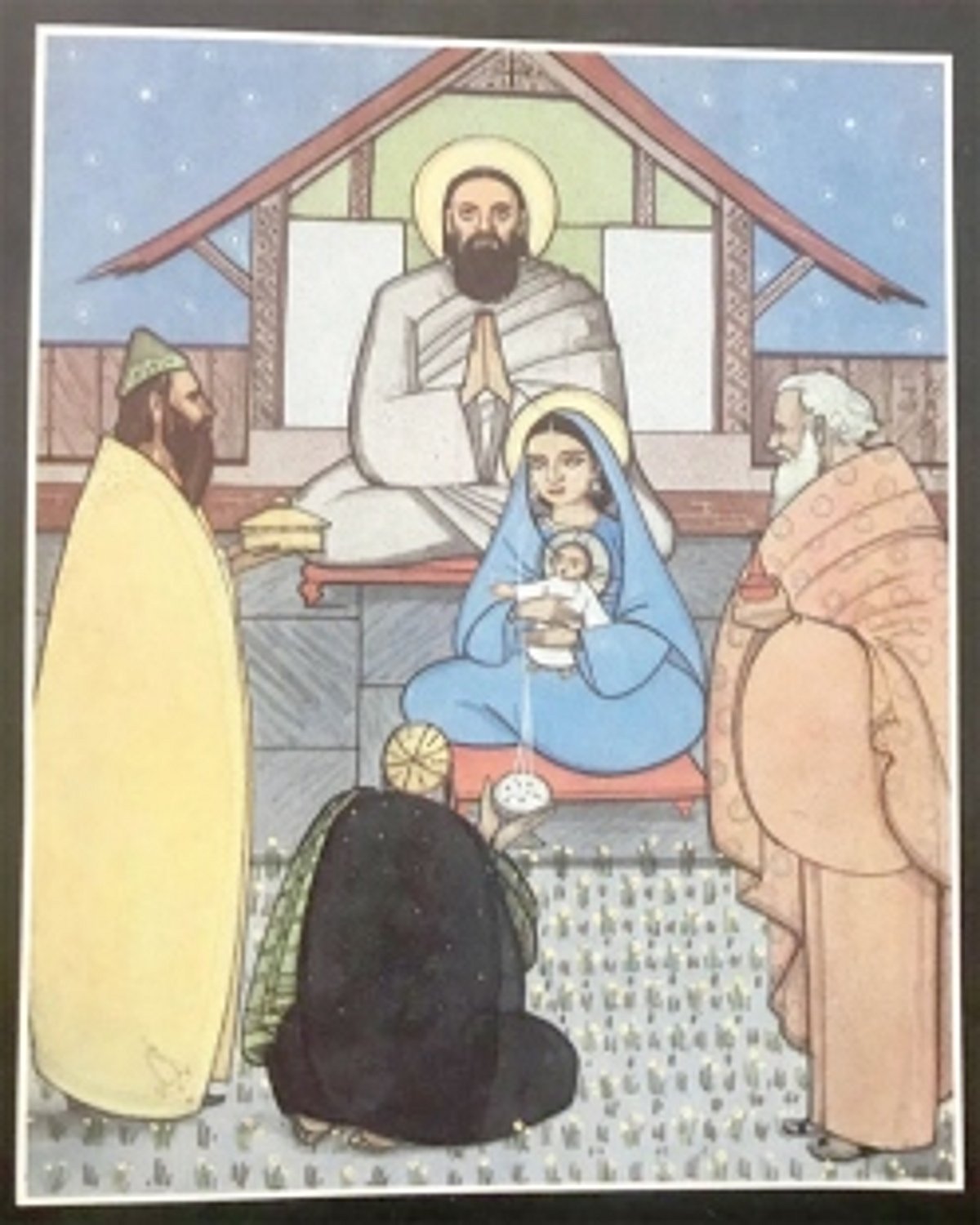
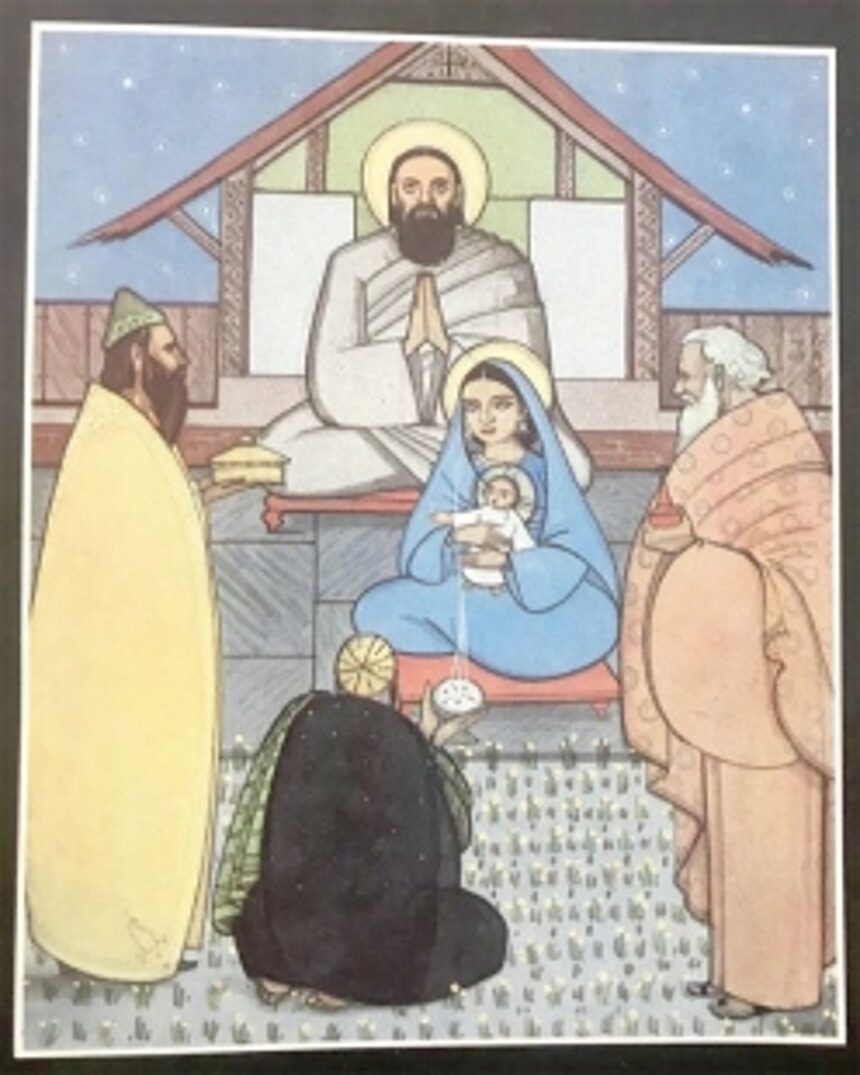
In the 1930s, he was forced to leave Goa following severe
criticism for painting Christian themes in Indian settings, especially for
painting the Madonna in a sari. Yet, he returned to Goa annually with his
family, especially his daughter. “He travelled to Goa almost once or twice
every year. He worked on a massive scroll for the Portuguese government in Goa.
He painted from memory and Goa was always on his mind,” she says.
“His paintings were not painted as a series. But if you look at
all of them, they are the Joyful, Sorrowful and Glorious Mysteries. He meant
them to be icons to be contemplated upon. I have not seen a single work
mishandled. He also applied the experimental methods used by iconograpers of
grounding colours and it is still used by artists,” she explains about his art.
The
book, the title of which will be disclosed later, will be published in May 2023
as it will be Fonseca’s 120th birth centenary and 55th death anniversary.