Taking a break from a
mundane and hectic week, Sunday is usually the preferred day to do something
out of the ordinary or literally move out of your home into the hinterlands of
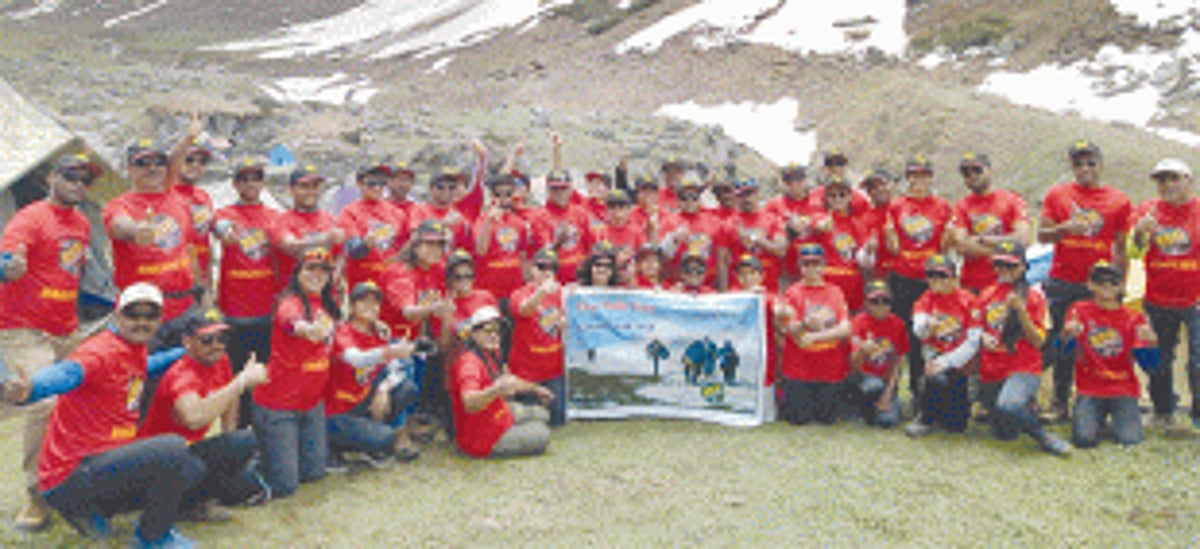
Goa. The first group of likeminded people to form a trekking group was Eco
Treks, which was formed in 2008 with just six members. From six, they have now
grown to a family of over 2100 trekkers who meet regularly for treks in Goa,
Maharashtra, Karnataka and even the Himalayas.
Sharing this
experience, they will be releasing their first ever book, ‘Hills to Himalaya’
on Saturday, November 5 at Nalanda Hall, 5th Floor, EDC House Panjim, at 4 pm.
The 204 pages book, ‘Hills to Himalayas’ features over 300 coloured pictures of
trek conducted in Goa, Maharashtra, Karnataka and the Himalayas. A total of 36
participants have narrated their trekking experiences in short chapters with
photographs to go with their anecdotes. The Forward is written by Alexyz,
President of Eco Treks and he has also enriched the book by his 11 caricatures.
“This book has been
two years in the making. Since, everyone was locked in their homes with no
treks during the first lockdown, we sent out an email in April 2020 announcing
about the book. Many trekkers came forward to pen down their favourite treks
and memories and fun moments. It was a lengthy process and Aarti Das has done a
wonderful job of compiling all the chapters together. The book covers the
entire journey from the first to the 148th trek. Our next trek is to Vengurla
on November 13. Some treks get full with an hour or two of announcement now,”
says Durgadas Parab, a founding member of Eco Treks.
Eco Treks was formed on October 26, 2008 with six founder
members, Alexyz, Aarti Das, Olympio Almeida, Durgadas, Julie and Vrishabh Parab.
They have been conducting on an average one trek per month to beautiful
locations. Their members are usually informed about the upcoming treks via
email and it is always multifaceted trek with trekking, learning more about the
environment and the villages. However, there are certain rules to be followed
and there is strictly no littering and drinking on any of their treks.
For this book, Eco Treks received messages from Bharat Vir
Wanchoo, former Governor of Goa, Rajendra Kerkar, Nirmal Kulkarni, herpetologist,
Richard D Souza, Principle Chief Conservator of Forests, Minguel Braganza,
agriculturist and Group Captain (Air Force) R C Tripathi, which have been added
to the book. “For our annual Himalaya Certificate distributions we always call
eminent personalities but our guest of honour is always Rajendra Kerkar, a
noted environmentalist and educationist. When he joined us for the sixth trek,
he told me to note down points and write a book. I pushed it aside but he was
very serious about bringing out their experiences through a book, something
that has never been done before,” he says about his support from Rajendra.
Though the number of trekkers has increased over the years, it
turns into a family once they trek to the Himalayas and spend more time together.
“It is really wonderful to see the dynamics of this relationship change once
trekkers are together for a longer duration. Usually, in a one day trek, you
hardly meet and talk to each other. The three nights and two days treks to
places like Coorg, Torna and Talpona also bring them closer but at the
Himalayas, there have to stay in tents together for over a period of 12-13 days
and that is when they become a family. Once back to Goa, they look forward to
meeting one another at the next treks,” says Durgadas.
A very important aspect of Eco Treks is the involvement of the
locals in the trekking experience for the participants, whether it is the
delicious piping hot lunch or breakfast that is served or their knowledge or
guidance on the trek. these villagers always have a open heart and wide smile
as they see so many people descend on their homes for an afternoon break.
Durgadas Parab has written about 20 plus local hosts, how they met them and how
they have developed relations with them. He says, “The locals are a hallmark
for us and we feel that they should get some benefit out of us. I call them the
CEOs of Eco Treks and I have even dedicated a chapter to them in the book, one
of the biggest chapters. It is important to acknowledge them and some villagers
would go out of their way to even build ‘mattos’ for us so that everyone could
sit comfortably to have their meals. They have always thought about the
wellbeing of the guests visiting their house.”
While the family of trekkers has grown by leaps and bounds, it
is remarkable to note that while the eldest members are in their 70s and still
enjoy the treks through stretches of greenery, the youngest member for a trek
was a 10-day-old baby boy. “I still remember that baby and the parents told me
that when the child gets that outdoor air, they also feel connected to nature
when they grow up. Such a wonderful thought,” concludes Durgadas.