Goa was built
into a state of villages by using the river for irrigation. Just pause and think deeply about how
foresighted our forefathers were.
The tragedy is how blind sighted we are now and destroyed the
basic essence of the village system of Goa. We realise this acutely when Fr
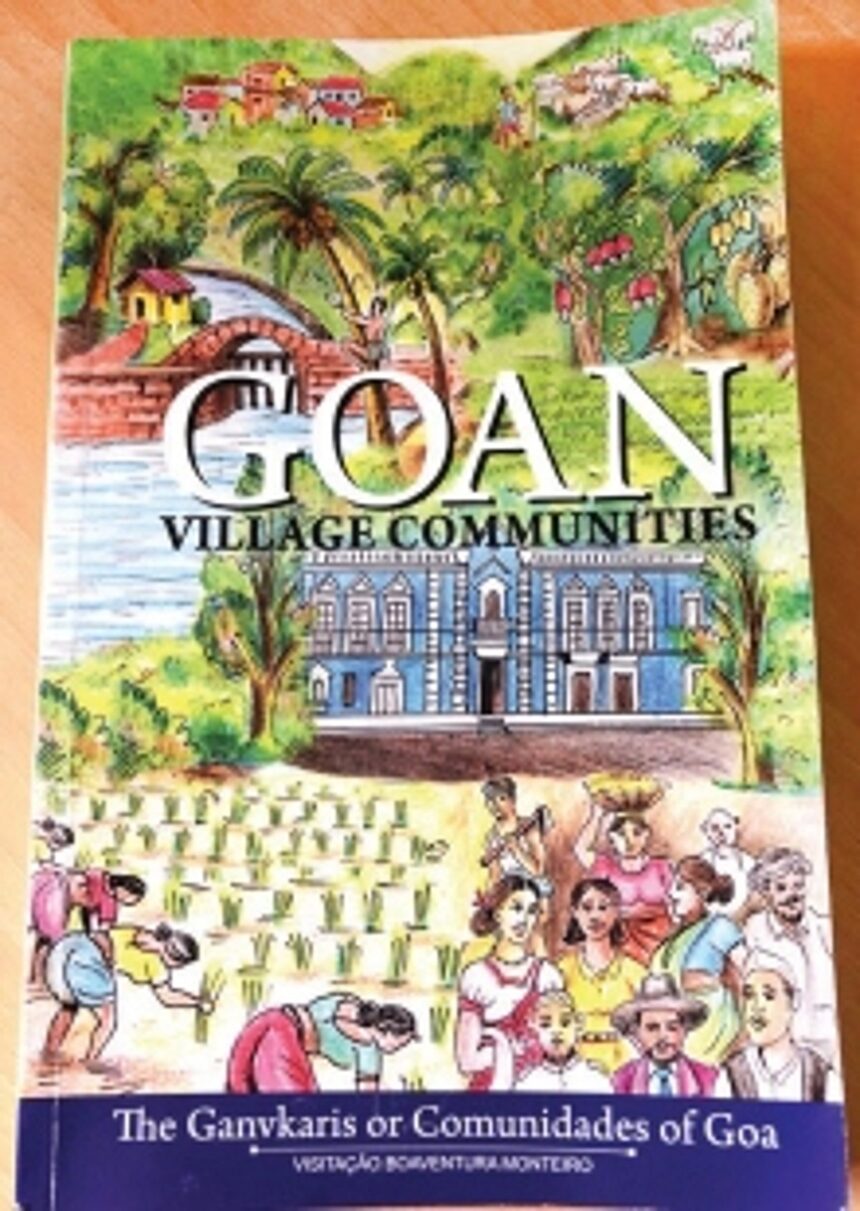
Visitacao Boaventura Monteiro’s book, ‘Goan Village Communities – The Ganvkaris
or Communidades of Goa’, is read. Now in its second and revised edition and
just out, it highlights the system of Goan village communities.
“The main reason I wrote this book is to create awareness in the
hearts and minds of Goans to know the self worth of each one of us. This book
gives elementary notions about the so called Gaunkaris or Communidades. There
are very well researched, detailed and extensive books on communidades, but
this book gives the basic information,” says Fr Visitacao, a Diocesan Priest
and currently the Parish Priest of St Anne’s Church, Bodiem, Tivim.
The 108 page book is the second and revised edition of the book.
Consisting of five chapters, it gives a clear image of what life was centuries
ago and how Goa was built into a state of villages by using the river for
irrigation, a system that was so unique to Goa, that Goans were imparting
knowledge to the rest of India.
Fr Visitacao wrote articles for Herald on various Goan issues
and Ganvkaris since 2013. “Today, the reading habit has very much decreased but
there are people who still read. The first edition of 1000 copies were
exhausted within three months and this time, there has been more demand for the
book. I printed 2000 copies of the second edition and I have only 500 copies
with me. This edition is far better than the first one. The book is about Goan
people, our identity and culture which makes it about our Goenkarponn,” says Fr
Visitacao.
Interestingly, right
from the third century before Christ, nearly 14-17 rulers, sometimes dynasties
lasting for centuries, ruled Goa but didn’t interfere with the system of
Communidades. “The peculiar thing about Goa is that all these rulers accepted
that the land did not belong to the rulers till 1961. They accepted that the
land belonged to the villagers called Gaunkaris or communidade. That is the
difference between Goa and the rest of India. It has got the course of law
which even the Governments did not understand. The state thinks that the land
belongs to the state and that’s why they are going on acquiring land, right,
left and centre, wherever they want which is leading to unrest in Goa. Even we
as an older generation hardly know anything. I, myself only knew that we are
the Gaunkars who are receiving ‘Zones’ but for the rest, I had to study to do
this book. Earlier, I was writing articles about the special status for Goa but
then I realised we already have special status provided the laws are enforced.
Our land is ours and no one can sell it. Communidade land cannot be sold. They
were practically running the economy of the state. In chapter 4 of the book, I
have focused on how this land is being sold with the introduction of Form I
& XIV, partly because of our ignorance has led to this problem,” he
explains.
Fr
Visitacao is currently working on a book on migration. “Rich agriculture and
heritage is the main reason behind migration. Goans have been in Kerala right
from the year 1294, before the arrival of the Portuguese, which was a great
migration, because of agricultural techniques. I will cover it in the new book
‘Migrations of Goans’,” concludes Fr Visitacao.