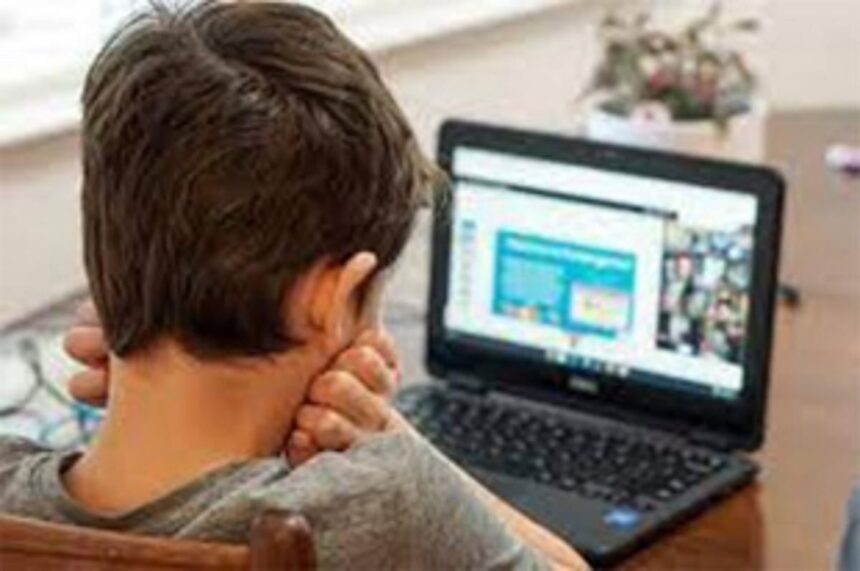
It’s back to the bad days. Staying at home and attending class in front of a
computer screen. That screen has been a constant for school students all over
Goa and the rest of the country. A teacher explaining the intricacies of
mathematics or a scientific theory or the significance of a geographical spot
on the planet online was part of the daily schedule of every school going
student. Then a dramatic dip in infections meant students from the senior
higher secondary ie 8, 9, 10 were attending classes at school. Now it’s all
come to a stop. Everyone will now study online at least till January 26 post
which a decision will be taken whether this should continue.
Now all this on and off can have a serious
effect on the young student. Education in a school environment also involves
interacting with other students, developing social skills, and emotional
intelligence which is all part of what increases one’s chance of doing well in
life. Now all that will not happen. One does not develop such skills sitting in
a room in front of a screen. That could have serious implications for the
competitiveness of individuals in the economy of tomorrow.
Shobhika Jaju , Psychologist and Founder of a guidance and
counselling centre said the constant shuffle between online and offline classes
was clearly unhealthy for the overall growth of children. This she said was
true for kids across all age groups. She said “As a psychologist who also
happens to be a mother to a toddler, I can see the negative effects of school
closure first hand. Not only are children becoming increasingly dependent on
adults around them, at a time when they should be learning autonomy, they are
also being deprived of long term meaningful friendships with their peers. I
view schools as an important agent of socialisation in a child’s life and
online classes can never substitute the learning, be it academic, social,
emotional, or otherwise”. Speaking specifically about students in middle
school, she said the constantly shifting from online to offline and vice versa,
could be very unsettling. Shobika said “Not only are we expecting our children
to just switch from one mode to another seamlessly (something which is not
possible for even adults), but this is also leading to deficits in learning,
attentional issues and a lack of interest in academic life. Since the Covid
situation demands that children’s health be prioritised, we are in a very
precarious situation. There is unfortunately no one way of dealing with this
and we have to keep changing with changing circumstances. However, as adults,
caregivers and teachers what we can do is just be a bit more compassionate
towards our younger ones and provide them emotional support at times when they
are finding it difficult to cope.”
For Shobha Panicker a very hassled mother this was a situation
she thought was now in the past. She said “Education seems to be the last
priority of our government. We have lost 2 years to digital education which has
been sketchy for most given connectivity and comprehension issues. It’s been a
double whammy on parents who have to now try and help children with the
curriculum and it’s often not possible for many. We have no way to comprehend
this vacuum. What’s worse is that casinos, multiplexes, restaurants and even
elections are in full swing but we can’t seem to find a solution to bring kids
back to school. India perhaps is the only country that has no vision on this
front. The reality is that we have to learn to live with this virus but we
can’t continue to sacrifice education. We have to come up with a policy that
puts education up front rather than allowing it to be continually sacrificed at
the altar of Covid management’. She may have a point for sure but the situation
on the ground may be too dangerous and no one wants children being
hospitalised.
Another worried parent Vijay slammed the government for making a
mess of the situation. He said “Covid came to us in 2020 and now it’s 2022 and
it is still going strong. It is obvious the government has not taken any
precautions to fight the third wave. We all know it is expected to affect the
young and what have they done. As a father I want to know what protections have
they put in place”. He said if kids take the injection, the parents had to take
the responsibility since the government was not taking the responsibility.
Another perspective was provided by Karen Tiwari who ran a
school once said she had two perspectives. She said in the smaller classes, the
little ones would be more open to infection because they were super spreaders
due to their habit of hugging people, whereas the senior students were careful
and followed the regulations. She said it has been very tough for the students
over the past two years. She said “It is difficult to learn online, it’s very
hard for a child to concentrate. So you are lagging behind academically and you
are under stress because you don’t want to lag behind. And then there is this
inherent loneliness and fear. My kids were fearful of going to school and
bringing it back to us. When mandates come out it is for the larger whole
rather than for the select”. She said she was not comfortable with the idea of
children going online but then what are the choices. She said online was not
the best option because practical’s are impossible which was so necessary in
academic life. The child was half learning. There was also pressure on
teachers.
Attempts
to contact management in schools proved futile as many either were out of the
office or did not want to answer questions. One can only hope for the very best
because the future of thousands of kids are at stake.