Konkani cinema has undergone
tremendous change. From April 24,
1950, that is when the first Konkani film,
‘Mogacho Anvddo’, saw the light of day.
Produced and directed by Jerry Braganza,
a native of Mapusa, the film was released
under the banner of ETICA Pictures.
Since then, the industry has produced a
number of Konkani films, some of which
have come to be known as milestones.
Konkani film ‘Paltadcho Manis’ has been
included in the 2009 list of world’s best
films. Filmmaker Rajendra Talak’s films
such as ‘Aleesha’ (2004), the bilingual
‘Antarnaad’/’Saavali’ (2006), ‘Saavariyaa.
com’ (2008),‘O Maria’ (2010) and ‘A rainy
day’ (2014) have been popular with
audiences and have won numerous
awards in film festivals in India and
overseas. In 2012, director Milroy Goes
brought about a whole new change in
Konkani cinema by introducing his digital
theatrical film, ‘The Victim’. But the biggest
leap that Konkani cinema took was in
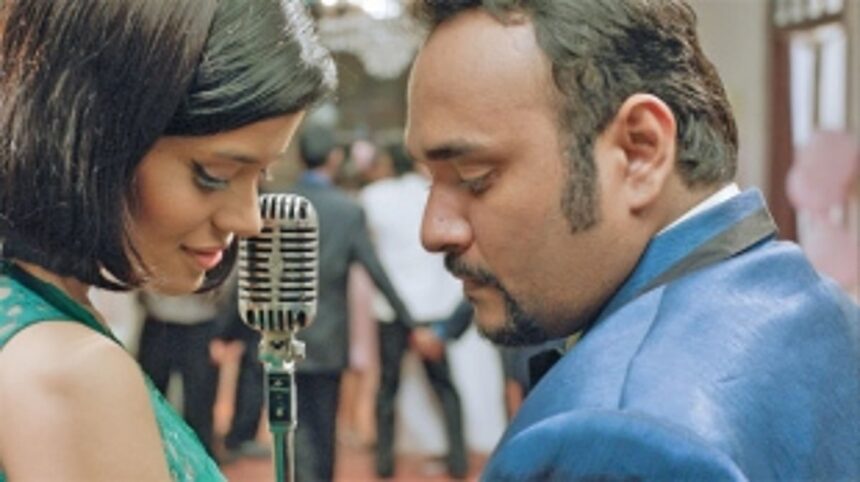
the form of ‘Nachom-ia Kumpasar’ that
went on to win the award for Best Music
at the United International Film Festival
(UIFF) in Hollywood, Los Angeles. The film
that stole the show in Goa and abroad,
winning accolades no other Konkani film
has achieved till date, is also the highest
grossing Konkani film till date.
While most of these films have been
made by Goan filmmakers and even shot
in Goa, for post-production, however, they
take the road to the city of Bollywood,
Mumbai. Post production can be an
expensive affair and Mumbai is by far
the most convenient place to source the
equipment, technology and the skilled
labour required for this task. Having said
that, things are slowly changing and the
process of doing the post-production work
in-house, in Goa, has begun.
Touted to be Goa’s ‘first action
film’, Konkani film, ‘Noshaa’ released
on October 28, 2016. The makers of
‘Noshaa’ tried to break away from the
typical process followed by their protégé
from the Goan film industry and dared
to try a few new things. Team ‘Noshaa’
has proudly announced that this film
has been produced by an entirely Goan
team with the whole film being shot in
Goa. While speaking to Herald previously,
Edison Gomes of Ambition Productions
(that has produced ‘Noshaa’), had said,
“Unlike any other Konkani film so far,
‘Noshaa’ will serve a generous dose of
action sequences – six to be precise, in
the runtime of 2 hours and 17 minutes.
This is the first Konkani movie to use
techniques like colour grading and the
Da Vinci software for production which
presently is used only in Hollywood
films.” Edison also claims that Goa has so
much talent for film production that they
never found it necessary to venture out
of Goa to find help for production and
post production. For post production, the
necessary equipment was bought and
configured to the necessary specifications
and a studio was set up at Fatorda where
the entire post-production process has
been carried out by a Goan – Royce da
Costa, who according to Edison is a talent
that had been otherwise unused in Goa.
For all these reasons, ‘Noshaa’ is said to
be a game changer in the history of Goan
films.
Dnyanesh Moge, Director, ‘Digant’,
says, “Currently, the Goan film industry is
functioning on a trial and error method.
With the exception of two or three,
none of the filmmakers are technically
sound; they are functioning solely out
of enthusiasm, which is not really a bad
thing.” Moge, apart from working on his
upcoming Konkani film for children, is
currently functioning as the coordinator
at Vinsan Academy of Film and Media,
housed in Mala. The academy serves as
a learning point for different aspects of
filmmaking such as screenplay, direction,
cinematography, editing, sound, post
production, etc. The institute has seen
some well known names from the Indian
film industry, such as Gajendra Ahire,
Abhinav Kashyap, Ranjan Das, Manish
Pingle, etc, impart knowledge to the
students as visiting faculty. Though the
programme that the institute offers is for
six months currently, from next year, it will
be extended it to a duration of 1 year, to
allow the students more practical exposure
to the subjects.
On a concluding note, Moge says,
“Things are definitely moving towards
professionalism and towards making
technically sound films.”