Herald Café: What
is Gout?
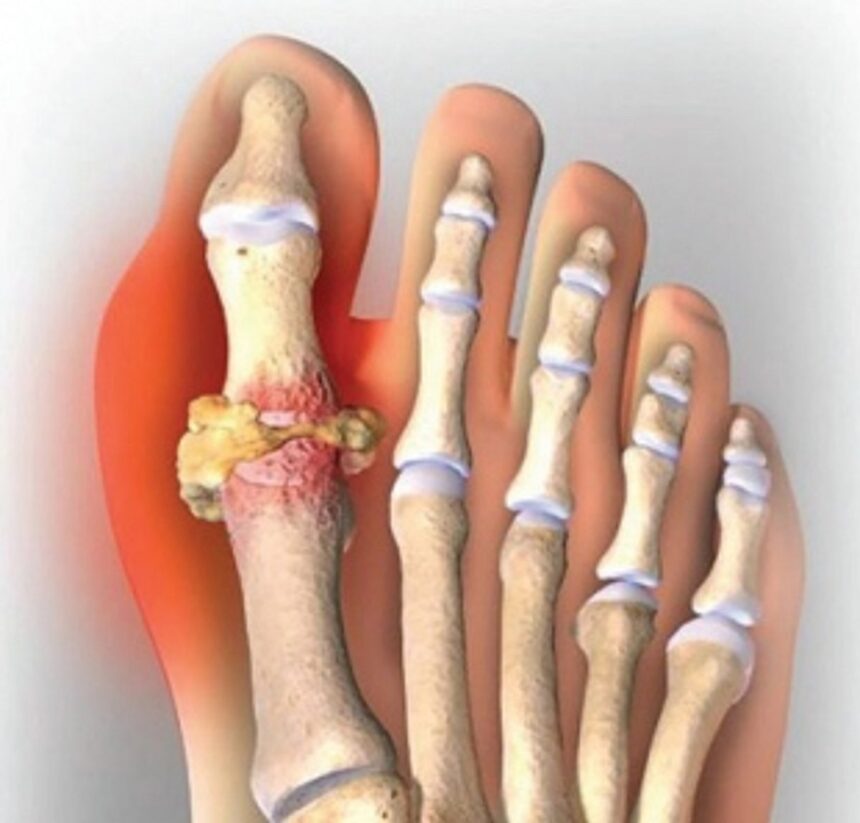
Dr Sambprassad Nadkarni: Gout is a disease characterised by deposition of Uric acid (UA)
crystals in various tissues. While the commonest presentation is sudden onset
joint pain, it can also manifest as tendinitis, bursitis, cellulitis, ulcers,
kidney stones and even with chronic kidney disease.
HC: What is the cause of
gout?
Dr SN: UA is produced in the
liver as an end product of purine (protein) metabolism. The normal blood levels
are maintained by filtration and excretion by the kidneys. However in 90% of
patients of gout, the kidneys are unable to clear the excess of UA, causing it
to rise in the blood. Whenever the levels rise above the critical level, UA
crystals gets deposited in joints and tendons causing an acute attack of gout.
In the remaining 10% of patients, excess production of UA is a cause of gout.
HC: Which people are
likely to develop gout?
Dr SN: Gout usually affects
men in the 4th and 5th decade of life. It also affects post menopausal women.
Patients suffering from hypertension, Diabetes Mellitus, Hyperlipidemia and
Obesity are also at an increased risk of developing gout. It rarely occurs in
children and pre menopausal women, for which a detailed evaluation is
recommended.
HC: What are the symptoms
of Gout?
Dr SN: It is not uncommon to
have elevated levels of uric acid without having clinical gout.
A typical attack of
gout usually presents with severe throbbing pain in a single joint, most
commonly in the foot. Attacks begin at night and within hours the joint becomes
red, hot, swollen and extremely painful. Symptoms like fever, body ache and
multiple joint pains can also occur. Typical attacks subside in about 7-10
days, after which the superficial layer of skin generally peels off. Gout can
also present as tendinitis, bursitis or cellulitis.
Recurrent attacks of
gout can result in progressive destruction of joint cartilage and bone,
resulting in painful deformities.
It is not uncommon to
find crystals (tophi) in the bursae, tendons and cartilage of ear which can
sometimes ulcerate and cause discharge.
HC: Does gout affect
kidneys?
Dr SN: Yes, In10-15% of
patients, gout can present with kidney stones and if left untreated can result
in chronic renal disease and renal failure.
HC: How can we diagnose gout?
Dr SN: Gout is diagnosed by
typical clinical presentation. Confirmatory test would be demonstration of uric
acid crystals in aspirated joint fluid. Serum uric acid levels may be normal
immediately after an acute attack of gout. Blood urea and serum creatinine are
useful to assess kidney function.
Complete blood count is
usually done to rule out infection. Imaging studies like X ray are helpful in
cases where arthritis has developed. Ultrasound and CT may be done for
diagnosis of uric acid kidney stones.
HC: What can trigger an attack of gout?
Dr SN: Dehydration, exercise,
injury, any stress, surgery, severe illness, infections, consumption of large
amounts of purine rich foods, certain medications like diuretics (used to treat
blood pressure) and chemotherapeutic agents can trigger an acute attack of
gout. It is also important to note that uric acid lowering agents like
Allopurinol can also increase the risk of developing acute gout.
HC: What food causes
gout?
Dr SN: Beer, grain liquor
like vodka, whiskey, red meat (pork, beef, mutton, organ meat like liver), sea
food (shell fish like shrimps, crabs, lobsters, mussels) and food containing
refined sugars like soft drinks, pastries, candies, etc.
HC: What food can be
taken by patients of gout? Dr SN: Vegetables, fruits, peanut butter, dairy products, cottage
cheese are safe for consumption. Adequate water intake (2-3 litres/day) is
usually beneficial. Low fat skimmed milk and yogurt, citrus fruits and Vitamin
C have a beneficial effect. Curcumin (turmeric), ginger, apple cider vinegar
usually help in reducing inflammation and pain in joints. Chicken, fish, and
veggies like spinach and asparagus are purine rich and should be consumed in
moderation.
HC: What is the treatment
for Gout?
Dr SN: Treatment of gout
includes, firstly, the management of acute gout using anti inflammatory
medicines and secondly, prevention of recurrence by using drugs to regulate the
UA levels. The first line of treatment consists of medicines that decrease the
production of uric acid. The second line of treatment consists of medicines
that will increase excretion of uric acid. This is avoided in patients with
kidney stones. It may be noted that these UA lowering agents should be started
4 weeks after an acute attack of gout and not immediately.
HC: Can gout be cured
completely?
Dr SN: Just like diabetes
Mellitus, Hyperlipidemia (Raised cholesterol) gout cannot be completely cured
but can be controlled with appropriate medications, diet and lifestyle
modification. In fact, many a time, all these 3 conditions coexist.
HC: When should I consult
a doctor?
Dr SN: One should consult a
doctor immediately after an acute attack. Furthermore, one should follow up
regularly to avoid recurrence and to prevent complications of untreated gout.
HC: What are the long
term effects of Gout?
Dr SN: Recurrent attacks of
gout can destroy the cartilage and can cause severe arthritis of the affected
joints. Uncontrolled gout can also result in kidney disease. Recent research
also indicates increased incidence of heart disease in patients with gout.
HC: Do medicines of gout
have any side effects?
Dr SN: Generally, the
medicines used for maintaining UA levels are well tolerated. However, one needs
to use it with caution in patients with renal failure and heart disease.
HC: What is your advice
for patients suffering from gout?
Dr SN:
Healthy diet, avoid
food with high purine content and sugars
Regular exercise to
maintain an optimum BMI
Adequate water intake
Adequate sleep
Follow
proper medical advice of the treating doctor