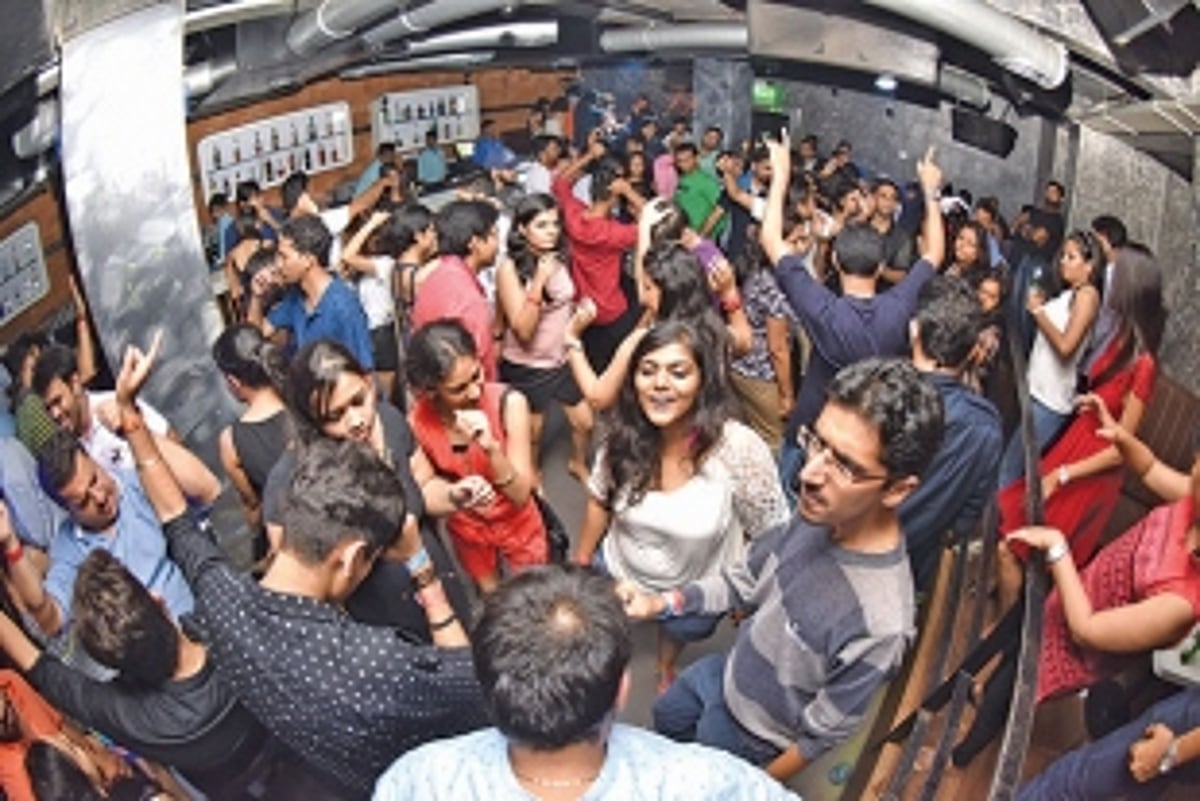
Evenings used to be made of these. A good film or some lovely music, the chatter of friends or new friends, simple but wholesome delicious food, some fine wine and conversations that topped the best desserts. Last Monday, the People Tree at Assagao, had yet another one of those. A documentary on Lahore( mentioned last week), followed by delicious Naga Pork curry cooked by Chan Chan Yagna, who runs the People’s Tree store and some lovely chats by the moonlight.
Midway through one of those, yours truly broke away to look for a man I promised to hunt and chat with, Orijit Sen. And there he was sitting in a cozy corner of the Balcao of the lovely home where People Tree is, his magnificent beard flowing like a river, eyes soft, rolling some fine tobacco for his cigarette, and doing that he does best, sketching on his electronic sketch board. Even in the din of people chatting about the documentary and the chatter of others who came into the store, he was an island of calm. Sen, India’s first and arguably best known graphic novelist, has a unique way of telling stories through sketches. These sketches, over the years have told stories of struggles and sacrifices, of protests and pain and the sketches have told stories of the fight for freedom and justice. Even though I had clearly intruded into his space and his work (he was deep in thought when I hesitatingly asked if I could chat), he was generous with his time.
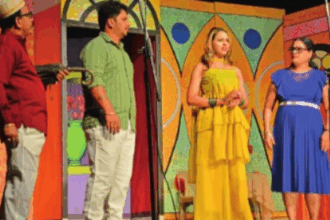
The conversation was largely around Palestine from he has just returned, perhaps the only Indian story teller across all genres to go and return from there. Sen, travelled with a group on the return leg of a unique cultural exchange between Jan Natya Manch and the Freedom Theatre group from Jenin in the Northern West Bank. They came in January and the Indian team went back a couple of months ago.
In his own words, in a recent article for Wire, Sen wrote, “It was a first of its kind, in its attempt to initiate people-to-people contact on a significant scale, to establish friendships at a real human level, to speak the language of art not diplomacy, to exchange creative ideas, and to learn from and celebrate each other’s struggles.”
In our chat, Sen spoke about his journey to this holy land, destroyed by violence and elaborated on his stories of his journeys through a part of the world, many fear to tread. Sen’s job was cut out. To do sketches and create images to artistically portray the great cultural union which only artists can create since diplomats and politicians have failed.
Sen was generous. He shared and spoke with a gentle passion of a man who protests through his sketches of peace. But if push comes to shove, he does take to the streets like he did in Palestine were he joined one of the numerous brave face off’s that the Palestine people have with the Israeli forces. Sen faced tear gas shells which had chemical content which severely harmed his eyes for a period of time. And yet he said to me, ‘You should come next year’. Well you never know, if that’s a calling, then the call shall be answered.
But even as the sounds of Palestine, its sights were playing out through Sen’s eyes, there was also a far deeper personal connect with his work on the struggles of the people of Narmada against the Narmada Dam which became the genesis of his first semi fiction graphic novel. My formative years as a journalist were spent on those very banks, closely watching (and participating in that struggle). The connect with Sen was therefore deep when yours truly remembered weeks and months spent in the villages of Allirajpur and Jalsindhi on the banks of mother Narmada, on the Madhya Pradesh side of the MP Gujarat border. The mind went back to nights under the starts on a full-moon night hearing the river, long walks for days with the Narmada Bachao Andolan, protestors singing songs, braving police action and yes lathi charges, and jointly admiring new poems, songs and articles composed during those journeys, almost daily, by the protestors.
Who would have known in 1992, that 24 years later I would connect to those times, sitting in Assagao, chatting with the monk like Orijit Sen who traversed the same space and created magical and sensitive work.
But you see, these experiences continue to happen in Goa where people from across India and the world, converge after they’ve been there and done that, to this space where they can tell their stories. Goa, is like a home you never knew you had, a place you return to, it’s the fireplace, it’s your bedside table, it’s your comfy bed, it’s your little nook, it’s your podium and it’s your pillow. All this was unspoken, on that beautiful Assagao balcao that evening, but felt very intensely.