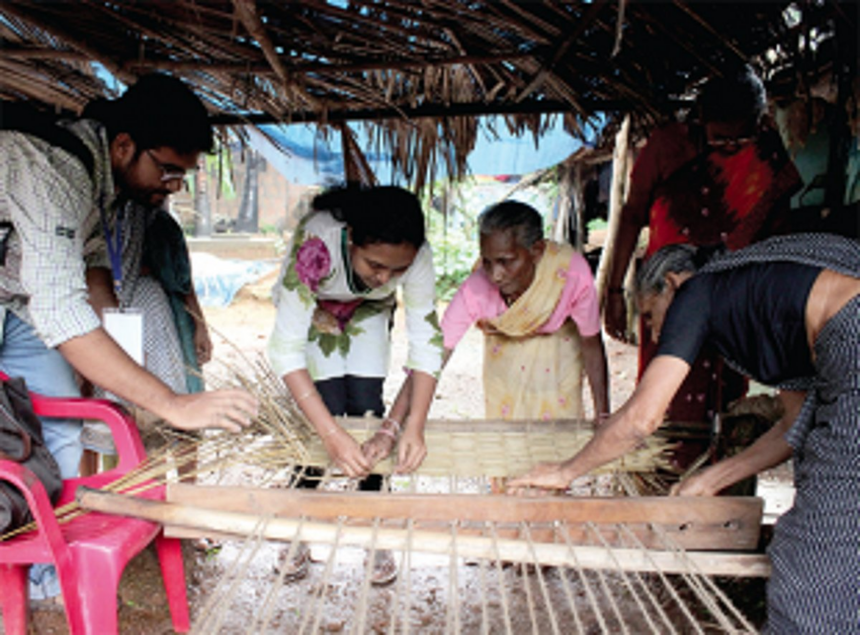
Responsible tourism was the new buzzword that became fashionable in the state. Now after
several years the authorities are now looking at it seriously and focused on
ensuring that tourism is more responsible, involves the local community and
more importantly contributes to their well being in a positive manner.
Interestingly beyond the headlines some
local tourism stakeholders are doing that effectively amd without fan fare.
Poonam Ribo of Konkan Explorers said since
they were not based on land but focused exclusively on water they would be
interacting with the local fishing community around Chapora. She said “We take
our guests around the mangroves because the only way to access them is via a
boat. We believe in being responsible and are involved with the local school
where children from the fishing community go. We take them out on the river
every year probono and talk to them about the river and the sea and how
important it is to keep it clean”. She said the children learned the importance
of not throwing plastic into the sea. They would take this message home to
their parents. This she said would have a ripple effect over a period of time.
They have been involved in this effort for nine years. She said she was excited
by the government’s move towards responsible tourism but it would also have to
be matched by responsible tourists. There are several groups around Goa that
are involved in this push towards a tourism that is more responsible, spread
out in the interiors of the state.
Swapnil Naik who is involved in
responsible beach activities and, musical programs in the evening said he was
aggressively promoting local talent. He said “We are getting musicians from
rural villages and introduce them to tourists. Songs in Konkani not heard
before on stage. Tourists are introduced to songs for Ganesh Chaturthi, then the
musical instrument the ghumot. People when they come to Goa, dance to trance,
this is so different in terms of vibe and rhythm. This should start by the
first or second week of March. It is good initiative and I believe it will
gradually change Goa tourism in the years ahead.”
Amitabh Gautam of Flying Fish which is
involved in scuba diving said they had locals as instructors. They were also
involved in ensuring the area was kept clean. He said “Barring the one document
we make the divers sign we are a paperless office. While diving we pick up any
garbage we come across. We are focused on keeping it clean and being
responsible.”
Imagine making farming look interesting and making tourists to
come and get involved was the idea of Mahesh Patil the man behind NV Eco Farm.
Based in Dharbandora taluka he has an agro farm into tourism. He said “We give
experience of organic farming and are focused on maintaining the bio diversity.
We have created certain adventure activities. We have a butterfly park, astral
garden in nakshatra garden, honey rearing and spice plantation. We have
converted a natural stream into bath spot. We encourage the local community to
sell their products. We have engaged all the local people for the work of
serving the local cuisine. We want to nature and promote tourism”.
Maria Victor of Make It Happen who curates heritage walks in
Panjim said each experience was curated to bring to life people stories that
are core to the culture and heritage of the local communities. Through vivid
storytelling by local hosts, discerning travellers are taken through history,
architecture, legends, art, music, savour local delicacies and experience the
local way of life.
She said “We see tourism as a platform to nurture and showcase
local talent such as musicians, artists, traditional occupations and passionate
storytellers. We emphasize on slow travel which emphasizes on the connection
between the traveler and local communities vis- svis manic sightseeing which
does not leave much time and space to assimilate the local culture”.
Recently Meenakshi Sharma DG, Ministry of Tourism, Government of
India who was in Goa and met with the Herald said “I think one thing that this
pandemic has shown the world is that people should never take things for
granted. There may be a day where one would just go out, take a plane and go
somewhere for a change. I think everybody got this time to retrospect, whether
what they were doing was right or wrong. Tourism is about happiness, about
feeling better and relaxed. So please do unto others that you want for
yourself. You are not tourists, you are a traveler, you are a passer-by and you
have your future generations to teach. Please be responsible and light-footed”.
Banglanatak dot com a Bengal nased NGO backed by UNESCO has
through its responsible tourism initiatives has structured this model I. bengal
amd Rajasthan and has started a conversation in Goa to take this forward.
Cultural exchanges between artists of these states amd Goa has already
commenced.
Amitavas
Bhatacharya, its founder told Herald “Tourism must benefit the community. Amd
whatever is good for community, is good for tourists. Current tourism in Goa
may have scope to attract another huge section of tourists with completely a
different campaign &/or, branding – hidden Goa, unseen Goa, Dekho Apna Goa.
This type of tourism must involve small operators offering unique experience,
which also promotes social entrepreneurship in Goa”.