Located by the Zuari River, wearing a
beautiful emerald crown of the Siddhanath Parvat, the 6th highest mountain of
Goa, the village of Bori has a history that dates back to the Kadamb era in the
12th Century. Historian V T Gune quotes tradition which holds that the idol of
Goddess Navdurga was installed by Kadamb Queen Kamaladevi in a temple dedicated
to the deity in 1150 AD as mentioned in the Goa Gazetteer Part A on page 774.
Architecturally and according to tradition, the Kamal Narayan temple too must
be dating to the Kadamb era of Queen Kamladevi. Corroborating evidence to this
can be culled from the Kamal Narayan temple in Degamve village of Khanapur
taluka of the Belgaum district of Karnatak. On the walls of this Kamal Narayan
temple of Degamve, I have seen the name of Queen Kamaladevi and her husband
King Shivchitt Permadidev Kadamb inscribed. Devidas Devari had shown me some
carved stone relics (Prabhawal) of the Kadamb era in Bori way back in 2001.
According to one tradition, Navdurga was
brought here from Banavlim during the Portuguese religious persecution.
According to Devidas Devari, Navdurga was brought from Karhad in Maharashtra.
In 1391, the Antruz (Ponda taluka) came
under the Vijaynagar rule followed by the Bahmani, Adilshahi, Marathas,
Soundekar Raja and finally the Portuguese in 1763 till December 19, 1961. Bori
was an important culturally rich village of the Antruz Mahal (Ponda taluka).
Some of the Great Goans in Goa’s history from Bori include the Late Jagannathbua
Borikar the Bhakti saint, late Govind Borkar and late Rayaji Borkar who became
martyrs for the cause of liberating Ponda mahal from the Portuguese rule and
gave it to the Peshwas in 1771, social worker, educationist and eminent doctor
late Atmaram Borkar, freedom fighter and journalist late Laxmidas Borkar who
accompanied Dr Ram Manohar Lohia and Dr Juliao Menezes to the 18th June
Movement venue at Margao in 1946, and Padmashree poet laureate late Bakibab
Borkar.
Another famous man from Bori was late Shankar
Borkar, the second drug controller of India from 1956-67. Nitin Borkar, a
doctor, observes that Shankar Borkar was a towering personality with a great
strength of conviction to help our Indian brethren with low price drugs and
support to the Indian Pharmaceutical Industry.
Bori has also produced many creative
personalities in the field of classical music, social workers, literary figures
and Sahitya Academy Award winners in modern times. Late Babi Borkar accompanied
late Master Dinanath Mangueshkar on the harmonium, vedic scholar late Vithal
Shastri Borkar, late Balkrishna Shastri Devari and not to forget Indian
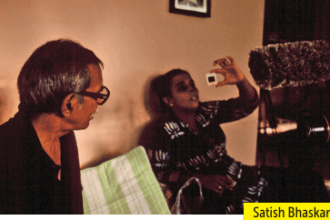
cinema’s make-up artist Murari Borkar alias Borkardada. Champu Jaidev Borkar
was the first lady doctor of Bori village.
Siddharth Parvat is a great natural heritage
wonder of Bori. There is an ancient temple on this parvat which is a testimony
to the antiquity of Bori. Other temples in Bori are dedicated to Narayan,
Ravalnath. The people of Bori celebrate a number of festivals.
In
1959, Devidas Devari established the Pratibha Vachanalay in Bori. A well known
socio-cultural organisation of Bori village is the Pratibha Friends Circle
established in 1962. The Sequeiras had their famous Top Cola factory in Bori.
The old Bori bridge was another landmark of the place. The house of Bakibab
Borkar should be preserved as a heritage landmark in Bori. A Bori Development
Trust has been founded in Bori and in 2009, the First Borikar Convention was
held there. Bori should be protected as a heritage village and all its heritage
landmarks should be preserved for future generations.