HERALD CAFÉ: What would you say is your interesting writing
quirk?
WENDELL RODRICKS: I write at crazy speed for the most part, very early in the
morning. As early as 4 am. There are days when I am not in the mood to write.
On those days I plan the plots, the chapters, characters, story line, research,
etc. I ensure I give two hours per day to writing, or thinking on the book I am
doing.
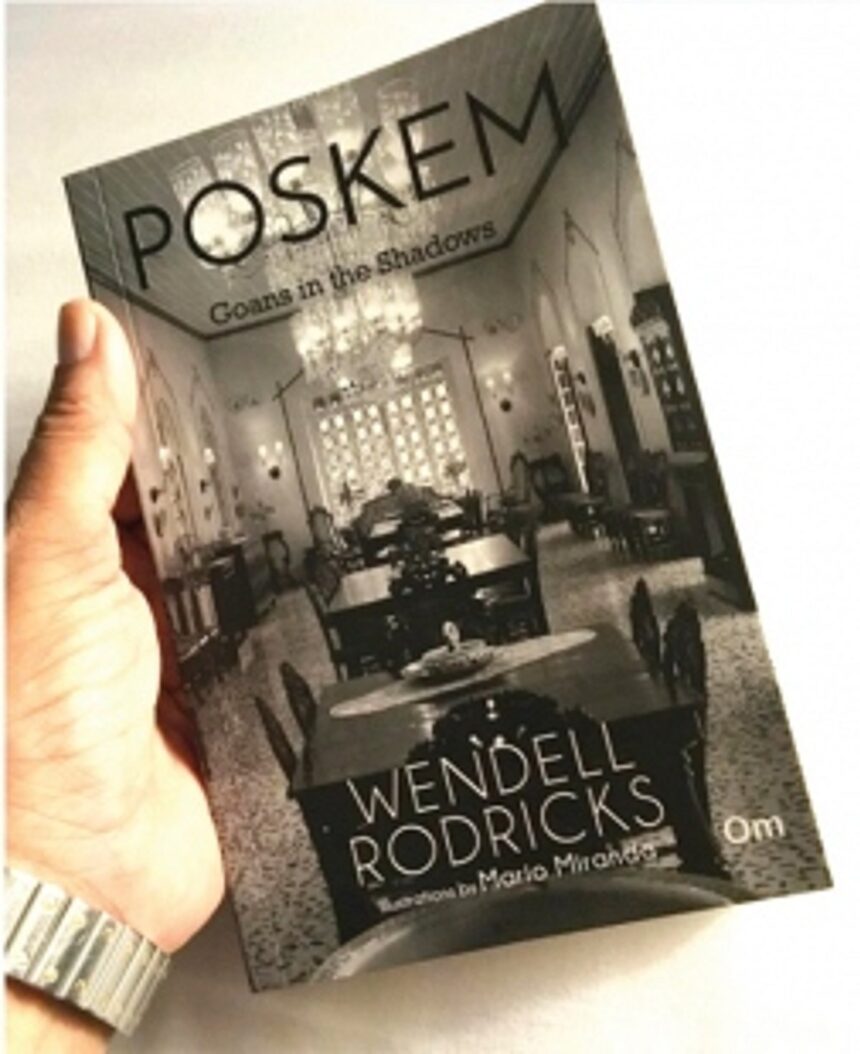
HC: Seeing that ‘Poskem’
covers a sensitive topic, was it difficult to get it published?
WR: ’Poskem’ was a breeze
to write, once I had the story of the characters lined up. But to get to that
level was a difficult process. Weaving the story line was a challenge.
Incorporating the recipes was also a daunting task. People asked why the
recipes couldn’t go at the end, but I wanted them woven into the story, because
many poskim are excellent cooks, often without a recipe book. I kept the
cooking as a common DNA thread with the four main siblings in ‘Poskem’. I had
no problem getting the book published. I have a great literary agent, and she
did a stellar job getting Om International in. Besides, the owner, Ajay Mago,
is a close friend and he was supportive from the onset, insisting that he
wanted to publish ‘Poskem’.
HC: In your interview
with Elle you mention that ‘Poskem’, in its nature, is an apology of a sort.
Would you care to elaborate on that?
WR: The Poskim of Goa
deserved the book ‘Poskem’ as an apology for the way we treated them. Their
plight went on for generations, and no one spoke about them. There have been
oblique mentions in plays, songs and books, but this is a very focused piece of
work. Thanks to the book, poskim will now never be forgotten.
HC: What did you hope to
achieve with ’Poskem’?
WR: I was surprised a
book was not written on the poskim people, in English at least. I have no idea
if there is a book like ‘Poskem’ in Konkani or any other language. I wanted to
write ‘Poskem’ because I did not want their lives to stay in the shadows
forever. We are the last generation who have experienced poskim in our lives.
This book is a testament to their lives.
HC: Moda Goa is a vibrant
and descriptive montage of Goa’s history and fashion. How difficult was the
research process?
WR: ‘Moda Goa’ took ten
years to research and a year to write. It will always be my most difficult, yet
most fulfilling book, because I took a leap into the unknown, by researching
Goan Costume. It is difficult to be a pioneer. That said, one needs to be brave
and foolish at times, to take the plunge into the unknown.
HC: What has been the
hardest scene that you’ve had to write?
WR: Without a doubt, in
‘Poskem’, the intimate scenes drove me insane. I don’t like to talk about sex.
I can talk about love easily as I am a romantic to the core. So with ‘Poskem’,
I got over with the most intimate scene in Chapter One at the very opening. I
was glad to get it over with and move onto the rest of the narrative. There
were a few other scenes that were troublesome. In the book, there are so many
emotions, from love to hope to despair to death. Besides this, there is incest,
sodomy, revenge, murder… The entire story is so dark. But somehow the recipes
and Mario Miranda’s splendid illustrations added a lot to the book… especially
Mario’s illustrations. They provided the visual imagery that I did not go into
with the book.
HC: Could you speak about
one of the things that you edited out of the ‘The Green Room’?
WR: I edited out the
names of some people who might take me to court. At times, I think to myself
that I should write ‘Green Room 2’ and have all the muck and gore in it… but
publish it posthumously.
HC: Do you read your book
reviews? How do you deal with bad or good ones?
WR: I am someone who loves a critical review;
I can’t deal with praise, I don’t believe in it. After a fashion show, who is
going to tell you that your show was a disaster? So when they rave after a
show, I take it with a large dose of salt. In any case, for me, the beauty of a
collection or a book is the process. I love the ‘process’ and don’t really care
about the reviews unless they are constructively written to improve my craft…whether
with scissors or pen.