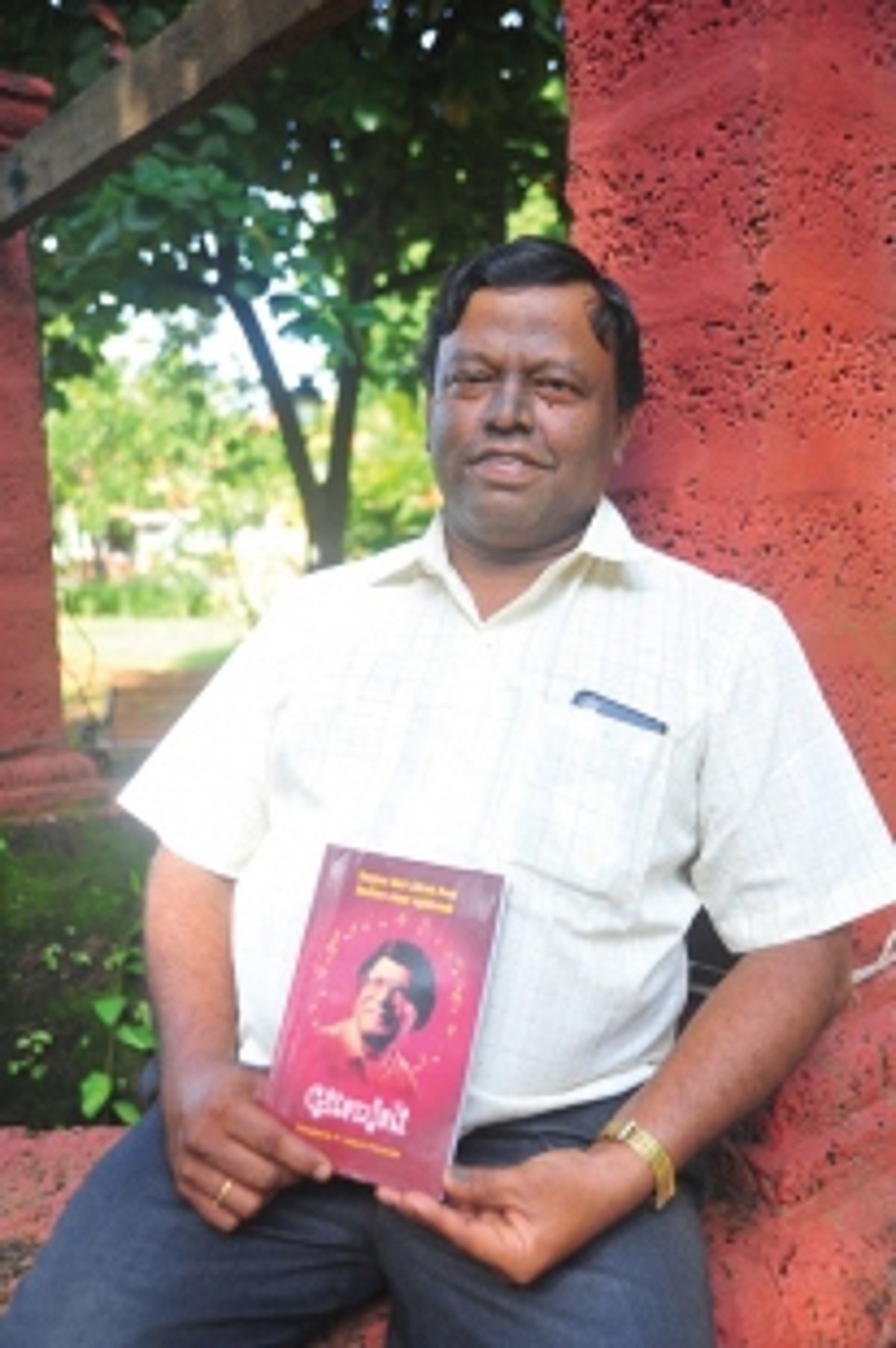
Growing up on the island village of Santo Estevao in Tiswadi, artist
Maria Bernadette Gomes imbibed her love for art from a very young age. She
proudly says that her village is the same one where renowned Goan artist Angelo
Da Fonseca was born. While she enjoyed painting and drawing things around her,
Maria took a long time to realise her artistic ambitions. She went on to do her
graduation in Chemistry and Botany (BSc) and then changed faculty, to complete
an MA in Sociology and then her PhD from Goa University.
She continued her career in academia, teaching Sociology at CES College
Cuncolim, and at the Government College, Quepem. During all of her teaching and
research, she continued to harbour the feeling that some day she should get
down to painting. Says Maria, “There came a point in my life when I thought:
this is it! It’s now or never. I took early retirement from teaching and just
immersed myself into painting. The years spent doing anthropological
research amongst the Kunbi and the Gouly tribe in Goa,
prompted me to document their lives. The motive was to capture some events and
moments I believed would not be witnessed by the next generation.
“And so, my mentors were in a way the people themselves. It was their
life, and a disappearing way of life that moulded my mission to capture what I
witnessed. I got an opportunity to see rituals and ceremonies around Goa. Some
things were not seen by many and some things were already dying out.”
Her art mines the rich cultural history of Goa. We have images of the
rarely seen Feti ceremony conducted by the Kunbi in honour of
their ancestors in Salcette. Today it is extinct. Maria had the unique
opportunity to witness the event and document it for posterity. Another work
captures the vibrancy of the Gouly dance, the Vakun Fugdi,
performed only by the Gouly women. “The unique dance simulates the
actions and movements of buffaloes, who are the most important animals in their
lives. I witnessed it some years ago and captured it on canvas. Today, only the
very old women from the tribe can perform the dance. It is almost a dying art
form,” says Maria. In earlier shows, Maria has documented the night life in
Goa’s villages, which looked at the zatras, ladainha, zagor, night
fishing and some little known night time rituals of Goa. Another series called ‘Gadar-
Mollar’ was entirely on the life of the Gouly tribe of Goa.
‘Folgam’, which means fun and frolic, attempted to capture the funny
moments in peoples’ lives. “I tried to recreate memories of the mischief that
we played when we were kids,” says Maria.
The artist had to rely entirely on memory in some
cases as in some ceremonious rituals in Goa, photography is prohibited. She
says, “I had to watch carefully and remember how it looked. Then I put it down
to paint. Like the Gadde ceremony at Sal, in Bicholim taluka or for instance,
the Dusserah ceremony at Pernem where it is literally impossible to get a
picture, these were the events that I felt that I should capture. The paintings
are my memories as I saw them and saved them in my mind’s eye.”
While Maria Bernadette Gomes records these vignettes
of Goa’s cultural life on canvas, Dr Rohit Phalgaonkar’s interest in heritage
takes a different turn. The cultural historian came across the rich history of
the Kunbi saree, also known as the the Adivasi
Kappodds and worn by the Christian Adivasi communities in Goa while
researching the cultural history of the state. He joined hands with fellow
researcher Vinayak Khedekar to revive the textile and get it declared as the
signature fabric of Goa by the government.
The duo was shocked to learn that the tribal Adivasi were
reluctant to perform their dances because they lacked their traditional attire.
There was no one weaving these sarees in Goa anymore. With help from
Advocate John Fernandes, Secretary of the Adivasi Sangatana in Quepem, the two
historians attempted to trace the historical roots of the fabric, turning their
attention to listing and documenting the tribal pockets of Goa as well as
sourcing samples of the original fabric. These dedicated efforts led to finding
a cloth merchant willing to weave the Kunbi saree and in a tie up with
an NGO, the Pink Brigade, willing to distribute and market the same. The Pink
Brigade donates the proceeds from sales of the Kunbi sarees to
the Adivasi community.
The Adivasi community is
spread throughout Goa and they are known by different names-the Kunbi,
Kulmi or Gawda. The sarees are in varying shades of red as
that is the colour used by the Adivasi throughout India, with checks as the
signature pattern. So far, the sarees of the Christian Gawda family
have been replicated.
With Maria working in gouache and canvas and Dr Rohit and Vinayak with textile – these are
wonderful attempts by these cultural researchers to bring Goa’s history to
life.