“One a penny,
two a penny, hot cross buns…”is not only a thrilling rhyme but every bite of the soft bread is a legend
tale taking every Catholic back to the time when Lord Jesus broke the bread at
the Passover feast among his disciples and shared it with them the night before
he was Crucified on Friday.
Apart from symbolising Christ’s body, the mystery also
symbolises the breaking of the fast on Maundy Thursday after 40 days of
fasting. The bun specifically marks the end of Lent. The cross representing the
crucifixion of Jesus and the spices inside signifies the spices used to embalm
Jesus at his burial.
Not all places have the same kind of Hot Cross Buns. Many people
bake them at home plain, while some add a flavor to it with raisins; some also
call it a spiced sweet bun due a trickle of sugar coating. In ancient Greek,
people would bake cakes and mark a cross on it instead of bun. In present days
however the fasting isn’t observed quite fervently, but in the olden days it
was different. If you ask your grandparents to tell you stories of these buns,
there are thousands.
Many Goans buy bulk
orders especially to distribute in churches. Parents also buy these buns on
Maundy Thursday for their children’s delight. Hot Cross buns have known to have
increased curiosity levels in them. Most children are amazed by the thought of
actually looking at a hot cross bun after hearing about it in their famous
nursery rhyme and stories.
Priscilla Dorris
Janarthanan says, “My daughter is all grown up now but as a kid I remember
buying for her a story book that had a story about the hot cross buns, the
picture depicted looked really tasty and hot, she used to insist that I buy
them for her every Maundy Thursday until she turned 8. That’s when she
gradually understood the real meaning behind the hot cross buns.”
No one knows whether
the meaning behind the Nursery Rhyme Hot Cross Buns is a myth or a reality
during the 19 century. However, it was a trend in those earlier days for people
to yell aloud and sell their products in an open market. It was known that the
poem was a loud cry from the bakers of that time yelling at customers to buy
their buns. Some myths also suggest that the lyrical song of the Hot Cross Buns
was sung by the baker’s child begging people to buy them.
Aideen Nunes says
that as a child her grandmother would tell her this story about how the bakers
often suffered a loss and hence on Maundy Thursday began selling their bred and
buns with a mark of the cross asking people to buy them in faith, this would
give them a penny to feed their own children. Like these there are several
myths around these buns.
Although Hot Cross
Buns are meant to be eaten on Thursday, some believe that it has to be eaten on
Good Friday. This is because a legend goes back in1361where a monk at St Albans
Abbey, developed a recipe called an ‘Alban Bun’ and distributed the bun to the
local poor on Good Friday. Some old folks also believe that Queen Elizabeth I
had forbidden the sale of Hot Cross Buns and only allowed it during funerals,
Good Friday or during Christmas. Therefore there is no complete consensus on
which day is appropriate to have the Hot Cross Buns. Goans however, strongly
believe that Maundy Thursday is the right day as it’s also breaking of the
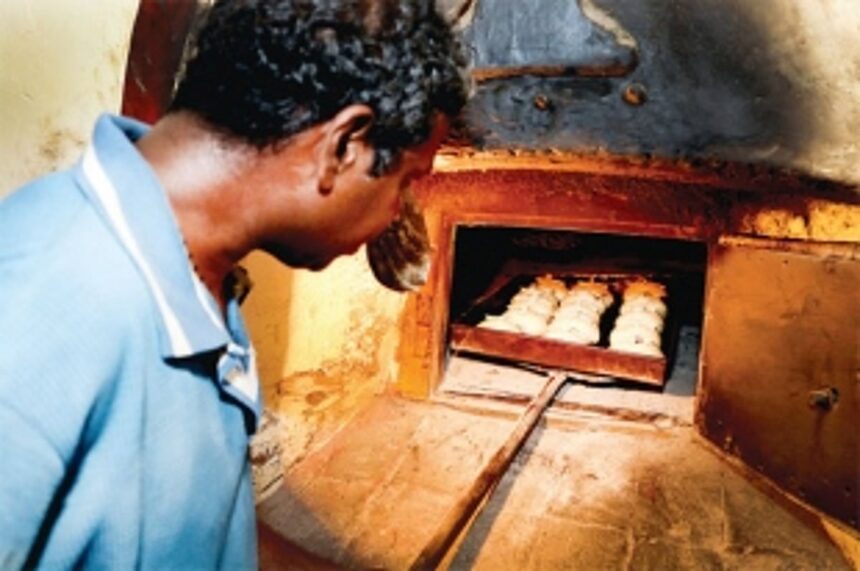
fast. Owner of Confeitaria 31 De Janeiro Portuguese and Goan Bakery Gletta Mascrenhas
says that they started making Hot Cross Buns 60 years ago. “Though now it’s
very common to just eat the buns, earlier it was specifically only eaten on
Maundy Thursday as a sign of fast breaking among all Catholics,” she says.
“Oh how I love to bake
these buns for the people, this is the best time because it doesn’t only feel
good I simply feel blessed. There are so many people who ask us for orders and
we make sure to give all of them,” expresses Gletta.
For
everyone, the Hot Cross Bun is not only a meal to break the fast but also an
emotion towards the Holy Week and a preparation for redemption. A lot of
churches in Goa will be distributing the Hot Cross Buns on Maundy Thursday and
people take part in the mystery of Christ.