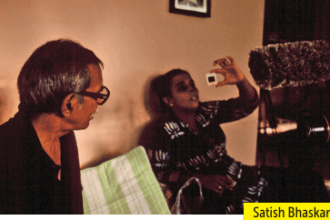
An incident in Colva on Tuesday night,
where a musician was attacked by members of the audience, sent a wave of
outrage coursing through the residents of the state, its music fraternity in
particular. In a strange turn of events, karaoke DJ and musician Ashwin Alvares
was brutally beaten by a group of men at a restaurant in Colva, when he wound
up his karaoke session at midnight. This came about because the accused in
question asked him to continue singing, beyond his stipulated time to do so.
When he did not comply to their demands, said group became very aggressive and
abused Ashwin, who quietly began packing his equipment. However, when he
stepped out, the men assaulted him brutally. The group proceeded to tear his
clothes and beat him up, ensuring that he was bleeding from injuries on his
face and upper body. The incident went viral after fellow karaoke DJ and
musician Emmanuel Antao, who was passing by, aided Ashwin and proceeded to post
a video expressing his concerns as well as pictures of how Ahswin had been
manhandled.
This is a huge cause for concern because
as much as tourists are blamed when such incidents come to pass, this one was
primarily undertaken by locals. Furthermore, plenty of Goa’s sons and daughters
are regular performers on this circuit, which begs the question of how their
families can rest assured if such incidents are allowed to go unchecked.
Popular band A26 is probably the marquee
act when it comes to live music in Goa. Led by the youngest veteran around, in
the form of Lester Rodrigues, the act has travelled the globe, playing to audiences
of all sizes, natures and dispositions. However, Lester points out that there
are certain measures that establishments need to take in order to ensure that
the artistes that ply their trade have their basic safety assured. “The owner
of the establishment should take full responsibility to make sure that the
musicians are not harassed. This was an incident among many that went out
of hand and it could have gone down really badly, since one of the attackers
removed a baseball bat from his vehicle. Every restaurant establishment should
hire adequate security when they have shows like this, and should keep a check
on unruly guests who threaten the musicians for no good reason. Solo singers
and artistes are now pretty shaken up, given the fact that a group of drunk
guests can assault them, and the establishment that they are performing at
washes their hands off the responsibility to protect them.
“As a member of the Goa Entertainment
Association (GEA), I can state that we are going to have a little training
session, open to all artists, on how to effectively deal with demanding and
drunk guests. Hopefully this kind of incident may never rise again. The
artistes also have a responsibility for their own protection and should avoid
playing is seedy joints like this,” Lester points out.
At a wedding venue in South Goa last
year, a band was handed over a letter from the manager of the property, stating
that they had to stop at 10:30 pm sharp, otherwise the power supply would be
cut off. The band complied as this move could damage their equipment, apart
from running into trouble with the police. However, some people in the crowd
came up and demanded rather forcefully for them to play another song. One of
these people seemed to be well-known, because as the band was dismantling their
gear, he brought the same aforementioned manager on stage, and the manager
himself requested the band to play another song. The band complied, but not
before they showed the same person the letter, and what it stated, in front of
the manager. In hindsight, the incident left the band wondering how they would
tackle a more aggressive situation, when the people who run the place
themselves are scared of being harmed by guests with clout.
Sharon Rodrigues, who comes from a
musical pedigree that boasts names like Chic Chocolate, Braz Gonsalves and
Yvonne Gonsalves, is no stranger to the music scene in India. A regular
performer herself, she shares her points of view on the matter, saying, “The
owner of the venue needs to stress on the timings to all guests at a restaurant
or venue, by either placing a board displaying rules near the stage or at the
entrance of the venue. If a contract is signed with the artiste, then a clause
relating to timings has to be included, and assurance should be given to the
artiste that management will handle an unruly guest at the first instance of
bad or abusive behaviour. The onus for the security of the artist should
definitely be on the management. The management must tackle a situation as soon
as it finds that a guest is hassling the musician, and not wait for things to
heat up further. Also, a call to the local police station would be absolutely
necessary if the manager senses that the situation could get out of hand. That
being said, I think that the artiste must make it a point to always stick to
the timing, whether his family and friends are around or not. Extension does
happen sometimes, when an artiste feels like playing an extra 10 minutes, just
to please people he knows personally.”
Zubin da Cruz, founder of True Blue, and
son of Goa’s iconic troubadour, Emiliano, believes that beyond just the musical
side of things, this incident is a blot on the local landscape on a personal
and cultural level too. “It’s a shame for all of us, first of all, that our
Goan brothers are behaving in such a disgraceful manner. I think security is a
must at every venue having a live performer. At places we perform, there is
always a bouncer by the stage, to ensure that nobody misbehaves with the
performer/s. The venue should be responsible for the security of the artiste
because the artiste is hired by the venue/organiser to entertain. I honestly
think that the only way forward is the government passing a law, where it is made
mandatory for all venues having live acts to have CCTVs for constant
surveillance and bouncers by the stage for security for the artists,” he
shares.
The GEA, as Lester has pointed out, is
going to take certain steps to ensure that this is better handled in future.
However, one hopes that owners of establishments are just as vigilant, because
at the end of the day, musicians tend to put themselves in the direct line of
fire, when it comes to guests or patrons, and safeguarding them should be a
front-running concern.