A
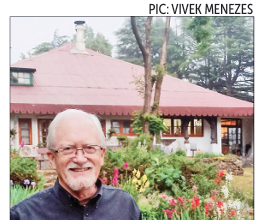
young boy brimming with ambition, Anthony Veronica Fernandes from
Arrady, Candolim, stepped into Kuwait to make a better living for his
family. As he returned home after 36 years of working abroad, his
first thought was to write about the place. Published by Goa 1556,
‘From Coconut Trees to Oil Wells – Journeys, links and solidarity
between Goa and Kuwait’ is his autobiography and tribute to all
Goans who brought prosperity home through their sweat and tears in
distant Kuwait.
“I
was completing my post graduation in Political Science when I got a
job in Kuwait. I was playing for Sesa Goa at that time but my
ambitions were high and being financially stable was my priority. I
started working in Kuwait in 1975 and returned to Goa two years ago.
I took two years to complete the 22 chapters of
my book,”
says Anthony, adding
that he is a
grandfather now.

“My
motivation behind
writing the
book was the urge to document my life in Kuwait. I was not very happy
with the way
Goans were
treated in Kuwait. There was a lot of discrimination every step of
the way in
Kuwait and the expatriates were like wolves, more dangerous that the
people of Kuwait themselves. There was a lot of exploitation and
everybody at
higher
positions did
as they pleased,”
says Anthony.
He
further adds, “The need to make more money made the labourers work
under bondage of their superiors. There were
no trade
unions and everyone was at the mercy of their immediate superior.
Within the expatriate community,
there was discrimination based on regionalism, nationality, colour
of the skin and nature of the passport.”
However,
over the years, Anthony noticed a
positive chance with regard to
the employees. “As
I was leaving Kuwait, I noticed that the working
conditions had
started to improve.
Earlier, we used to get 21 days of paid leave which has now been
extended to 31 days. There are other
benefits too,
but the cost of living has also increased while the salary structure
is still low.”
On
the day of the release itself, Anthony had sold 300 books,
out of which nearly 50 had been pre-booked for Kuwait. “The book
got a good response from readers who completed the first few
chapters. I received a lot of offers to provide the books in other
Gulf countries
as well. The
youngsters were very interested in the invasion of Kuwait as the
movie ‘Airlift’ had
just
released.”
Reminiscing
about that time,
Anthony
relates, “The
three months from August to October
1990 were the
worst. We formed the Goa Kuwait solidarity centre in November and had
rallies and public meetings to highlight the conditions of
the hundreds
of Kuwait evacuee Goans.
Of the affected people,
just 25 per
cent
participated in the rallies and yet it made headlines. The news
reached the Kuwait embassy in Delhi and the Kuwait government in
exile in Taif, Saudi Arabia.”
Anthony
was part of the cultural scene in Kuwait too. “There were many
cultural programmes being
organised
in Kuwait. There was no harm and we were given full freedom,
provided we didn’t
encroach on
the boundaries that were set. We used to organise
tiatrs, musical shows, ballroom dances and even the Mando festival.
However, compared to the Goan community, the East Indian community
was more active. The success of the programmes depended on who was
organising it and how united the group was,” says Anthony.
The
book provides 16 pages of photographs that document the early days of
Anthony in Kuwait with a mix of tiatrs, musicals, protests and
sports.