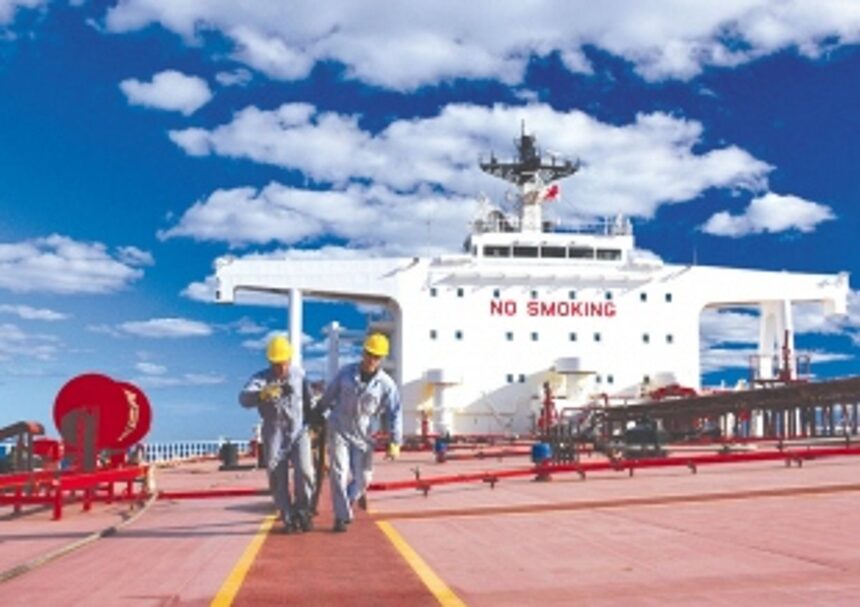
When Stephen Pimenta passed out of the hospitality institute sometime in the nineties, he worked on a five star property for a couple of months before snagging an assignment on a cruise liner. He is still at it all these years later and seems to enjoy the life, the money and the standard of living he can afford. He is a microcosm of a much larger picture that is quite common in Goa. Seafaring Goans are a constant on the high seas, earning their hard earned dollars putting in those long hours. As the country celebrated the 59th National Maritime day it certainly made sense to ask the younger generation and those in the business if it still made sense to spend half a year on a ship away from family and friends.
Dixon Vaz who helped set up Goan Seamen association of India said the average Goan had the call of the sea in his blood and that call was still being headed by scores of young boys in the state. He said “I started very young and spent twenty years on and off the ship. I worked in food and beverage and yes I did the long shifts. It was a good life but also a tough life. You can do it when you are young but once you cross the thirties you need to spend more time with family. I did that and settled in Goa. The young boys are still looking at it as a way to make some decent money”. Patrick Saldanha who is planning to go onboard a tanker as trainee junior engineer said he was excited with the task ahead but he also made it clear he would do this for a couple of years and then perhaps change his line by perhaps going back to college.
Jeffrey Pinto who has quit his job at a local property on the coast and is preparing to go onboard a cruise liner said he was following the path created by his father and then followed by others in the immediate family. He said “I hope to learn new skills and earn money that will help my family live a decent life. My dad worked hard and helped us live a good life. I want to continue that and help my siblings do well”.
Neeraj D’Aguiar administrator at the NUSI Maritime Academy said there were Goans who were now in various aspects of the industry. He said “Earlier they were in catering in large numbers and various aspects of food production but now they are in engineering and various levels of technical jobs. Now they are in various departments and are considered very employable because of their skills and their command over the English language. We are conducting a six month training course for ratings. Every six months we get 200 students from all over the country following an all India exam. Goan students can sometimes number anywhere between 40 or less or even more. There is nothing fixed.” He said it was obvious that there was interest but the industry was changing continuously and the smart ones would learn to adapt.
Frank Veigas, President of Goa Seamen Association of India, said the fascination with the sea was from colonial times when Portugal was a seafaring nation. He said “Goans set up the Goa-Portuguese seamen’s club in 1896. When the first ship the SS Loyalty sailed from Mumbai to London, there were Goans on that crew. Goans felt the pain during the recent lockdown when cruise liners stopped functioning. I wish the Indian government could tap the youth for employment in the Sagar Mala project”. He went on to say the state desperately needed a nautical college where Goans could be trained to be officers. He said there were institutions that provided diplomas and an institute in Britona which should be upgraded. This would help create officer material candidates or engineers. When asked why so many Goans gravitated towards cruise liners he said hospitality was in their blood. Building relationships came naturally to Goans and that gave them an advantage in hospitality. According to trends he said there was an increase in the number of people coming to the industry because they could even work in hotels if jobs were scarce out at sea.
However Captain Ashley Moraes felt there was a drop in popularity. He said “Earlier yes I would say it was popular but now with the youth of today, no way. I know of people who study nautical science and go on to study a MBA and work in an entirely different industry. Another guy moved into photography. The salary difference is not much now. The treatment of junior officers is very different from the days of old. Companies talk of giving visas to families but it does not happen easily. Turnaround times are dramatically short and all that adds to pressure on staff. It is a different industry now.”
Well like everything, industries change and the more pragmatic individual will find his or her way through it. And the average smart Goan boy will find his way in an evolving industry.