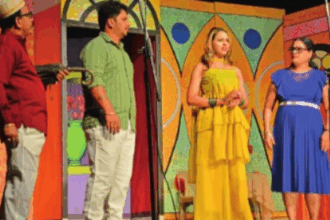
While the tiatr
fraternity is mostly dominated by Catholics, a handful of Hindus have equally
contributed towards tiatr, thus helping in its growth and promotion.
Chinchinim-based
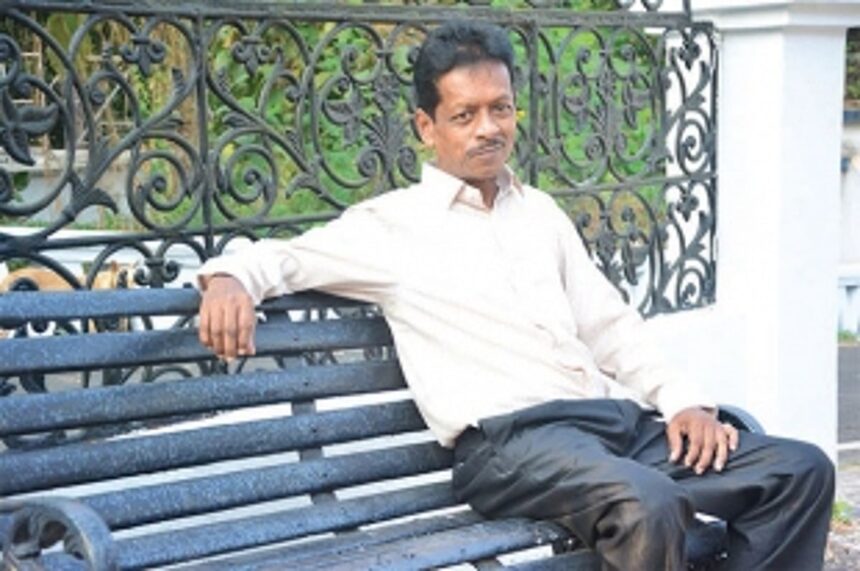
Kissan D Naik, popularly known as Kissan de Chinchinim on the Konkani stage,
was born on October 23, 1961. Since childhood, he was fascinated watching
tiatrs and would dream of making it on the tiatr stage, as an actor and
director.
When ‘khell tiatrs’
were quite popular in Goa, sometime in the 70s Kissan got an opportunity to watch
late Rosario Rodrigues’ khell tiatrs ‘Ekech Rati’ and ‘Ani Fator’ at the
football ground in his village. “During that period,” he revealed, “two khell
tiatrs of each director would be staged simultaneously and people would flock
to watch them.”
Before reaching the
height as an actor and director, Kissan started penning one-act plays and
staged them for competitions organized by CRC, Chinchinim in 1978. His first
one-act play titled ‘Ekuch Rogot’ was staged in his village, helping his
villagers enjoy the Christmas season.
From one-act plays,
Kissan decided to serve as a ghost writer for his friends and contributed
around 5-6 tiatrs, thus acquiring more knowledge and maturing asa writer. In
1984, he penned and staged his first tiatr ‘Jivit’, followed by ‘Khottem
Noxib’, ‘Vignam’ and ‘Hanslem ani Roddlem’.
In 1988, it was a
tryst with ‘khell tiatrs’, with ‘Mogan Sonvsar’, ‘Lottery’ and ‘To Ek Patki’
coming about from the mighty pen of Kissan. In 2007, he decided to convert his
khell tiatr ‘Lottery’ into a tiatr.
And while enjoying
penning tiatr scripts, Kissan took off in all earnest, contributing towards the
growth of the tiatr field by staging one tiatr annually. In 2008, he penned and
staged tiatr ‘Tumcheach Hatant Asa’, followed by ‘Dovlot’ in 2009, ‘Jivit Ek
Jugar’ (2010), ‘Ghor Ghovachem Mondir Devachem’ (2011), ‘Tich Ek Ostori’
(2012), ‘Jivit Devachem Dennem’ (2013), ‘Fottkiro’ (2014), ‘Tankam Porot
Haddinaka’ and ‘I Love My India’ (2016), ‘To Mhojea Mogacho’ (2018) and ‘Tanchi
Chuk Kosli?’ (2019).
But before taking a
plunge in the tiatr field as a tiatr director, Kissan picked up his acting
skills and performed in late Chris/Meena’s tiatr ‘Mhoji Nit Korat’, followed by
John Claro’s tiatr ‘Rostadak Ostad’, Milagres de Chandor’s ‘Jessica’, Felix
Tavares’ two non-stop tiatrs ‘Divli’ and ‘Visvaxi Ghorkarn’, Joe Meny’s tiatr
‘Herodiana’, Justinho Fernandes’ tiatr ‘Fuddar’, Paul Rebello’s ‘Niraxa’, Vincy
Quadros’ tiatr ‘Kallok’ and Mario Santan Fernandes’ three tiatrs, namely
‘Chitt’, ‘Pamprel’ and ‘Boro Rosto’.
Kissan has also
featured in musical plays (songit khell) of Patrick Perry and Kennedy Fernandes
aired on the All India Radio (A.I.R). When late Vijay Dias presented his tiatr
‘Kotha’ at the Kala Academy’s annual tiatr competition (1984-85), he picked up
the merit certificate for comedy.
Of late, Kissan may
have projected himself as a tiatr director with several productions under his
sleeve, but prior to stepping into the director’s shoes he has performed as a
comedian. “In productions of other tiatr directors it was appearance as a
comedian on stage,” he states, but in many of his one-act plays he has played
the lead roles.
As a Hindu, Kissan
would go and watch dramas (nattak) being held in Chinchinim on various festive
occasions during the month of December. He also had an opportunity to act in
one of those historic dramas, but never took much interest in them thereafter.
“Direction in Marathi
dramas is par excellence,” Kissan admits, but he also accepts the fact that
tiatrs are improving as far as script, acting, direction and singing is
concerned. “Over the years,” he says, “they are on the path to growth and
prosperity”.
“Tiatr directors are
working hard to give the best to the audience,” Kissan continues, “and ample
support from the media has equally helped in the progress of tiatrs.” “If tiatr
writers, directors and media were not there to lend support, then perhaps
tiatrs would not have flourished,” he adds.
Kissan has also worked
upon a Konkani film ‘Love Story’ on VCD, which was directed by Richard D’Souza.
“Apart from tiatrs on stage,” he believes, “production of CDs, VCDs and DVDs is
the only option for the survival of the Konkani language.”
Kissan works upon one
tiatr annually as he wishes to give something different to the tiatr audience.
His subjects revolve mostly around family and social themes, with one bold
attempt made at patriotic ‘To Mhojea Mogacho’ in 2018.
“Tiatr ‘To Mhojea
Mogacho’ witnessed only four shows,” confessed Kissan, “but it did receive good
response from the audience as far as the script was concerned.” The tiatr
audience enjoys tiatrs revolving around mother-daughter-in-law and family
issues, but he likes to think, work upon and present differently.
Apart from acting as a
comedian, tiatr script writing is Kissan’s forte. But due to financial
constraints, he prefers approaching people of good will, who will support and
produce his creations.
Kissan has always
introduced amateur artistes on stage and to keep the show going, he have roped
in some of the commercial tiatrists. “When introducing new talent on stage,” he
says, “there’s lot of hard work involved and training new comers as far as
direction is concerned is indeed a tedious task.”
With migrant
population on the rise in Goa, Kissan now wants to attract the non-Goans to tiatr.
“Why only the Goan community?” he inquires, “let the non-Goans also come, watch
and enjoy the rich cultural tradition of Goa.”
When asked about
picking up the art of writing Konkani in Roman script, Kissan revealed that
somewhere in 1972-73 propaganda of tiatrs was mostly done by movement of
vehicles and after every announcement, handbills would be flung at every nook
and corner of the village. Going through those handbills helped him to learn
Konkani and write it conveniently.
Apart from the tiatr
script, Kissan also pens comedy within the play and the cantos. Sardon Baretto
helps with road scene comedy, while Freddy D’Souza and Sardon Baretto
co-operate with the composition and arrangement of songs in between the acts.
“If you pick up and
work upon old and common issues, it is like taking tiatr back 10 years,”
believes Kissan. “So, new concept only initiates growth of tiatr,” he adds,
“and introducing new faces helps to go ahead with the new production, with more
shows in the offing.”