Margao is still
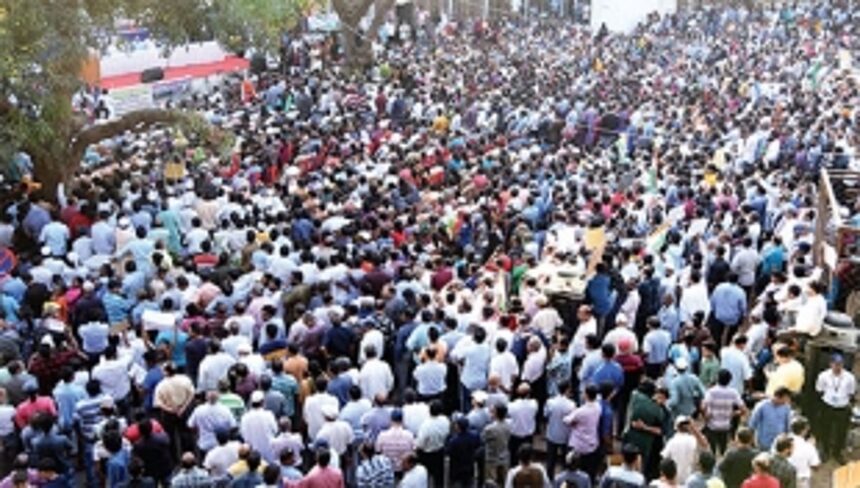
buzzing from the anti-CAA/NRC/NPR rally held at the historic Lohia Maidan on Friday.
“The response was
immense,” recalls Alison Morenas, 33, “I have attended several meetings in the
past and have even helped organize some, including political ones, but I’ve
never seen such a huge participation. Not only was the ground packed, people
were in the Grace Church courtyard too overlooking the ground.”
Darryl Correa, a
62-year-old who is into insurance and investments and lives near the Maidan,
says, “The rally was so packed that the crowds were spilling onto all the
roads. There was absolutely no space to even walk!”
Rating the rally as
“very good”, Prashant Naik, 56, businessman and educationist, says, “I’ve not
seen such a huge turnout in the recent past. There was huge participation from
people, who occupied whatever space they could find, to be able to hear the
speakers.”
Though backed by the
Church and called by its social-work wing, the Council for Social Justice and
Peace (CSJP), along with other citizens’ groups, the rally did not stand out as
only one community’s initiative, say attendees.
“Apart from
Catholics, there was substantial presence of Muslims and Hindus,” says Naik,
“It is always said Goa is a place for communal harmony and this was very
visible at the rally.”
“It was a people’s
rally. I saw many prominent Hindus in the audience,” says businessman and
author Datta Naik for whom the “most unique” aspect of the rally was the
“audience’s spontaneous reaction”.
“I have attended so
many rallies; I’ve never seen anything like this. People would suddenly burst
into slogans or hold up flags and placards. They were freely expressing their
anger and their feelings—there was no stage management—whether it was in
reaction to speeches or just on their own. And this was the best sign that the
rally was a success. This is how a rally should be,” says Naik
He recalls that the
atmosphere was “so charged that even passersby would have become excited just
listening to the crowd”.
Correa says the
“crowd was definitely with the speakers” and the “speakers definitely had
immense crowd support”.
Could this rally be
seen as a confrontation between the Church and the government?
Morenas says there
won’t be any confrontation, but “this rally will help to escalate the anti-CAA
sentiment, and it will make a difference, especially with the zilla panchayat
elections just around the corner (in March).”
Correa is not sure
about a direct confrontation but thinks the government may not like what the
crowd was told at the rally.
“The speakers told us
not to share our (personal) information with whoever comes to our homes to
collect the same (for the National Population Register (NPR) and National
Register of Citizens (NRC)). That is likely to anger the government,” he feels.
Lauding the
“well-chosen speakers” for their “excellent speeches”, Prashant Naik doesn’t
think the government would go after the Church over this rally, “after all the
Church has been vocal on so many people’s causes in the past too”.
He
concludes saying, “The speakers gave a clarion call to oppose the CAA, NPR and
NRC. And I believe this rally is just the start of a long fight against the
same.”