In the framework of Old Goa Revelations (OGR), a conference titled ‘Study and
Preservation – Shared Heritage of Portuguese Origin’, funded by the Calouste
Gulbenkian Foundation, in cooperation with the Archaeological Survey of India
and Fundação Oriente, discussed the multidisciplinary approach in the study and
preservation of shared heritage in Portuguese origin with presentations. The
conference was held at Fundação Oriente, Panjim. The OGR works by a theme quote
‘Do not go where the path may lead, go instead where there is no path and leave
a trail.’
The research was promoted by the
Portuguese research centers CIEBA – University of Lisbon, Faculty of Fine-Arts,
Laboratório HERCULES University of Évora and Laboratório José de Figueiredo-
Portuguese Directorate of Cultural Heritage.
The session was promoted by Fundação Oriente, taking advantage
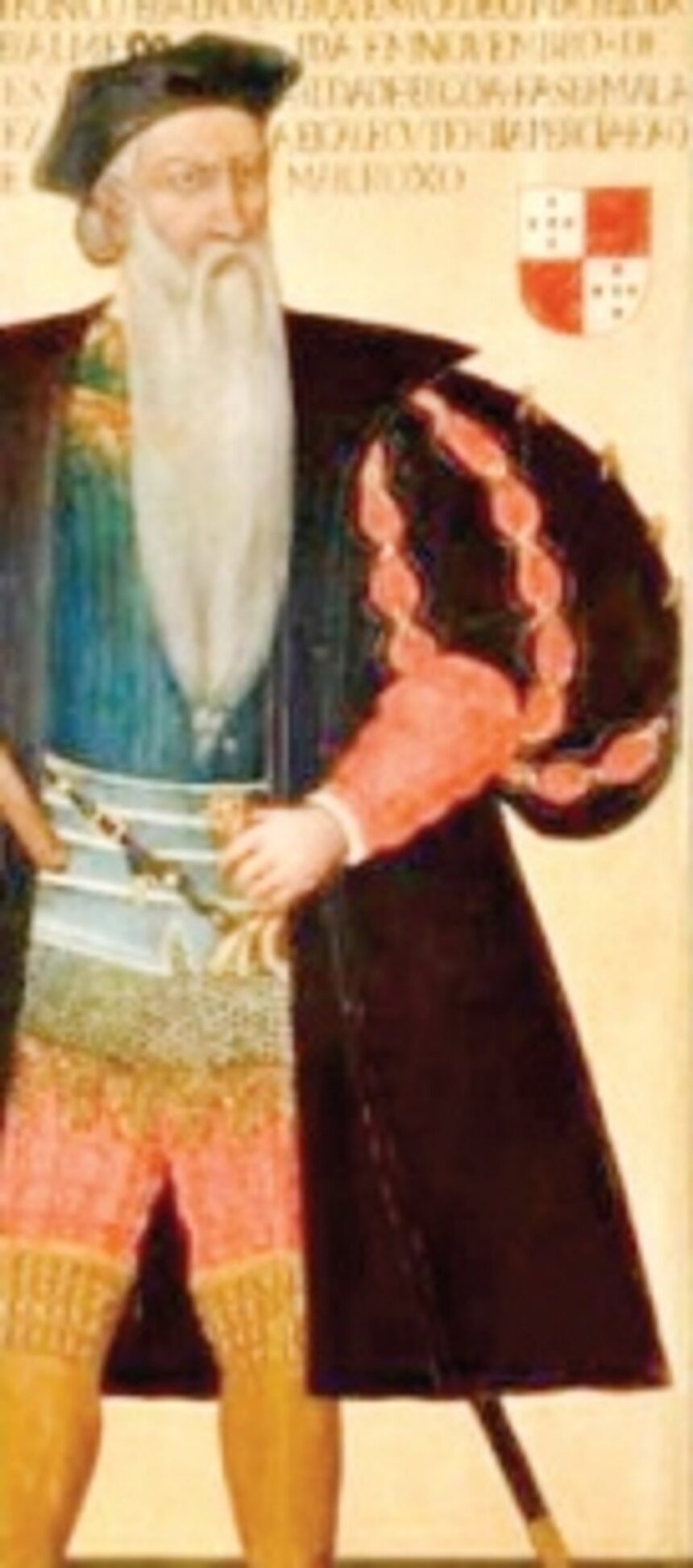
of the fact that the team of researchers of the OGR Project (Old Goa
Revelations – New Insights on the Vice-Roys Portrait Gallery) is present in Goa
to carry out a project of cooperation with the Archaeological Survey of India
(ASI) in Old Goa.
The
three participant researchers Dr António Candeia, Dr Mónica Esteves Reis,
Conservator-Restorer Teresa Teves Reis, and Dr Fernando António Baptista
Pereira discussed their experiences regarding the study, interpretation and
preservation of shared heritage of Portuguese origin worldwide.
Conservator-Restorer Teresa Teves Reis presented an overview of the Project Old
Goa Revelations: New insights on the Vice-Roys Portrait Gallery. Dr Mónica Esteves
Reis discussed the Heritages of Portuguese influence in Brazil, Africa and
India. The session answered questions about collective memory, identity and
post-colonial conservation policies. Dr Fernando António Baptista Pereira
presented the topic ‘Museology of far-eastern collections of Portuguese origin;
Museums of Macau and Fundação Oriente’.
The presentations focused on heritage studies, museology and
conservation, especially in shared heritage scenarios such as Goa, as there is
a need to build common dialogue and terminologies that are key to collaborative
projects with international and multidisciplinary teams and institutions, such
as the OGR Project.
Dr Mónica Esteves Reis has been conducting scientific missions
in India in several locations, including Goa, for the last 12 years. Along with
the team OGR Project, she is developing scientific examination of a selected
series of portraits with top-end equipment with non-invasive procedures that
allow them to capture the underlying paint layers without the need of removing
the paint.
Preserving heritage is important to every society. Dr Mónica
spoke on how the conservation of heritage and culture is necessary. “Historical
locations are a part of our cultural matrix and help define one’s identity;
building collective references that relate to a collective of memories
including society’s ideas, beliefs and values that society then organises into
a system (a construction). These collective of memories are understood,
accepted and adopted by that society.” According to her belief, preserving the
historic locations and traditions we can acquire its values to society, hence,
actively cooperating to its preservation.
Speaking
to a selective crowd of audience, a participant described the importance and
need to attend such kinds of conference and sessions. “I am here today because
I feel that such topics are rarely spoken of and people have neglected the beautiful heritage. But knowing the research and work done to
preserve the heritage is what makes it exciting and essential to know about.”
Goa’s colonial-era left behind some remarkable heritage, which
today is being forgotten about due to the new technologies and constructions
taking over. The OGR group reminds us of the significance that lies in studying
and preserving heritage.