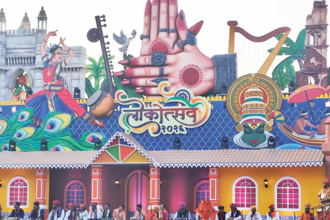
The outdoor venue at the International Centre Goa, Dona Paula
generated an air of expectancy dressed in bright colours and lights, with two
screens, two stages, impressive sound setup, musicians and dancers. The
audience too wore a sense of class and intellectual
vibrancy. The LSE, South Asia Centre, was launching the LSE INDIA SUMMIT 2016
with a talk by Srdja Popovic on ‘People Power: How Non-Violent Strategies are
Shaking and Shaping the World’.
Goa Chief Minister Laxmikant Parsekar inaugurated the event with a
detailed reading of the “shaping” of Goa’s present and future by his
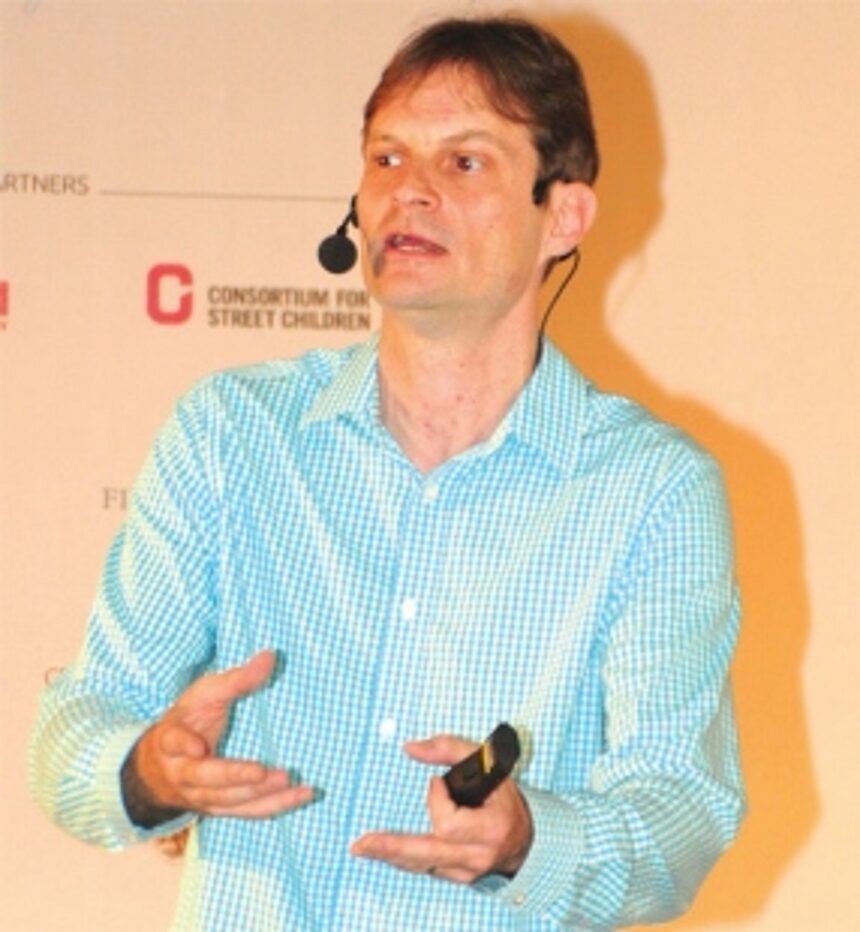
Government. The Speaker of the evening plugged into the audience with opening
humourous one-liners and a sincere, interactive, charismatic personality and a
persuasive talk that dispensed with notes and a podium. He won us over with
persuasive facts and practical ideas that were tangible and usable in “shaking”
(read that as contesting, challenging, dissenting, opposing, disturbing,
disrupting) the “shaping” by politicians.
The screens came alive with vivid relevant images collaged with apt
text. He opened up numerous cans of worms strewn over more than a century of
causes and effects, from World War I to the present. The emerging picture of
the bad guys controlling and shaping democracy created reinforcing images of
democracy gone wrong. Even though the bad guys have had a few bad years in
recent times, he warned that ‘the learning curve of the bad guys was more
active’. They keep reaching out and grabbing political space and are quick
learners in controlling any form of “dissent”. The good guys should proactively
concentrate on the little tangible “bread and butter “issues: women raped, road
potholes, dog poop not cleaned. The magic word was “accountability”. The only language politicians understand is
numbers; there is more power in the hands of the unarmed because armed forces
prefer to face other armed forces. The march of the unarmed, banging pots and
pans about tangible realities is very disconcerting for them. So we have to
come out in huge numbers to keep our politicians accountable for the littlest
tangible, real issues. “Major non-violent campaigns have been successful twice
as often as violent resistance campaigns”. 41% success as opposed to only 4%.
We have to develop an alternative narrative, a new vision, a
blueprint for revolution using non-violence. And we have to focus on that
vision. We have to concentrate on suitable location and time.
How do we do this?
We can’t fight Mike Tyson in the boxing ring but maybe, we can
defeat him at chess. Apart from the daily “bread and butter” issues which have
to be voiced as “demands” , there has to be unity, planning and non-violent
discipline. Unfortunately, “both Serbians and Indians are alike: they begin
planning five minutes after the deadline”. A ripple of laughter animates the
audience. The wake up calls throughout are keeping the audience with keen alive
eyes, hanging on to his every word.
Use media to teach people skills, change their hearts and minds;
teach them not to expect others to do the work for you; the lesson has to be
driven home: each of us is a shareholder in change. People have to be recruited
in this non-violent army. To create this
‘you’ involvement, the actions have to be catchy enough to become viral and
they have to be replicable.
Popovic’s examples of humour as dissenting action live in my mind. “People
were invited in a park opposite a shopping centre to hit a barrel with the
President’s face printed on it with a baseball bat. They had to put in a coin
in a box for charity. The shoppers were delighted and enjoyed the show. When
the police arrived, they weren’t able to arrest anyone, so in frustration they
arrested the barrel! At Christmas time, in Russia, numerous toys protested with
the message ‘We want clean elections’. An official document declared ‘The toys
are banned because they are not citizens of Russia’. Perhaps, they were
deported to China where they came from!”
We have to overtake and reverse and never declare ‘Game Over’. There
is always a new level of mastery and winning. “Democracy is like LOVE. You’ve
got to do it every day”.