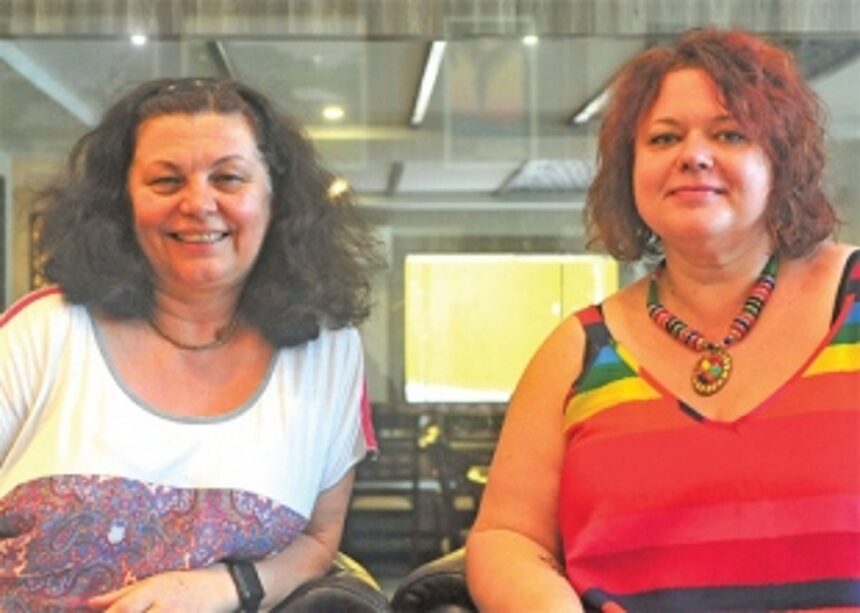
Casually sitting in the hotel lobby and mingling with musicians from different countries are two
festival directors of high calibre music festivals of Europe, actually picking
musicians for their respective events. As they enjoy every beat of music, they
are getting closer to their decision on who can woo their audience in the Czech
Republic. Zlata Holusova, Festival Director, Colours of Ostrava, and Petra
Hradilova, Festival Director, Czech Music Crossroads and Festival in the
Streets are in Goa and are looking for the next big artiste from India.
Colours of Ostrava is an annual international multi-genre music
festival organised in Ostrava, Czech Republic, and this year’s festival, to be
held from July 18 to 21, 2018, will mark its 17th edition. Its last edition
featured over 350 programmes on 21 open and covered stages with concerts,
discussions, theatre performances, films, workshops and live performances.
Zlata explains, “We are doing three festivals, Czech Music Crossroads and
Festival in the Streets, which are headed by Petra, and the main festival, for
which I am the director, is Colours of Ostrava. The venue is very interesting
because it was previously an industrial area with metallurgical works, mines
and ironworks; it is one of the best venues for cultural projects in Europe,
including our festival. Every year, we are getting bigger and now the
festival’s audience strength is 50,000, making it one of the biggest in Europe.
We are finding the best musicians from around the world as we are constantly
travelling.”
Petra adds, “We are a very adaptive festival and we have stars
from various countries and different genres performing on stage. It is an
exceptional festival and everyone can find what they like. The advantage is
that the audience comes in to listen to what they like and they are exposed to
more music and they start to love it. There are 20 stages but the important
part of the festival is the music discussion, called Melting Pot, which is
ideas without a border. There are discussion stages where very interesting
speakers from around the world, in the fields of history, economics, philosophy
and good life, share their ideas. Last year, Amitava Bhattacharya of
Banglanatak dot com spoke about Indian musicians at this forum and he had a
workshop for Czechs too. This is a space for musicians who are on a mission to
talk about their stories.”
The festival has featured Indian musicians several times over
the years. Last year, Baul performers from India showcased their music at the
Colours of Ostrava festival, which featured musicians from 40 countries. This
year, artistes like Jessie J and George Ezra will be performing at the festival
that is ranked in the top ten in Europe by The Guardian.
Though Zlata has been managing one of the top music festivals in
the world, she still finds Sur Jahan’s concept very unique. She says, “I never
saw a festival that brings musicians to work and spend time together for ten
days, to build friendships and collaborations. We can recognise what Indian
music can offer us because roots music is important for us and it doesn’t
matter from which part of the world it is.”
Petra is on her first trip to India and she is amazed by the
sounds of the country. “I think it is much easier to understand the music here,
the acoustics and feeling is different. Our audience at the festival is ready
to accept anything that is good, because we are trying to educate them with different
music. You couldn’t recognise Indian music from a CD or the internet,” she
says.
Zlata
and Petra are constantly scouting for musicians who can be part of their
festivals and with the help of the internet, they feel that the world is
getting smaller, making it more connectible. “It is easy now but it is a little
sad that Indian musicians don’t represent themselves well on the internet,
which is a big. They do not promote themselves well. We need to see how many
musicians make up the band and how the overall performance will look live on
stage. Indian musicians have to promote themselves through the internet if they
want to get internationally recognised,” concludes Zlata.