The
piece begins with the image of a towering female figure, with a silent scream, as though frozen in time.
Then over the next 90 minutes, the artist steers through a maze of parochial
patriarchal narratives, building and dismantling cliches, sometimes through
storytelling rooted in research, sometimes through vicarious if not violent
physical theatre, as she literally probes through various parts of her own body
– an act which during the 90 minute performance often transcends the boundary
of the physical space between the performer and the audience – a pertinent
reminder that despite the conditioned numbness we all carry it in our bodies.
For Diya, the piece began in 2012 almost
as a physical reaction to the rape of “Nirbhaya” and the protests that
followed, and has been evolving since. With every new account of rape, and
‘patriarchal penetration’ she encounters through research, most of which is
self funded, the piece finds deeper rooting. “I do not use the word rape
anymore as much as I use the word partiarchal penetration. At each level –
micro, macro, and through all realms – emotional, physical, intellectual,
spiritual, these invasions continue to happen and what does that mean and how
does that manifest” – it is these enquiries that have led to this performance
piece.
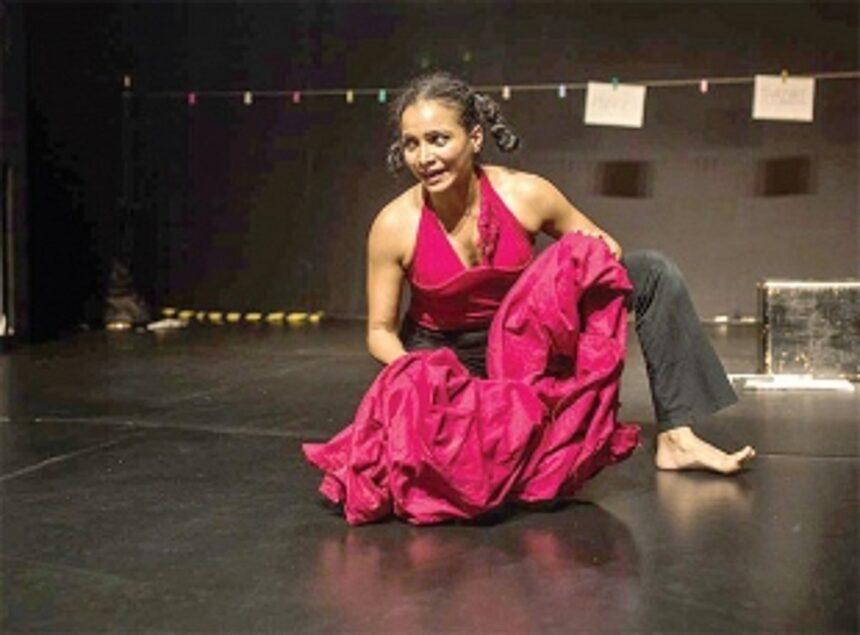
Visually the piece is stunning, performed in a striking red and
black palette, something that fortifies the tangibility of the reality the
piece sets out to convey. Through several archetypes of the woman as they exist
in the society – the slut, the wife, the mother, the virgin, the diva, the
warrior, many of which juxtapose real life characters onto the fictional realm,
she investigates and navigates the various patriarchal, parochial narratives
that is the reality of the present times. Besides the mother/wife and warrior
characters, one of the characters in particular – an archetypical American
woman who runs a blog howtokeepyourman.com, is a wonderfully subtle inquisition
into the slut-to-goddess stereotype, layered with satire, keen enquiry and
veiled empathy. “I am very interested in the slut to goddess stereotype – the
woman who uses the slut stereotype to become the goddess, knowingly or
unknowingly using the stereotype. And though that is an anomaly in many ways,
we navigate and survive patriarchy how we know and if someone can find power in
their narrative, more power to them!”, she told Cafe
Despite the visceral, physically embroiling and at times eerily
sexual nature of the piece, the performance leads upto an exhausted though
hopeful invitation. Diya herself terms it an ongoing (failing) research –
‘because a female artist, in a studio, thrashing around, trying to navigate and
understand patriarchy by locating it in her body, is not going to be successful
because I cannot do this alone. The men in our lives – our fathers, our
brothers, our husbands, our lovers, our one-night stands, can they feel it too?
Can they join us and carry and help navigate through intimate and authentic
engagement.”
It is this very nature of the narrative – one that does not set
out to criticise but rather to reflect and enquire into the variegated world of
women, and invite and appeal to the sensitivity and intimacy with men that the
piece finds its feminism.
At
a time when feminism is portrayed through the linear lens of violent anger, the
Red Dress Waali Ladki adds layers of compassion, observation, subtlety and a
call to intimacy. This is perhaps why, over the last 20-odd minutes as the
artist sings, exhausted though hopeful: “Deep in my heart, I do believe; Deep
in my throat I do believe; Deep in my body, I do believe; Deep in my activists,
lawyers, journalists, engineers I do believe; Deep in ammas, and thakumas and
khalas… Deep in my stratosphere, I do believe….”, it leaves much of her female
audiences in sniffles.