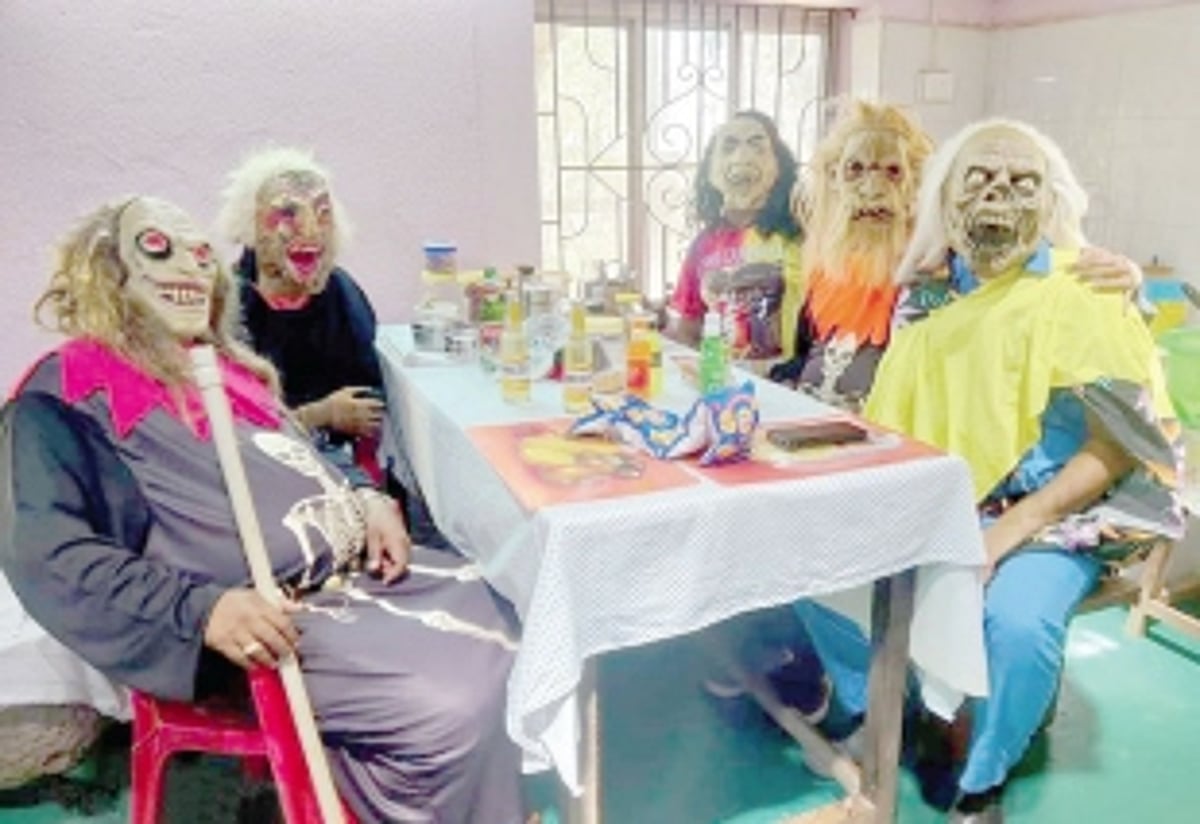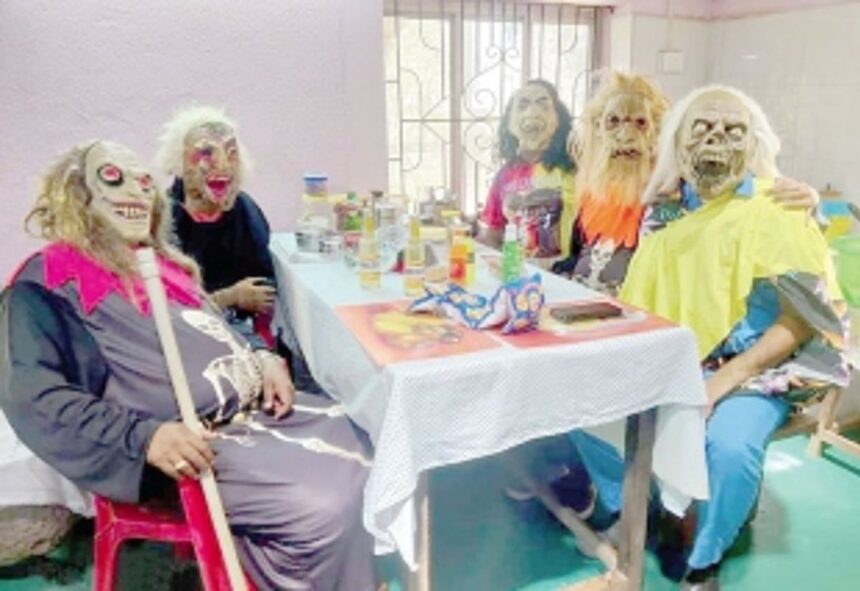
From today, February 19 to 21, enter Divar Island at your own risk. It’s not that there is any real threat but one might jump out of their skin if they see a creature sneak up on their car window. Residents of the island will be dressed as potekars and will be sighted in every area of the island. They mean no harm but their expertise for finding the right mask and costume comes off as frightening. This is all fun and game for the Potekar Festival, which is held three days before the Lenten season.
A few decades back, every village had their own version of celebrating Carnival. Village youngsters would wear funny clothes, sometimes of the opposite gender, and roam around the village, throwing colour and powder on unsuspecting passer-by and even enter homes to annoy friends and neighbours with their antics. Potekar Festival was Divar’s way of celebrating Carnival.
‘Potekar’ is a Konkani word which means shabby which might have been the origin of the first costumes of the residents. While the islanders are still in search for authentic history of the festival, it is really commendable that they have managed to revive the festival so enthusiastically after a break of nearly thirty years.
The Potekar festival dates back to the pre-Portuguese era. The secret of the festival is in the disguise. Dressed in different themes and after days of working on their costumes sometimes even hand-made, their identity is hidden for these three days. Some even wear cowbells on their ankles and around their waists to add a distinct sound to their getup. And to take on this new persona, they even change their voice and mannerism.
Earlier, the masks were more painstakingly created by hand with paper-mache. Clay from the fields would be moulded into the shape of a face and a wet cloth would be placed put adding papers with ‘grut,’ a mixture of maida and water. There would be a beeline to the barber’s shop to collect hair waste which would be stuck to the mask as hair and beard.
The residents meet in a designated house in the village, where they work on their costumes and masks and the accessories they require for their look. In the recent years, the number of participants have increased as more youngsters join in. Marius Fernandes, Goa’s Festakar, is one of the driving forces in bringing this festival back to prominence. “We have been researching about the festival as it dates back hundreds of years. We have found a lot of information and oral stories but we still need authentic information. The festival was on a full scale in the 1970s with the guitar and ghumot, strolling on the roads and going door to door. It was exhausting wearing the costume for three days. Once people starting moving abroad, there were very few who followed up on the festival which stopped for a few years. Now, those same people have returned back to the island and they have revived the festival,” says Marius, who also takes part in the festival.
With almost 100 people working hard to taking on these scary looks, they start collecting clothes which are old and torn and sometimes stitch new clothes for the look they want. Masks which are good quality and highly prized are mostly imported from abroad through favours from the islanders working abroad. They fill their clothing with hay or clothes to get an oversized look.
Only men would dress in scary costumes but in the last few years, even girls and women participate in the festival but it is really hard to tell who is behind the mask. They visit the homes which serve them drinks and food and most importantly, ‘godshem’.
While the children on the island have grown comfortable with these ghoul like creatures prowling the village, those visiting might be scared to open their eyes. “I recommend that very young children should not be brought along as they might be really scared with the costumes,” advices Marius.