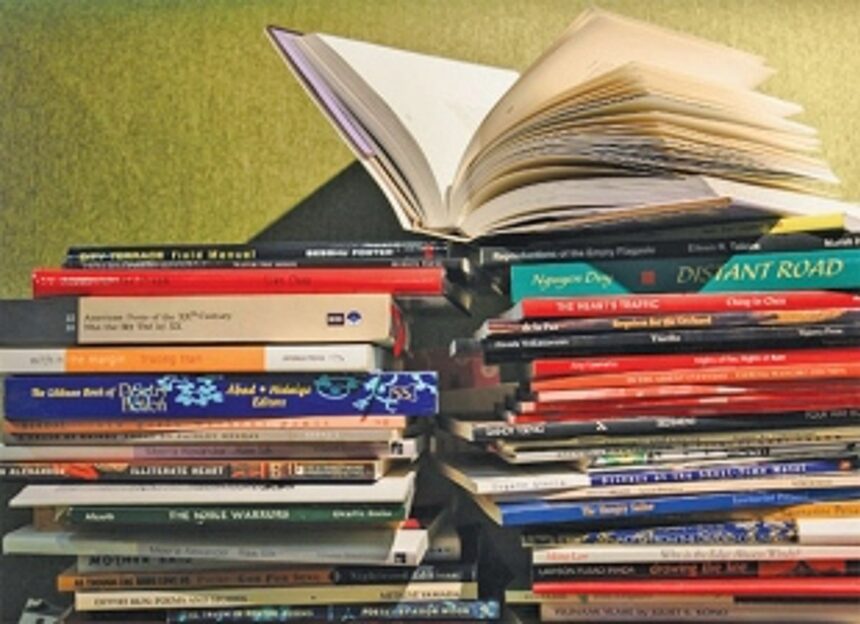
Union Finance Minister Nirmala Sitharaman’s proposal to slap a 5 per cent customs duty
on imported books in order to encourage the domestic publishing industry and
printing industry has ruffled the feathers of book lovers, educational
institutes and libraries. While the government is pushing local writers to
approach publishers, the tax will not only hinder access to information and
creative ideas but local publishers will not be able to bridge the literary difference.
While earlier reading books were tax-free, now imported books depending on
their prices will be more expensive on the pocket.
Panjim based author Oscar de Noronha
recently launched his first book in Portuguese ‘Castilho de Noronha: Por Deus e
Pelo País’ (For God and Country) along with ‘Goa tal como a conheci’ (Goa as I
knew it), a chronicle of twentieth-century Goa, authored by his father, late
Fernando de Noronha, in Portugal. A college professor, Oscar says, “The hike in
customs duty will automatically reduce purchase of foreign books by educational
institutions. The step might help promote books by reputed local authors and
publishers but hopefully they won’t make hay out of the issue and overprice
their books.”
Leonard Fernandes, the man behind The
Dogears Bookshop, Margao, also runs CinnamonTeal, the first self publishing
organisation in India. He also organises Publishing Next, a conference that
features panel discussions, workshops and talks besides encouraging networking
and business development. “An import duty is usually levied when a government
wishes to protect local industry. It supposes that a similar product is being
produced locally and therefore levies an import duty to make the imported
alternative more expensive. If that was the logic of the 5 per cent duty that
was imposed by the government in its budget, it betrays a lack of understanding
of the basic premise of books – that no two books are the same. It assumes that
the very same books produced abroad are also published locally and hence the
imported edition must be made expensive. It is just a ridiculous assumption to
make. What the 5 per cent import duty does is discourage, not stop, publishers
from bringing in new ideas and concepts in the form of books. If that was indeed
what the government was actually trying to do, it amounts to a form of soft
censorship,” explains Leonard.
Still unclear about the pricing of books with the new customs
duty, Leonard says, “When publishers import foreign editions of books, they
price them to the Indian market. This (Indian) price is not always the Rupee
equivalent of foreign currency price. So a $100 book would not always be priced
at Rs 6900. It would be priced keeping in mind the Indian market. I am
therefore not sure how much a 5 per cent import duty would affect the price of
these books, except that it will increase the paperwork involved during such
imports. As such, therefore, there would be no impact on bookstores.”
To
conclude, Leonard says, “If the government really wanted to increase book
production in India, they would have reduced the GST imposed on several input
processes, like printing, for instance. By making input costs cheaper, books
could have been priced lower.