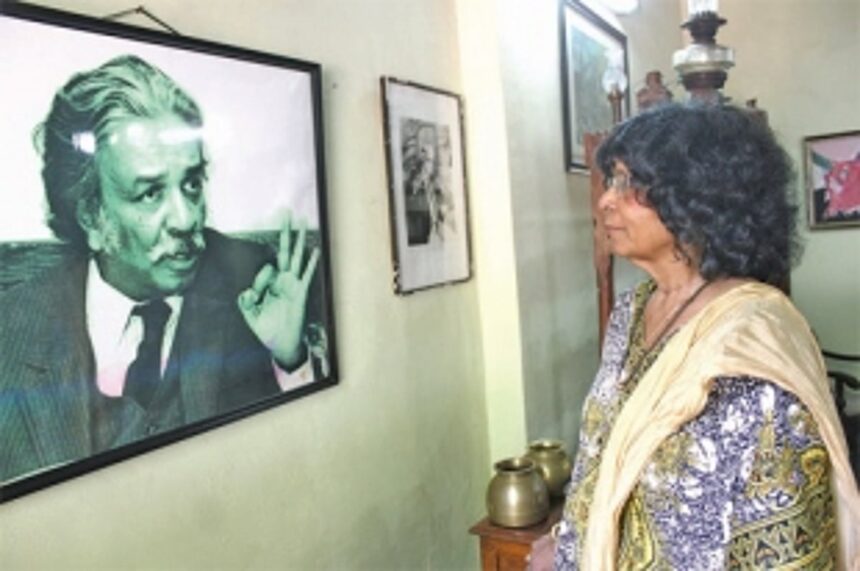
Sitting in her home in St Estevam,
Silvia Bragança has a faraway look as she recalls the series of events in her
life that have led up to this point; a life that has encompassed many factors,
including love, loss, and a story that is told and yet remains untold to many.
Hers is a tale of a lifelong mission of awareness and justice, told and retold
through mediums unlike any other: art, literature and history.
Silvia was born in Goa in 1937, and
shares her time between Goa, Portugal and Mozambique. However, it is Goa where
she first embraced her artistic side, having received her first lessons in oil
painting here. She went on to obtain her Bachelor’s Degree in Painting at the
Superior School of Fine Arts of Lisbon in 1966, before also obtaining a Degree
in Pedagogical Sciences at the Arts Faculty of the University of Lisbon.
Thereafter, she dedicated herself to the areas of teaching and research in
culture, in all three places that mattered to her: Portugal, Mozambique and Goa,
and went on to produce a number of works, which include books on art, for both
students and art teachers. Today, Silvia is included in the Contemporary
Dictionary of Portuguese Art, and has participated in many workshops in
Portugal and Mozambique.
However, while she has been lauded for
her art over time, what matters in this particular case is the muse for her
current exhibition of work, her one true love, and late husband, Mozambican
journalist-academic and widely regarded diplomat, the late Aquino de Bragança.
Having met in 1983, the couple would marry a year later, before fate cruelly
stymied their plans and Aquino was killed in a plane crash shortly after; the
circumstances surrounding his death are still shrouded in controversy. In fact,
Silvia quotes her husband in almost premonition-like fashion, when he once said
“We are too happy. Such happiness cannot last too long.” Since his death,
Silvia has worked towards upholding his life and legacy, including the penning
of his biography, ‘Aquino de Bragança: Batalhas ganhas, sonhos a continuar’.
The Portuguese version was on shelves in Maputo, Mozambique in 2009, while its
English counterpart, titled ‘Battles Waged, Lasting Dreams’ was published in
Goa in the year 2011.
“It has now been 30 years since my husband
and many others died in a fateful plane crash in 1986. But he lived for a
cause, and died for it too. And this is something that the younger generation
needs to keep in mind. I believe that there is a war coming, just like there
was in my husband’s prime. He fought to see how we could stay out of it then,
and the younger generation needs to see how they can stay out of it now. The
symptoms are all around us. Just look at places like Iraq or Syria. Enough
said. That is why I thought that this was an appropriate time for this
exhibition that pays homage to Aquino,” Silvia shares emotionally.
Aquino died on October 19, 1986, in a
plane crash in Mbuzini, South Africa, which claimed the life of the first
President of a post-liberation Mozambique, Samora Machel, for whom Aquino was a
spokesman and peace negotiator. And him being taken away when they were but
starting out their lives together is something that still haunts Silvia.
What many people tend to skate over on a
local front is the significance of the contribution of Aquino’s work. To date,
he is regarded as one of the largest contributors to the movement that aimed at
overthrowing the colonial yoke in Africa. This is what Silvia aims to showcase
through her current exhibition, on display at Galeria das Belas Artes in
Calangute from today, till April 6, 2017.