On November 8, Kuwait-based Shyam Virgincar
was unusually happy. Apart from the fact that he was returning to his
motherland after 12 long months, the reason for his glee was something else.
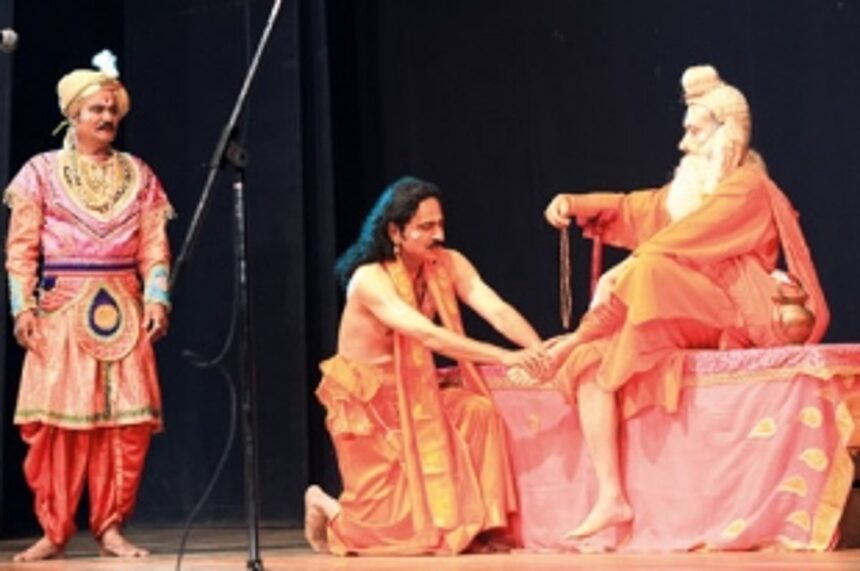
After a sabbatical of 10 long years, Shyam was ready to immerse himself in the
art-form that he loved so dearly – to enact the key role of ‘King Ambarish’
while performing in a Dashavatari Kalo. The occasion – Shree Ramnath Mahajan
Nattya Mandal was celebrating the silver jubilee of Kalotsav this year and it
was upon the actors who had performed 25 years ago to recreate the magic by
performing their respective roles. Despite the fact that a slight glitch in the
flight schedule resulted in Shyam arriving in the morning of November 8,
leaving no time for rehearsals, the smooth dialogue delivery and the flawless
performance left the audience asking for more. And he did deliver. The need to
present this art form in its originality in front of the Goan audience made Shyam
and few other likeminded individuals present a Dashavatari Kalo at Ravindra
Bhavan in Margao on December 10. The programme also featured veteran musician
Pt Ulhas Velingkar who after a long time performed the ancient yet rare art
form of Dhumaali.
The cultural tradition of Dashavatari Kalo
dates back to around the 17th century and has a tremendous history in Goa. Shyam
adds, “In the olden days, The Dashavatari Kalo was a phenomenal act performed
in the presence of enthusiastic villagers who would sit and enjoy the act all night
long. The act used to start with the entry of Haridas and end with Shankhasur
being killed which used to happen mostly at dawn. Unfortunately, only the bare
minimum parts of the act are followed now. This could be because the audience
of the current generation does not have the patience to sit for longer hours
and appreciate a rare art form.”

Perhaps it is Virgincar’s passion for this art
form that made him bring together like-minded enthusiasts to form a group by
the name of Haushi Nrutya Natya Sangh in Margao with the motive of reviving Dashavatari
Kalo by presenting it in various temples and venues in Goa. The group that was
formed in 2000 was active until 2004, when Virgincar left for Kuwait for job
prospects. However, he has kept the movement alive by getting himself involved
on his annual visits to Goa. He also expresses a desire to move to Goa for good
in a couple of years and actively follow his passion.
The original Dashavatari Kalo
–
Earlier, the Kalo used to start
with Dhumali vadan. Dhumaali is a complex variations of musical notes played on
Pakhawaj by 2 or 4 artists. Dhumaali vadan would go on till 1-2 hours
–
Then, a traditional character
called Sutradhar or Haridas used to come on the stage and invoke Lord Ganesh
–
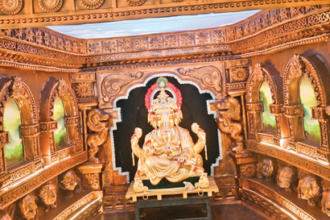
Then, an actor dressed as Lord
Ganesh would come dancing with Riddhi and Siddhi (two female figures associated
with Lord Ganesh)
–
Two traditional characters
called Kaka (Uncle)and Mool (kid) would then come on stage. Post a string of
dialogues between Haridas and the duo, Ganesh Vandan used to be performed. This
would mark the end of Purvarang (prologue)
–
Then, a Dashavatari Akhyan – most commonly Ambarish Shaap Vimochan used
to be performed. The end of the act heralds the beginning of Vishnu’s first
incarnation
–
Post the act, Shankhasur (The
demon who was slain by Lord Vishnu’s first incarnation – Matsyavtar) enters the
stage with a traditional mask and a verbal duel between Haridas and Shankhasur
ensues. Eventually, Shankhasur is killed by Lord Vishnu in the form of
Matsyavatar and this marks the end of the act
The scene now
–
Nowadays more people throng to
the betting and gambling stalls at the Kalo
–
Dhumaali vadan has been
eliminated due to unavailability of musicians who know how to play Dhumaali
–
As a result, the act starts
with Haridas singing, followed by the entry of Lord Ganesh with Riddhi and
Siddhi, and ends with the killing of Shankhasur. The Act gets over within a
span of a couple of hours
–
Instead of performing
mythological plays relevant to the Kalo, temple committees invite orchestra
groups or theatre groups to perform non-religious / general plays in Konkani or
Marathi