Nupura Hautamaki’s pretty little home in Anjuna wears
a distinct “wholesale warehouse” look these days as sacks of grain lie in the
veranda and boxes of food crowd every corner of the house. For the Goa
Humanitarian Helpline (GHH) volunteer, this food bank is a lifeline of the
cause. In Salvador do Mundo, Nandita Deosthale’s The Learning
Centre is experiencing a novel element of “hands-on education” as
volunteers—friends, family members and strangers—sort and pack thousands of
relief packages and cooked-food packets for stranded or travelling migrant
workers.
While in Dona Paula, Miriam Koshy Sukhija and
volunteers are transitioning the COVID Outreach Goa (COG) initiative from
feeding migrant workers to empowering them through an Cogold online labour
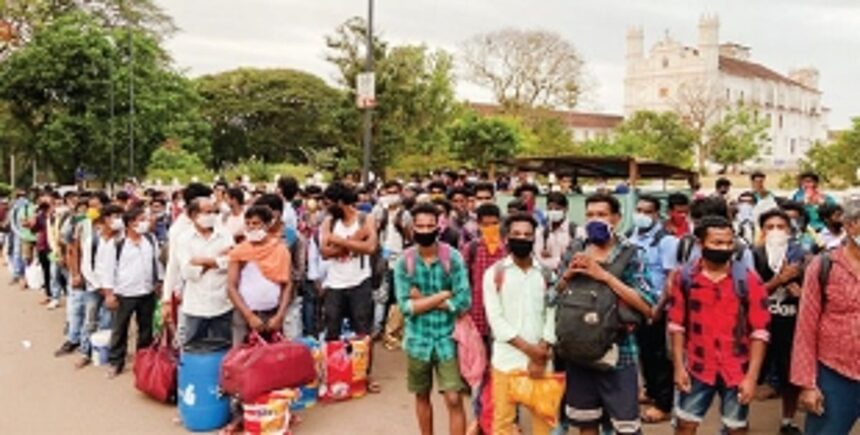
directory on that allows potential employers to hire them. As Goa struggles with its own share of the all-India,
heart-wrenching plight of migrant workers left jobless, homeless and starving
in their adopted states and walking to homes thousands of kilometers away,
citizens volunteer groups that sprang up across the state in the early days of
the first lockdown, have found themselves unable to leave their posts, despite
lockdown 4.0 being less restrictive.

“We still respond to SOS calls for food and aid,” says
Anurashi Shetty of COG, as Sukhija answers an emergency call for food for the
migrant workers camping at the stadium in Bambolim. Hautamaki says GHH’s
cluster operations—distribution of relief material on specific days at specific
locations—will stop on May 30 in view of the upcoming monsoons.
“Our distribution work is carried out in the open and we won’t be able to
manage it in the rains,” she says adding, “We will, however, continue to
respond to SOS calls.”
While COG has shared with the state government the
extensive database of migrant workers collected through its own and other
groups’ relief work, many of its volunteers have stuck around as they’ve
noticed the state machinery stretched and struggling to cope with the sheer
number of migrant workers still around despite the thousands who have been able
to take trains home.
“Apart from the migrant workers who are from states
that have yet to send trains to take them home, there are many who have settled
in Goa and who are looking at uncertain employment in the immediate future,”
says Shetty, explaining the idea behind Cogold. Hautamaki says that apart from migrant workers, the
GHH has been receiving SOS calls from many locals, including senior citizens
living alone. Her tryst with this volunteer work in fact began with a request
for help on her Facebook page for a Goan senior citizen couple from Mumbai who
were stuck in a hotel in Panjim and who had not had food since lunch the
previous day. “I contacted a friend who lives in there and he was able to get
food across to them,” she recalls. Since then messages for food volunteers to distribute
food or food tokens at railway stations or stadiums and even a request for
transportation or payment for transportation of “2-3 boxes of sanitary pads
from Anjuna to Navelim stadium” have been sent out by COG or GHH.
“Very early on we realised that there was a need to
coordinate with all those doing the same work so that there was no duplication
of effort,” says Hautamaki of the volunteer groups’ success at reaching out to
migrant workers. Incidentally, volunteers have also been facing flak
from some locals in some villages. “They don’t like migrant workers queuing up
outside their gate, they ask us in Konkani why we’re helping these ghatis, they accuse us of making a mess even though our volunteers clear up after
distribution, and in many cases we’ve seen how not just migrant workers but
even local Goans settled in villages that are not their home villages are
discriminated in ration distribution because they don’t have voter cards. The
lack of basic humaneness in some instances is appalling,” says a volunteer,
adding that it often leaves them very disturbed. Another points out to corruption and appalling
incompetency in the state-run system but says there are also “many government
officials and even police personnel who are hardworking, diligent and who have
gone out of their way to help and are doing their best”.
For Ishita Godinho of Goa Outreach the take home from
the volunteer work has been the positive support from friends and family, while
Deosthale feels the smooth functioning of her “organically-formed” group of
artists, teachers, musicians, etc, could well be emulated. With no leader,
specific tasks are allocated to one or two people with “complete trust” and
these people, in turn, get the job done through their own teams. “You don’t need an MBA degree or a corporate
background to do this, you just need to understand what’s happening, learn fast
from the mistakes you make and keep your system simple,” she says.