A drive of about thirty-three kilometres takes one to the
bank of River Tiracol. Near Naibag–Satarda Bridge, stands a small shrine
dedicated to Satiya Devi at one of the most picturesque locations of the
village. From a deserted look in the morning, devotees start converging after
noon to offer their obeisance to the deity. If Pernem (Pedne) is known for the
grand Dasoro (Dussehra) festival the world over, then Dhulvat celebration on
the seventh day of Shigmo is very close to the heart of every Pernekar as
thousands of them participate in the colourful festivity. This year, the people
of Pernem settled elsewhere will keep their date with the roots of their birth
when they celebrate Dhulvat, today, March 12. For every devotee, it is a place
of faith as they feel their wishes are fulfilled by the deity.
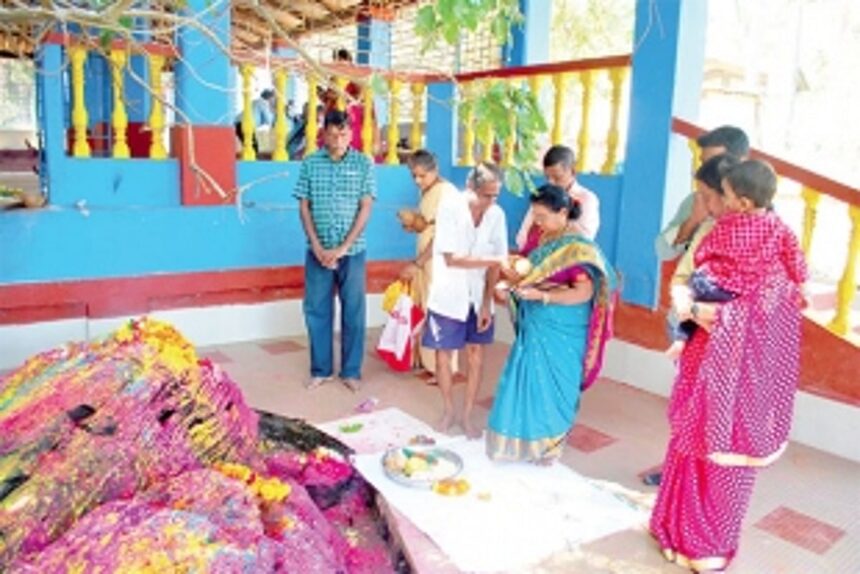
As devotees start arriving post lunch, priest Gajanan Swar
who inherits the right in the village to carry daily (Pooja) worship and upkeep
of the shrine along with his family members, it is a busy day as devotees offer
their prayers at the colourful Satiya Devi Rock Shrine, locally called Satiya
Devi Ped. Women devotees offer Vhuti or Oti (sari or blouse cloth) to the
deity.
There is Kajaro plant that stand next to the shrine, which
is revered as a place of Rashtroli, village deity. Outside the temple, there is
bust of a cow and four Tulsis which reminds the people of cows that were
offered to the Satiya Devi. They were buried at the site after their death,
informs Tatoba Swar (Gitesh). Here, every rock is revered by the people as can
be seen as the rocks are smeared with colours. One of them is a rock that makes
appearance at low tides from the river not far from the shrine. “Satiya Devi is
thought to have originated at seven different spots,” says Gajanan Swar.
The rock shrine is smeared with gulal (varied colours) by
the devotees as the celebration with the beating of drums begins at Satiya Devi
Mangar inside the temple. From a few visitors initially, the temple gets
surrounded by a sea of devotees as they take every available space, and from
the bridge, it is a splendid aerial view.
The Romtamel from all 12 wards that include Mulvir,
Parashta, Mauli, Poroskodem, Khajne, Sarmala, Malpe and other places join in
the celebration as the atmosphere get exciting as participants from Romtamels
starts singing and dancing to the beats of the drums.
Gitesh adds, “Playing of Rombat begins early in the morning
in each ward. Later in the afternoon, after playing at Rakhnyachi Holi at
Naibag, they finally arrive at the Satiya Devi temple.” The full area is
engulfed in a deafening beats as the people apply colours to one another in a
jovial atmosphere.
A prominent resident of Pernem, Anand Naik states, “Dhulvat
is celebrated on 5th to 9th day in different part of Goa, but it is held on 7th
day here. Satiya Devi has important significance for people as the shrine of
Satiya Devi is located on the boundary of the village. The goddess is
considered as the protector of the village.”
There is another legend about the Satiya Devi. It is
believed that 500 Satis took Samadhi at this place. The Devi is thought to
visit every ward after midnight to keep a watch on the village, informs
Yeshwant Gaonkar from Poraskadem.
Shigmo is one festival other than Chovth and Dasoro, which
bind all section of society and it is no better place than to witness it at
Satiya Devi Shrine. Whether the Pernemkar has settled at distant places or the
married daughters, they come in hordes to seek the blessings of Devi without
fail year after year.