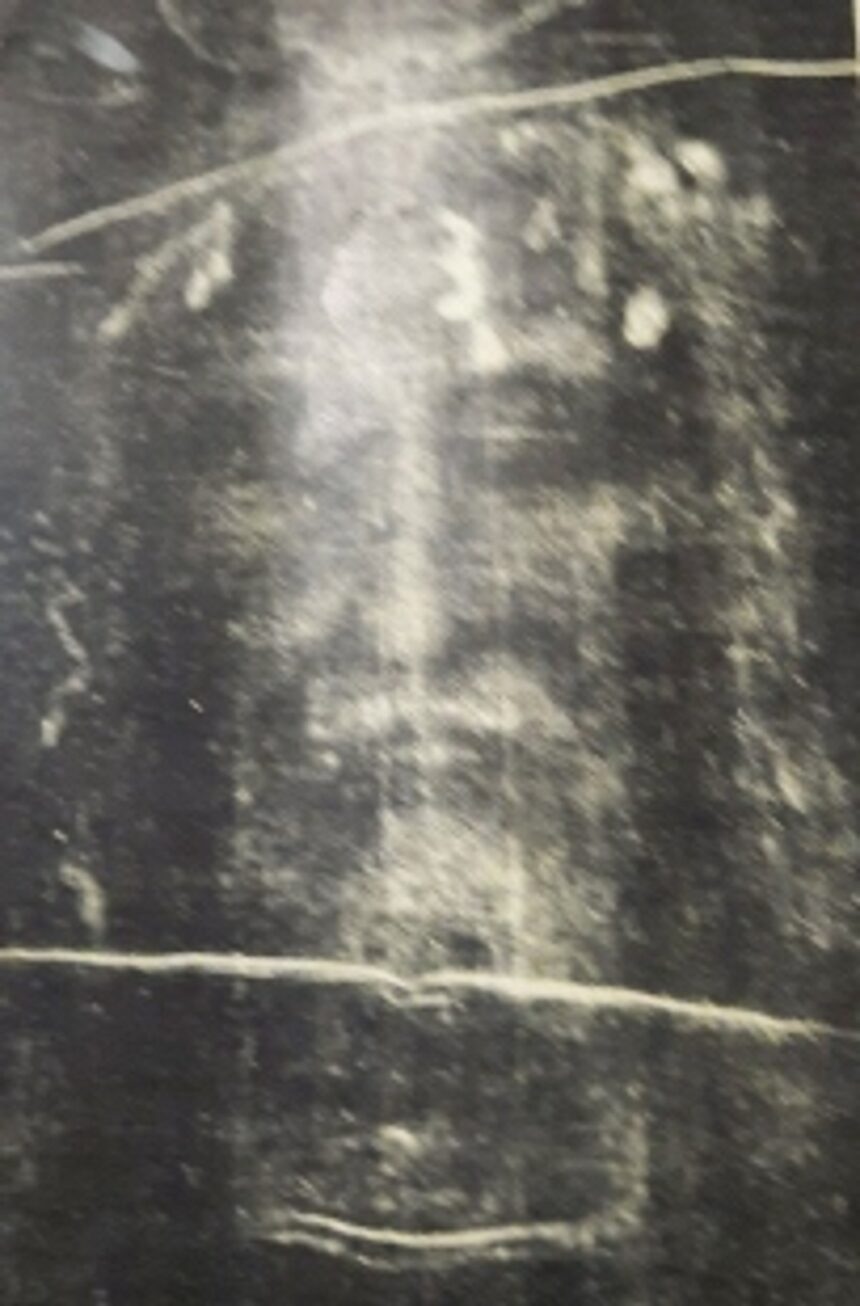
This piece of linen stands as a relic of Jesus. It’s a long piece of cloth that was placed over the body of Jesus Christ after He was brought down the cross. It is 4.3 inch of linen which carries the impression of man lying and his arms crossed over his body. The cloth has been examined by experts and they are of the opinions that the image clearly shows the face of what the artists have depicted as the face of Jesus Christ. The image is said to be a negative.
The shroud is subject of many debates, including it being a forgery. However, the shroud is said to have been taken from Jerusalem to eastern Turkey in Constantinople, and from there by crusaders to Europe. This piece of linen was been under the microscope and clearly studied, revealing that it’s a fabric of the type woven in Palestine during that time. It ruled out that it wasn’t the type of linen woven in Europe in the 14th century.
It the year 1977, criminologist Max Frei, who did pollen analysis on the linen said that the fibres of the shroud showed it was from plants of the type which grow in Turin. He said that the shroud seems to have been exposed to the Palestine desert. The image, according to Eric Jumper, an aerodynamics professor of the US Air Force, the image appears only on one side from and that it appears to be a scorch. Jumper said that the data from the shroud it’s possible to reproduce a three-dimensional image of the face.
The church authorities, including many Popes, do believe the shroud has the image of Jesus Christ, bearing His traditional face and the marks of His death, the crown of thorns. It’s believed that it’s the same that Joseph of Arimathea brought to Calgary to wrap the body of Christ. It was only in 1889 that the shroud was exposed since photography was known to have been invented. Signor Pia (Spainish for Mr) was given to take the photo, and later the photographers agreed with the Signor Pia’s that the bloodstains on the shroud are positive, while the image is photographically a negative. Just like a film that’s not yet printed. Fearing that any further examination of the shroud could possibly result in the deterioration of small parts, the custodians of the shroud have decided that when a better test is devised that would prevent any harm to the fabric, then perhaps they would allow it.
Among the Popes, Pius XI was very much interested in the shroud and believed in its “genuineness”. The next Pope Pius XII, said in 1953, “the Holy Shroud, upon which we behold with deep emotion and solace the image of the lifeless body and broken divine countenance of Jesus.” All Popes have endorsed the veneration of the shroud. However, it should be considered that the approval of the Popes should not mean that it’s compulsory for the faithful to be obedient.
The shroud lies in the Royal Chapel, behind the High Altar in the Cathedral of Turin. It was only taken out on rare occasions from the casket.