Our Spanish experience began when we landed in Madrid at around noon and moved to an
Airbnb apartment at Gran Via, a street in Central Madrid, which I highly
recommend to anyone as most tourist destinations and places of importance can
be done by foot.
The very famous and historic square ‘Plaza
Mayor’, which was commissioned by King Philip II and completed by King Philip
III, comes alive in the evening offering different kinds of gourmet
experiences, drinks and distractions and being there was very entertaining.
A walkable distance from there is ‘Mercado
San Miguel’. A market built of very ornate glass and cast iron, it draws hordes
of tourists. It offers a huge variety of tapas menu like grilled ‘banderillas’,
which are skewers with Campo Real olives, goat cheese, fruits, anchovies,
peppers, etc. Also available is Bacalao with dried tomatoes and veggies, patatas
and Iberian ham sandwiches. What really got me and my husband excited was
eating raw mussels with a dash of Tabasco sauce and lemon. A must try here is
Sangria, vermouth and Albariño wine. We tried a splendid assortment of tapas
and moved on to equally great desserts.
The next day, we visited the Royal Palace
(Palacio Real) of Madrid. Getting there early helps to avoid serpentine queues.
The opulent and intricate interiors coupled with the richness of materials used
like Spanish marble, stucco, mahogany doors and windows are simply jaw
dropping.
A trip to Madrid cannot be complete
without a visit to the Prado Museum (Museo Nacional del Prado). This museum was
patronised by Queen Maria Isabella de Braganza and it was her love for art that
personified into this huge treasure chest of art. We spent approximately five
hours trying to soak in as much as possible till our feet ached and eyes could
not behold anymore. The experience is overwhelming and it kind of takes you
through centuries of social diaries.
The next treat was, of course, a
‘Flamenco’ performance – a gypsy dance that is part of the cultural ethnicity
of Spain. ‘La Taberna de Mister Pinkleton’ sounds funny, right? But this was a
small tavern kind of a place that housed about 10 tables with a raised platform
in front of the tables for the performance. The place had a great bar and the
next two and a half hours were well spent enjoying the Flamenco and its
graceful movements. A Spanish culinary tradition that we enjoyed is ‘Paella’,
which is a rice-based dish with duck or sea food.
The next day, we rented a vehicle and the
four of us left for Granada. We stopped by tiny villages, on the way, and ate
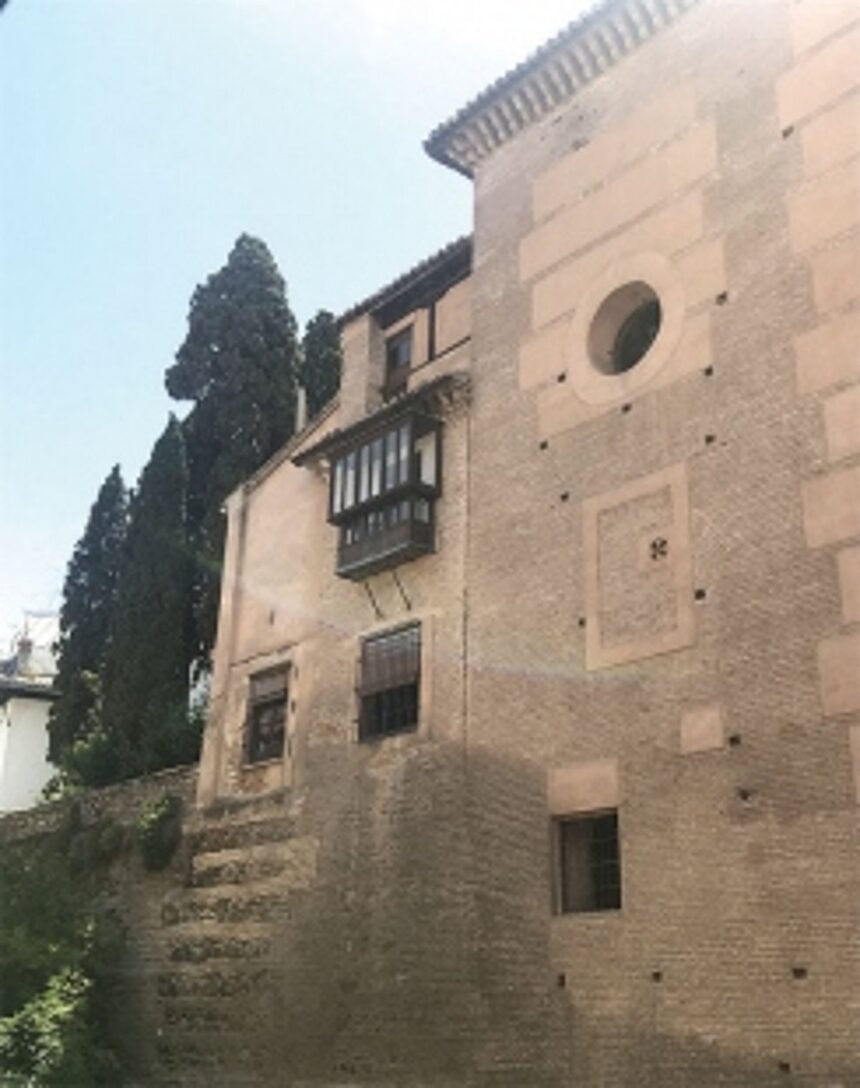
some lip smacking local Spanish food. Granada is a city that seems like an
intense brotherhood between Islam and Christianity. Here the serene Islamic
architecture and Moorish-flavoured lanes and streets walk hand in hand with
very ornate churches, street cafés and bars. The streets exude the very essence
of Europe’s liberal culture and performers exhibiting different forms of art
draw great appreciation from the onlookers. To me, walking in Granada,
especially in Albayzín, along river Dario, was like a beautiful postcard being
unfolded. As you walk uphill through the ancient Moorish quarter, one is
treated to a stunning view of Alhambra, a palace city of the last of Moorish
dynasty Nasrid. Be prepared to walk a good 6 to 7 kms to enjoy the majesty of
the place and its superbly crafted gardens.
an experience I have to share is the visit to Plaza de Toros de
Granada to watch a bullfight. Me being me, I thought this was like our
‘Dhiriyo’ back home. But bullfighting here is a Spanish tradition. The
bullfighting arena is almost one hundred years old and outside the Plaza de
Toros we saw a huge crowd with the old and the young moving around in festive
excitement. The elite were impeccably dressed. Almost all the women carried
beautiful cane bags that held Jamon sandwiches, cookies and hot dogs. It was as
though the whole city had gathered there. The matadors, the picadors and the
banderilleros marched into the bullfighting ring with crowds cheering for them
in an ear-splitting noise. Each matador would fight two bulls (six fights in
all) and the President of the club seated high up in the audience waves with
his handkerchief to pronounce the winner. I felt tormented as I watched the
bulls going down and couldn’t hold my tears back. Well, whether you like it or
not, if you are in Andalusia (a part of Southern Spain), do not miss the
“corrida de toros” (Spanish style bullfighting), which is a signature feature
of Spanish culture.
It was already our sixth day in Spain and we were driving to
Seville. We visited Iznahar, a very quaint village en route to Seville. ‘Bario
del Coso’, a labyrinth of beautifully whitewashed houses dotted along a
crisscross of narrow lanes is a unique characteristic of this town and most of
these houses are adorned with very simplistic yet colourful floral arrangement
on their outer walls. Another less frequented and lesser known town we visited
was Antequera. This medieval town literally takes you back to ancient times. We
drove uphill to the highest point in town. The delicate intricacy of the spires
of the many churches and walls of the towers of the Moorish fortress juxtaposed
against the setting sky was a sight to behold. We were pretty baffled by the
Dolmens, dating back to the Neolithic and Bronze ages, just outside Antequera.
The Dolmens are actually burial mounds and there is evidence of the concept of
the entire community building these mounds, which are now a World Heritage
Site. Gothic churches and baroque bell towers are also worth a visit.
We weren’t lucky all the time, however. We drove to Jerez de la
Frontera, which is known to breed the best horses and produce the best sherry
in Europe. We drove to the famous Royal Andalusian Riding School to catch the
equestrian show but we were late and the academy was closed. A hectic drive to
‘Tio Pepe’, the finest winery in town, added to our dismay, as this too was
closed by the time we reached there.
To me, Granada is a romantic affair, but Seville is seductive.
It has a beautiful blend of the old and the new with the Catedral de Granada
and the Catedral de Sevilla as the jewels in each crown, being immense,
awe-inspiring in scale and grandeur and extremely ornate. The audio guide is a
must, without which, I do not think anyone of us would know what we were
looking at.
Walking up the Giralda (the bell tower) is quite something and
what always struck me is the “never give up” attitude of the Europeans. The old
with their knees buckled and some with even crutches climbing up the multiple
steps of the tower made me forget all my aches and pains.
Later, we literally soaked ourselves in Sangria, the local
Spanish drink made either with red wine or white wine as the base ingredient,
with fruits. Spanish food is mainly a Tapas menu with the main course being
steaks and fish. We tried a large number of varieties from deer meat to grilled
octopus and a number of fresh crunchy salads. I loved their Gazpacho, which is
a cold soup made from blended vegetables and mild herbs.
From
Seville, we also visited Cadiz, a very famous and charming port town about a
hundred kilometres away. From Seville, we later proceeded to Portugal by bus
which is a three-and-a-half-hour journey. To me, Spain, with its medieval
towns, churches, Moorish architecture, castles and walkways and, above all, its
people, is like a beautiful song that one can keep listening to, without
getting tired.