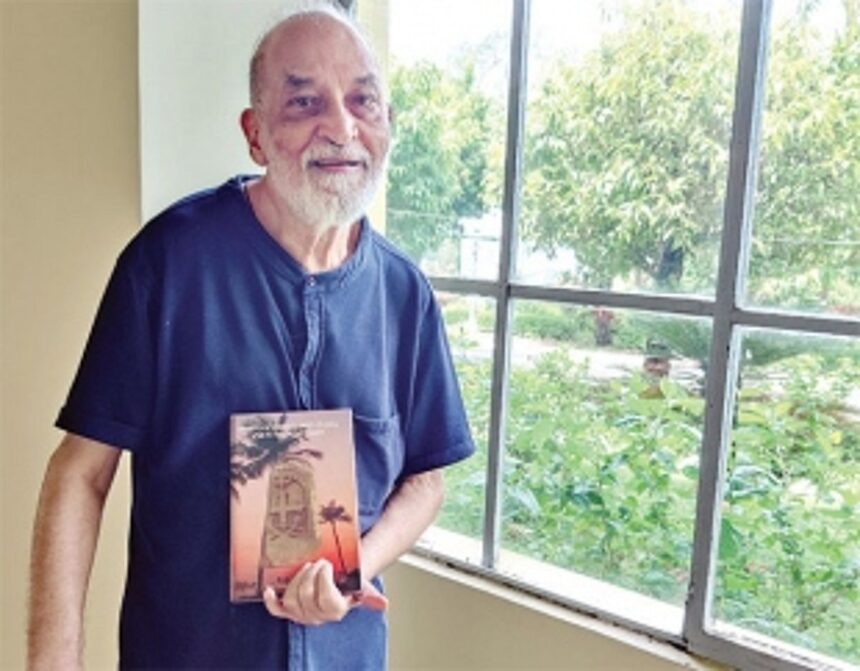
St Thomas, the apostle of Jesus Christ, arrived in Goa in 52 CE before leaving for his mission
to Kerala and Tamil Nadu in South India, says historian Fr Cosme Jose Costa.
The findings are a conclusion after
decades of study by church historians and researchers and are published in the
books Apostolic Christianity in Goa and in the West Coast and The Heritage of
Govapuri, written by Fr Costa.
While common belief is that Christianity
came to Goa with the arrival of the Portuguese in 1510, the discovery of a
cross on the banks of the River Zuari at Agassaim, dating back to the 6th
century was an archaeological testimony to the existence of pre-Portuguese
Christianity in Goa. The cross had equal arms and had an inscription in
Pahlavi, a language used by Persian traders. It was discovered by Fr Costa in
2001 and is now kept in the museum at the Pilar Seminary.
Spurred by this discovery, Fr Costa set
about collating evidence and writings from the 2nd century till the 20th
century to propound his theory that Jesus’ apostles St Thomas and St
Bartholomew traveled to India in the 1st century of the millennium. Following
the apostolic tradition to preach first to the Jews, both sought to first carry
the Gospel to the Jewish communities that had settled across the western coast
of India.
“It is a fact that Christianity came to
India long before it went to Europe, in the very first century AD within 30
years after the death of Jesus Christ. Christianity was introduced in South
India by St Thomas and probably in Western India by St Bartholomew, both of
them immediate disciples of Jesus Christ,” states Fr Costa.
So did St Thomas come to Goa? “Yes,”
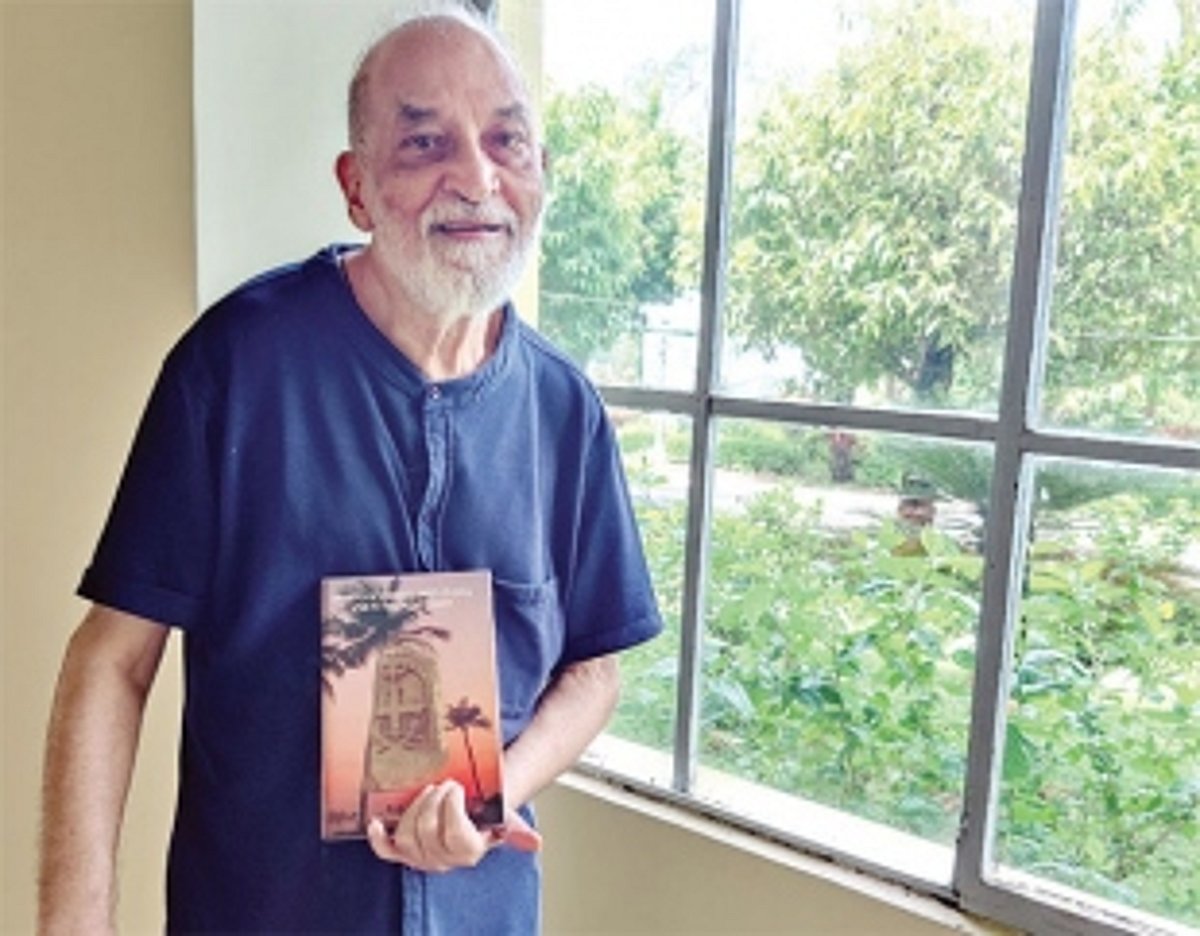
replies Fr Costa, citing sources and references in his books. The 82-year-old
priest is a professor emeritus of the History of Christianity at the Pilar
Theological College and curator of the Pilar Seminary museum that has artifacts
found in Goa from Roman times.
To establish his findings, Fr Costa first
provides a wider perspective that Goa was visited by Roman ships from or after
30 BCE. He also points out that the ancient port of Gopakapattana, that lies in
the present- day village of Goa Velha, was an important trading centre from the
time of Gudea, the ruler of the city state of Lagash of Sumer, Southern
Mesopotamia (2143-2124 BCE).
“Goa was situated on the trade route from the Persian Gulf to
Malabar (South India) and was frequented by traders from among the Greeks,
Romans, Persians and Arabs, respectively, through the centuries. Goa was known
by different names to these traders. Both St Thomas and St Bartholomew availed
of Roman ships frequenting the Indian ports,” says Fr Costa.
Fr Costa further draws upon research previously carried out by
Reverend Dr Hubert Olympius Mascarenhas (1903-1973) of Colvale, North Goa, who
began studying the origin of Apostolic Christianity in India while he was a
student in Rome in 1930.
Both Fr Mascarenhas and Fr Costa refer to the book Promptuario
das Definicoes Indicas written by Monsignor Leonardo Paes, published in Lisbon
in 1713, that states that St Thomas landed in Goa and baptized two persons.
The Promptuario quotes a local tradition from the Flos
Sanctorum: Vida de S. Tome, in which it mentions that St Thomas baptized a
couple in Goa. The man took the name ‘Dionisio’, while his bride took the name
‘Pelagia’. Both are supposed to have died martyrs for the faith. Dionisio was the
son of a local ruler Mantrazar. “The rulers of Vijayanagar (Bisnaga) claimed
that Mantrazar was their very ancient ancestor. It is possible that Dionisio
and Pelagia are translations of original Sanskrit names into Portuguese,”Fr
Costa states.
Quoting a second source that refers to St Thomas’ evangelical
work in Goa, Fr Costa’s research states: ‘According to the Jesuit Francisco
Souza, a metal plate bearing an inscription in Kannadi characters was shown to
Portuguese officials in the city of Goa (Old Goa) with its translation in
Portuguese in the year 1532 AD. The metal plate speaks of Mantrazar, a governor
of Goa (of the Satvahana empire) and his son and daughter-in-law, who confessed
the truth of the existence of only one God and professed their faith in the
mysteries of the Trinity and the Incarnation, thanks to the teachings of St
Thomas the Apostle.’
In 1930, Fr Mascarenhas was a student in Rome where he
discovered the original letters of St Francis Xavier. In his letters to St
Ignatius of Loyola, St Francis writes about the great devotion of Christians in
Goa to St Thomas.
‘It is four months and more that we arrived in India at Goa,
which is a city wholly of Christians, a sight to be seen…Since the people of
this land are very dedicated to the glorious apostle St Thomas, he being the
Patron of the whole of India, I beg that His Holiness should grant a plenary
indulgence on the saint’s feast day…so that there may be growth in devotion to
St Thomas among all his devotees…,’ states the letter from St Francis to St
Ignatius.
“Who were these Christians who had great devotion to St Thomas
in Goa? Could they be perhaps the descendants of pre-Portuguese Christians
(made by St Thomas, St Bartholomew, St Pantenus, St Jordanus de Severac and
others), who by now had come to be designated by the generic name of St Thomas
Christians?” Fr Costa asks.
He refers to Fr Mascarenhas’ writings in two issues of the New
Leader in 1970 where Fr Mascarenhas argues that the people whom St Francis
referred to were the St Thomas Christians of Goa. Fr Mascarenhas then recalls
that his own grandmother hailed from the village of Aldona in North Goa, who
had told him that as a young girl she had seen a stone-carved equal-arm cross
near their house on the hill without any image carved on it. ‘The people were
hiding such crosses to avoid their destruction by the Portuguese soldiers who
came looking out for heretics,’ Fr Mascarenhas’ states in his article.
So, could there have been a community of St Thomas Christians or
devotion to the apostle in Aldona before the Portuguese arrived in Goa?
Ironically, the parish church in Aldona is dedicated to St Thomas. This writer
spoke to Hector Fernandes, former president of the Comunidade Fraternal de
Aldona, to inquire how St Thomas came to be the parish’s patron saint.
“Whether there were St Thomas Christians or devotion to the
saint in Aldona in pre-Portuguese times is not known to us. But one thing we
know is the oral tradition, passed down over the centuries, that when the
Franciscan missionaries were building the church in Aldona in the 16th century,
they consulted the gaunkars (native villagers) as to who would they want to
dedicate the church to. It was the gaunkars who chose St Thomas and it was done
accordingly so,” Fernandes said.
“There is a cross at Souza vaddo-Lozar in the ward of Quitula
that doesn’t match any of the other crosses in Aldona. Its arms are of equal
length and the design of its arms may match the design of the St Thomas cross.
The cross is erected on comunidade (community) land. The site is near the
Aldona river and was a place where goods were brought on the river trade route.
No one is aware when the cross was built or who built it,” said Fernandes.
Unearthing St Bartholomew’s work in the
Konkan
Unlike St Thomas, the works of St Bartholomew in India are
almost not known and Fr Costa’s book seeks to unearth more evidence about this.
He cites writings from the Fathers of the Church including
Eusebius of Caesarea (4th century) and St Jerome (5th century) which state that
when St Pantaenus visited India in the 2nd century, he found that the people
already knew Christ through the preaching of St Bartholomew who had left them
the book of Mathew in the Hebrew script.
Fr Costa further references Greek traditions that say St Bartholomew
traveled to a place called India Felix. The term Felix is a translation of the
Sanskrit word Kalyana. There is a place called Kalyan, north of Bombay (Mumbai)
and a village called Kalyanpur near Mangalore, Karnataka.
Fr Costa further investigates devotion to St Bartholomew in
Kalyanpur near Mangalore and concludes that St Bartholomew landed in Kalyanpur
in the south and travelled up the western coast, including Goa, to reach Kalyan
near Mumbai, where he might have been martyred.
So what traces exist of St Bartholomew’s mission in the Konkan
and Goa? Fr Mascarenhas – who was also a freedom fighter and who was even
offered the post of Ambassador of India to the Vatican by India’s first Prime
Minister Jawaharlal Nehru but declined the offer – has left his thoughts in a
booklet titled Konkannachem Apostolk Kristanvponn (Apostolic Christianity of
the Konkan) written in Konkani using the Kannada script.
Fr Mascarenhas writes that the name of St Bartholomew has come
down to us from apostolic times to the present on the Konkan coast as ‘Betal’
and he is also venerated by Hindus. He also refers to the village Barkur, which
is close to Kalyanpur, as originating from St Bartholomew’s name.
To corroborate Fr Mascarenhas’ statements, Fr Costa studied the names
of some villages in Goa and found they probably correspond to names of Jewish
places. For example, Betpate, the Konkani name for the village of Betalbatim in
Salcete, South Goa, corresponds to Bethphage in ancient Israel. “The first
parish church on the island of Chorao, constructed in 1529, is dedicated to St
Bartholomew, while the church in Betalbatim, founded in 1630 dedicated to Our
Lady of Remedies, has a side altar dedicated to St Bartholomew…” writes Fr
Costa.
So what happened to the early Christian communities on the
Konkan coast including Goa?
‘In the first few centuries, there were no Christian churches
and no priests in the Konkan, or as Fr Mascarenhas says, there was no
difference in the art of Hindu and Christian places of worship, except in the
cult. Due to the vicissitudes of the times, long distances that separated these
Christians from the other centres of Christianity in India and abroad, conquest
of their region by dynasties that were indifferent or hostile and above all,
lack of Christian priests to minister to their scattered communities, many of
these apostolic Christians might have reverted back to Hinduism, preserving
however, many Christian ideals and principles in their way of life.
‘Others might have persevered in their beliefs, around their St
Thomas crosses, till the coming of the Portuguese, following different rites,
mixed with superstitions and aberrations that the Portuguese could not
tolerate. So the ages-old Christian shrines or St Thomas crosses were
ruthlessly broken and substituted with Latin crosses and the Christians
absorbed into Roman Catholicism,’ writes Fr Costa.
Fr Costa also quotes Fr Mascarenhas’ article published in The
Examiner, a weekly published by the Archdiocese of Bombay: ‘The Inquisition
chewed up every vestige of Apostolic Christianity not only in Goa but a good
way down the coastline to South India. In Goa, nothing has remained except the
faith of the simple people, not only in the Latin cross but also in the
Oriental Apostolic cross of red weather-worn, granite stone, with all four arms
equal.’
‘The writer D F Dantas in his book Gomant Kontha, written in
Konkani in 1897, has recorded that these Oriental Christians were absorbed into
the Latin rite, and those who did not want to give up their old rite and their
Indian names, dress and customs were persecuted and many of them, especially
from Aldona, ran away and settled in Kalyanpur and Mangalore’, Fr Costa’s
research further states.
‘The
Portuguese missionaries did yeoman service in spreading the message of the
Gospel in the East…. However, the methods employed by the Portuguese
Inquisition were questionable and far removed from the spirit of the Christian
Gospels of love, compassion, forgiveness and understanding,’ writes Fr Costa,
who urges for inter-religious dialogue and for researchers to take further the
study on Apostolic Christianity in Goa and India.