The quiet little village of Adsulim; nestled in the
panchayat area of its more famous sister village Benaulim; has an illustrious
Italian resident tucked away in its lush surroundings.
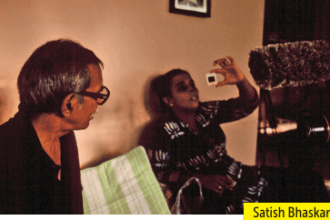
Dr Giuseppe Marraro (Giuseppe is pronounced Josèpé and
is Italian for Joseph) is known to colleagues and friends as Pippo. At the
shops and restaurants in Benaulim, the 80-year-old is affectionately called
Papa.
Yet, there is nothing retiree about Marraro.
Since the start of this century, this native of
Regalbuto in Sicily has spent each year shuttling between Italy, India and
China. South Goa is his home away from home since 2004 and serene Sernabatim is
his “favourite beach in the world”.
In a medical career that is in its golden jubilee
year, Marraro has served in various roles, including director and chief of the
department of anaesthesia and intensive care at hospitals in Milan and Merate
in Italy.
He has also been a professor—associate, adjunct,
visiting, emeritus—at medical institutes and universities across the world and
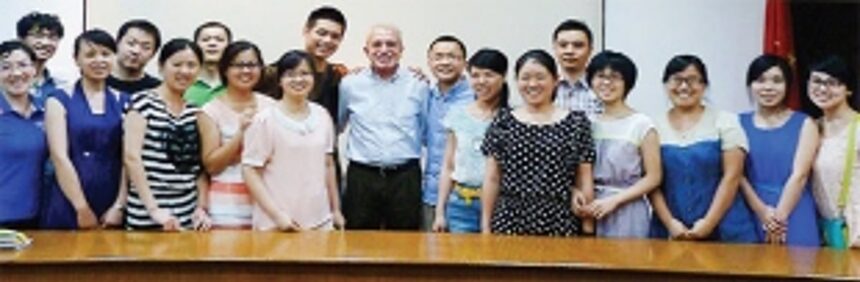
he currently works with young doctors in medical institutions in Quanzhou
(China) and Navi Mumbai (India) where he has helped set up the medical
simulation centres for training in ventilation.
His 11-page, concisely-worded curriculum vitae of past
and present work, achievements, accolades, and clinical and experimental
researches, including the development of the ‘Marraro bilumen tube’, reveal the
doctor’s intense desire to constantly upgrade his expertise.
“The more experience a doctor has in the medical field
the more it will benefit patients, because even if the doctor doesn’t know
something, he or she will know someone who does,” says Marraro, over lunch at
the home of his friends, Cristo and Shanti da Costa.
Speaking from Mumbai, Dr Nandini Dave, a paediatric
anaesthetist, says Marraro’s enthusiasm and energy are infectious. A senior
consultant at SRCC Children’s Hospital, Mumbai, Dave first met Marraro during a
workshop in Mumbai 10 years ago and went on over the years to teach with him at
the DY Patil School of Medicine, Navi Mumbai.
“His vast knowledge of his field is complimented by
his intense passion for teaching,” she says, adding that Marraro has no
boundaries, “he connects with everybody as a friend”. “He wears his heart on
his sleeve. He has no two sides to his personality; he says things, whether
good or bad, straight.”
That straightforwardness comes out clearly as Marraro
speaks passionately about his life.
Born on January 26; exactly 10 years before India
became a Republic; Marraro was three when American troops landed in Sicily
during World War II. “I remember how they would distribute chocolates in an
attempt to befriend the locals. I remember my mama helping to wash the soldiers’
clothes and cooking for them,” recalls the younger of two brothers.
Though interested in engineering, Marraro was pushed
into medicine by his father, as his maternal grandfather and an uncle were
doctors.
Apart from obtaining his medical degree and specializations
in Anaesthesiology, Puericulture (Neonatology), and Paediatrics from the
universities of Catania and Pavia, he also studied during his 18-month
compulsory military stint in medical institutes in Florence, Venice and Verona,
developing in him a desire to move beyond Sicily.
The move to Milan came soon after he finished his
studies and he joined the then 26-bed, S. Carlo Hospital that offered the first
neonatal ICU in Italy. His thirst for research and his commitment as a
doctor—he describes himself in that phase of his life as a “boiling man”—led
his superiors to send the then 38-year-old to Merate as chief of department of
the then brand-new, 100-bed L. Mandic Hospital.
In Merate, Marraro, a bachelor, chose to adopt
12-year-old Claudio Spada, and the latter, an information technology
specialist, has been his father’s biggest support through his medical and
personal life.
While Marraro’s career graph stayed upward throughout
his working years, the thirst in him has remained unquenched and thanks to contacts
built over the years he has been invited to institutions across the world to
take workshops and teach.
His first trip to India was in 1992 and he has worked
in hospitals from Vellore to Delhi. While he loves Goa, which was suggested to
him by an Indian friend as a destination to go to for a break; Mumbai—with its
intensely migrant-built vibe—reminds him of Milan, he says.
Meanwhile, like many foreigners stuck in Goa through
the Covid-19 pandemic, Marraro too has adjusted graciously. While his rented
accommodation, in past years, has been “perfect” for his short stints of stay,
in the lockdown the erratic power supply and consequently poor internet
connectivity, among a few other issues, have been a “frustrating experience”.
For apart from being a teacher, Marraro is also
associated with Milan University’s ‘Healthcare Accountability Lab’, is an
associate editor of Paediatric Critical Care Medicine, a member of editorial
boards and a reviewer of several scientific medical journals.
With a pandemic underway, the researcher has also been
busy collecting data on the disease and its treatment from across the world. “I
have two papers that are ready to be published,” he says about his findings,
politely refusing to divulge the contents of the same.
Prod him and he says the pandemic has taught the
medical fraternity a few important lessons, including the need for more
attention and support to intensive care and emergency care facilities in
hospitals. “Over the years, these sections have been often sidelined,” says
Marraro.
There’s also a need to review the various
trial-and-error treatments adopted across the world that left some survivors
with long-term issues and a need to understand why the pumping in of money,
equipment or new hospital facilities did not necessarily translate into better
tackling of the crisis, he says.
“Understanding
these things will ensure that we don’t make these mistakes in the future,” says
Marraro.