No festival in India is complete without sweets, usually distributed as a sign of joy and
happiness. Similarly during Diwali, sweets are an important part of the
beautiful festive season, spreading positivity and enthusiasm. Just like the
vibrant multi-coloured rangoli that decorates the entrances of the houses,
there is nothing quite like the trays laden with different varieties of Diwali
sweets. Most of these are prepared at home or bought from those who give the
sweets an authentic and home-like taste.
Poha (beaten rice) is the main dish prepared for Diwali.
Shivanee Bhogate, a resident of Mapusa,said, “Sweet Poha is believed to be Lord
Krishna’s favourite, and since he killed Narakasur, the evil, this sweet is
made to portray positivity and the good.”
“Poha, however, is cooked in different ways,” informed Aisha
Kalangutkar, from Mapusa, adding, “Batat phav (potato poha), sakar
phav (sugar poha), nallachya rossatle phav (coconut milk poha), and dudhatle
phav (milk poha) are the different types of poha that are made. Apart from
this, there are several other sweets that add to the enthusiastic spirit of the
festival,” she explained.
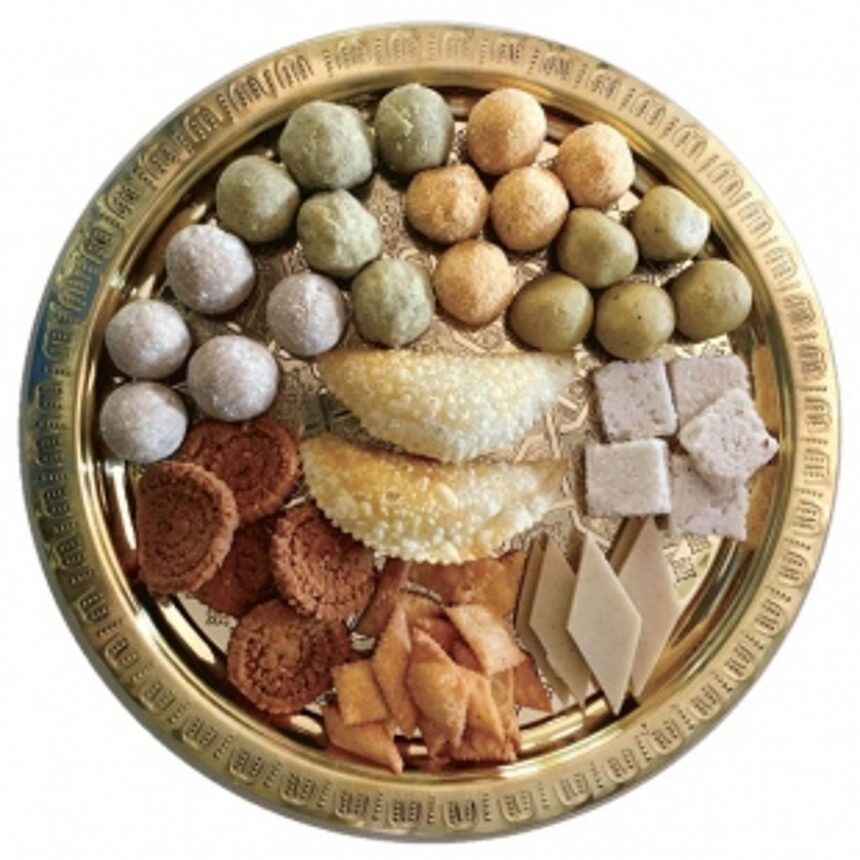
The other sweets made and distributed among family and friends
are Shankarpali, Phenoryo, Laddoos made of Moong, Rava, Besan or
flour, Kaju katli, Nevri, Chakri, Dalichi Kapa, Nallachi Kapa and many
more. Kaju katli, loved by most people, is thin and of a smooth texture,
which melts in the mouth with the goodness of cashews and sugar, but don’t
mistake it with Kaju Barfi which is almost similar to thekaju katli, but
is richer in taste and softer in texture. Another most loved and largely
distributed sweet is the besan laddoo, which is made from powdered
sugar, roasted gram flour and ghee. A specially made sweet for Diwali is the shankarpali,which
are slightly flaky and crisp fried cookies. Nevryos too are widely
distributed; these are deep fried pastries of whole wheat flour, stuffed with
grated coconut, jaggery and dry fruit.
Diwali
sweets were one of the highlights to the festival and complimented the diyas
that were lit for the celebration. No matter which religion you belong to, the
sweets are distributed to all, which highlights the fact that sweets can indeed
unite, spread love and happiness among fellow human beings, thus fulfilling the
purpose of Diwali. To conclude, Aisha Kalangutkar said, “To celebrate all that
is good and positive in our otherwise dull, grey lives, we all need sweets to
brighten up the festival of Diwali and enrich our lives with laughter and some kaju
katli.”