Vascokars have been celebrating the Damodar
Bhajani Saptah festival for the last 116 years. Interestingly, this particular
Shree Damodar temple of Vasco has a unique story behind it. According to
legend, in the year 1898, there was a plague epidemic in the city. It was at
that time of despair that the people of Vasco turned to Lord Damodar, an
incarnation of Lord Shiva, for help. They went to Zambaulim temple, the origin
of Lord Damodar, and from there, they took back a coconut (shrifal) in the form
of ‘prasad’ so that it may be installed for worship in Vasco.
Initially, it was installed at the Old Mata
High School in Baina before being shifted to the Joshi residence, a house right
in the middle of the city that is located along the ‘Swatantra Path’. An
eminent businessman in his time, late Anant Subrai Joshi, the father of late
Subrai Joshi, donated a part of his residence to install the idol of Lord
Damodar.
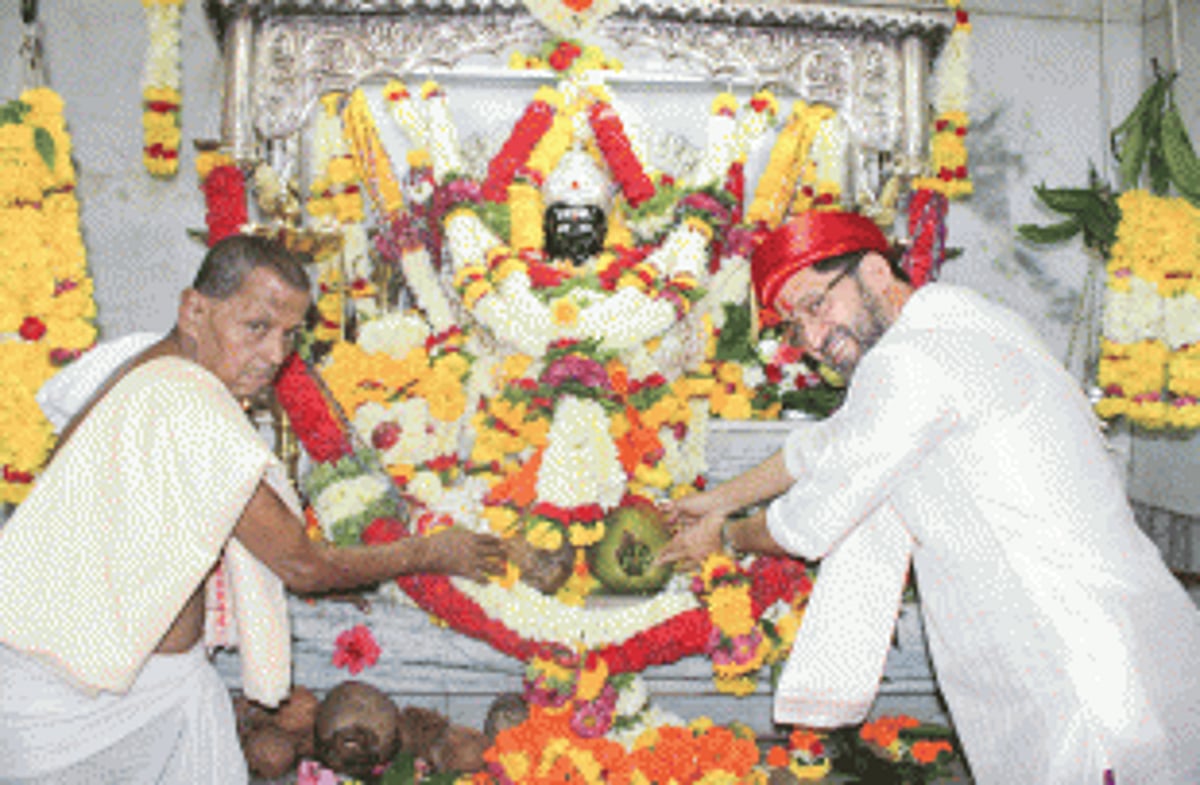
Since then, the traditional ritual of
installing a ‘shrifal’ at the lotus feet of Shree Damodar has been performed by
one of the elders of the Joshi family. In recent years, this ritual is being
performed by Paresh Joshi. When asked if the present generation of the Joshi
family will carry forward the tradition, Paresh’s son Vibhav Joshi asserts, “We
want to continue the tradition in the years to come too. Not only our
generation, but we strongly feel that the future generations too will do the
same. It is a blessing of Lord Damodar on our family.”
Vasco resident Sagar Naik says, “It is a
matter of pride to have a part of one’s house devoted to faith, where all
people come to seek blessings from Lord Damodar. The Joshi family is truly
privileged and blessed.”
The Vasco Saptah commences on the day after
the festival of Nagpanchami. “Though ‘saptah’ means a week-long festival, in
Vasco, it concludes within a day. Bhajani mandals perform non-stop bhajans to
invoke Lord Damodar,” says Paresh Joshi, President of Bazarkar Saptah
Committee, adding, “But the fair continues for a week. In olden days, due to
the poor transport system, people had to travel to either Bicholim or Mapusa in
order to buy brass or copper utensils. Hence, the families of soon-to-be-wedded
girls would eagerly await this fair to buy all these items. Back then, most of
the stalls erected were of commodities useful for day-to-day life. Stalls of
‘kadiyo bodiyo’ and grams were and still are an integral part of any
festivity.”