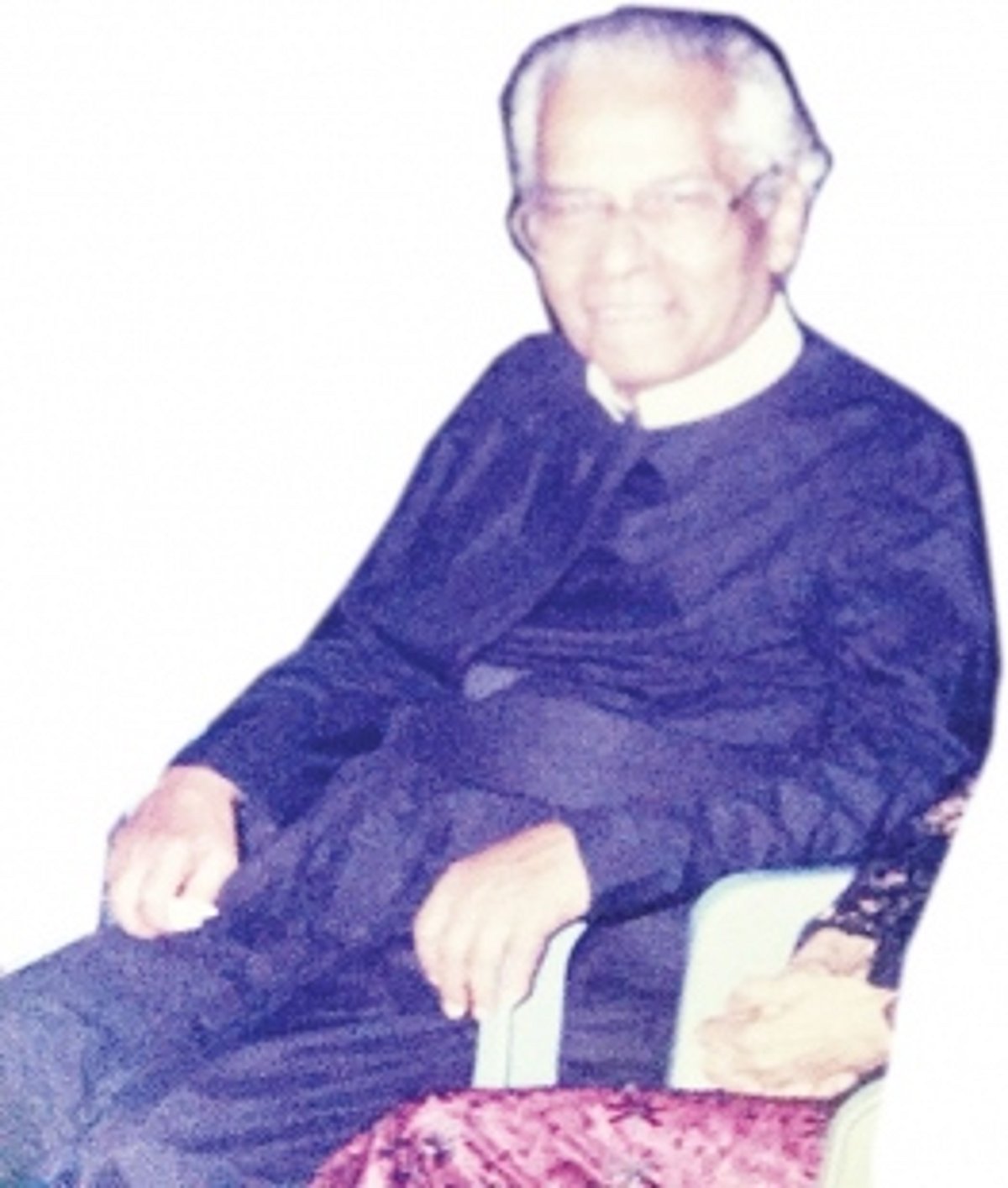
Percival Noronha was laid to rest ending yet another glorious
chapter in Goa’s chronicles of chroniclers. And in the assembly of people, most
of them white haired, with each strand of silver, symbolic of years spent on
this land, were fellow preservers, historians, writers, journalists,
professors, musicians, artists and lawyers.
By the time he was in his nineties, he had seen all he had to
see. And when his hearing started faltering and failing, he had actually seen
and heard it all, confining himself to his cavernous and charming home in
Fontainhas, with his handwritten notes, books and papers, immersed in a world
he never quite got out of, the Panjim of the forties and fifties, a charm
offensive that consumes you for life.
At a time when memory disks were somewhere up in the clouds, and
Google drives and cloud computing were subjects of aliens, people like Percival
Noronha of Panjim, Rafael Viegas of Curtorim and even Valmiki Faleiro of Margao
did the good old thing diligently. Made notes, kept newspaper cuttings,
preserved old magazines and newspapers and literally had hard copies (that’s
the only copy they ever had). And what they achieved in the process was
priceless. They became record keepers and owners of the first drafts of history
as they were being made. There can hardly be a debate that Goa saw changes that
would define its future and its identity forever at a time when record keeping,
relatively speaking, was at its most primitive but arguably most pure. The
handwritten notes, in pencil or ink, written with fountain pens, have more
value as documents than carefully and digitally chronicled (albeit more
convenient) records of today. Rafael is an aggregator and collector of
information, including perhaps each copy of The Illustrated Weekly of India, so
carefully kept that the staff of the weekly used to call him for records and
information about stories and information in their own magazine. Percival was a
true chronicler, making notes and drafting information in the form of articles
or handouts, including for Heads of State and Government who came to Goa for
the Commonwealth Heads of Government Meet (CHOGM) in Goa.
As Percival was laid to rest, with quite a few eyes moist, lumps
in throats, the feeling was that of a fall of a brick in the old wall. Each of
these jolly good people became a part of the edifice of the formation of Goa,
each part which enhanced the sum (and substance of Goa) and yet each, on their
own, a sum of all the good parts that Goa had. Rafael, in his early nineties,
and Percival can be hand-picked due to their seniority and till Percival passed
away earlier this week, were two of this very rare breed, who kept ‘noting’ or
collecting Goa’s records, information, facts, almost desperate to be the
lighthouses, watchdogs or insurances against the memory of Goa ever fading away
from the landscape of civilisation. And yet there are more. There must be more.
Remnants of the past, who live to preserve till they, in the natural passage of
time, perish, leaving behind imprints like Percival surely has.
Among those at Percival’s funeral and others who couldn’t make
it, were some of those who record their Goa in a manner only they can. Vasco
Pinho, is as iconic as his photographs. He is more than a photo-historian.
Photographing Panjim’s jardins to the back alleys, from the cobbled streets to
its churches and chapels and historic structures, each a remnant and a reminder
of her European past and its very Latin in spirit present.
Pinho’s written word is intrinsic to the research and knowledge
of Panjim as his photographs are. In his “Snapshots of Indo-Portuguese
History-1 ‘Pangim’”, one of his several books, let’s look at just one paragraph
which gives a sense of attention to detail of every incident of importance and
the meticulousness of its recollection:
“For the people of Goa, the Twentieth Century began on a tragic
note. A major disaster occurred on December 3, 1901, at 7:00 a.m. The motorized
launch ‘GOA’ capsized while crossing the Mandovi from Verém to Pangim. Of the
estimated 165 passengers travelling by that launch, 81 met with their watery
grave. The passengers were on their way to Velha Goa’s Feast…On December 3,
1902, a cross was erected on the southern bank of the Mandovi, near the Caes
dos Gujires, in memory of the 81 persons who had perished in that disaster.”
(Sourced from Dale Luis Menezes’ blogpost “History of ‘Pangim’ in snapshots”
While it is Percival’s passing that has triggered remembrances
and introspection of these chroniclers, the fact that Goa’s capital, Panjim, is
now 175 years old is reason enough to acknowledge the contribution of those who
create, preserve and record information about one of the best towns in the
world. Of these 175, Percival lived through 96 of them.
Very few
of Goa’s or Panjim’s chroniclers of history would have had a formal degree in
history. Nor are their books taught formally in departments of history. But in
their recording of ‘bricks on the wall’, they will forever be the showstoppers
on the ramparts of history, not just of a town or a land, but of a civilisation
that was and continues to be so unique.