Elsa Angel Rose
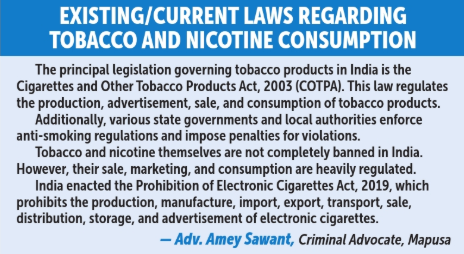
Existing/current laws regarding tobacco and nicotine consumption

E-vapes are arriving in Watermelon Ice, Strawberry Mint Piña Colada, Banana Taffy Freeze, and more alluring flavours. Sadly, for many youngsters and adolescents who are ignorant of the health hazards of these e-vapes, they are part of their lifestyle. They appear cool in their peer groups with these e-vapes, and discussing which flavours they like and more has become a conversation piece.
Unlike in earlier days, when nicotine and other tobacco products appeared in dull and mundane packaging and featured lacklustre marketing, manufacturers have taken a 180-degree turn in this regard. The e-vapes are appearing in sleek designs and mouth-watering flavours, wherein the device turns into a “high-status” tech gadget as well. “The industry has pulled off a massive design pivot. They’ve completely decoupled nicotine from the old, dirty image of a cigarette, no harsh smoke, no ash, no yellow stains. If you look at modern disposable vapes or nicotine pouches, they look exactly like sleek USB drives, premium highlighters, or minimal tech accessories. They easily slide into a student’s pencil case or pocket without raising flags for parents or teachers,” said Anurag Gupta, senior Marketing expert from Porvorim.
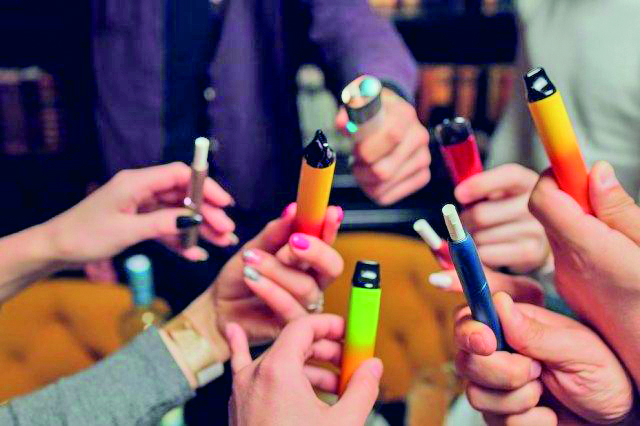
Then there is sensory engineering. As long as a teenager feels that he or she is just inhaling flavoured liquid, they believe they are safe, which is the perception. All the e-vapes, by arriving in flavours like bubblegum, mango ice, dessert blend and more, bypass a young person’s natural and biological aversion (coughing reflex) towards the vape and become an incredibly smooth onboarding ramp. “By flooding the market with candy-shop flavours, they completely mask the harsh chemical taste of nicotine. Add in the vibrant pastel gradients and neon packaging you see all over Instagram, and you realise these aren’t being sold as tobacco products; they are being sold as trendy lifestyle accessories,” Anurag shared.
World No Tobacco Day, 2026, theme is “Unmask The Appeal: Countering Tobacco And Nicotine Addiction.” The theme emphasises the need to unmask the deceitful and often alluring appeal of harmful tobacco and nicotine products when they are presented in a variety of flavours and packaging. New data highlight the alarming extent of the problem: at least 40 million children aged 13–15 worldwide currently use one or more tobacco products. In countries where data are available, children are, on average, nine times more likely than adults to vape.
The marketing machine behind e-vapes
Since direct marketing or advertising of tobacco is banned in India, ‘surrogate marketing’ or ‘shadow marketing’ is done for these products. “In the vape and synthetic nicotine space, their entire popularity relies on this exact deception, specifically, the ‘harm-reduction’ illusion. The industry aggressively pushes the narrative that these are clean, ‘95% safer’ alternatives meant for adult smokers trying to quit. But that adult-focused framing acts as a massive psychological loophole for kids. Adolescents don’t think they are ‘starting to smoke.’ They think they are just inhaling flavoured water vapour,” said Anurag. He added, “To a teenager, ‘tobacco-free’ is easily misread as ‘addiction-free’. They don’t realise that synthetic nicotine is chemically engineered to hit the brain faster and harder. The deception lies in selling a heavy chemical dependency disguised as a harmless, tech-enabled lifestyle trend.”
Vape companies cannot use billboards or other traditional media outlets to promote their products; instead, they move to dark digital ecosystems to market and advertise them. Peer-to-peer influence, online micro-influencers and lifestyle vloggers, unindexed online landing pages (Telegram channels or private WhatsApp catalogues), and other forms of shadow marketing are the major routes used to market their products.
Extremely addictive nicotine meets dopamine-craving young minds
Nicotine is one of the most addictive substances known to mankind. It seems even more attractive to young minds who are in pursuit of a dopamine rush, eager to “experience life,” and on a journey of self-discovery. “When tobacco is smoked, chewed, or inhaled through vaping devices, nicotine rapidly reaches the brain and triggers the release of dopamine, a chemical associated with pleasure, reward, and motivation. This creates a temporary feeling of relaxation, alertness, or satisfaction. With repeated use, the brain begins to depend on nicotine to maintain these feelings. Over time, users develop tolerance and require increasing amounts of nicotine to achieve the same effect. When nicotine levels fall, withdrawal symptoms such as irritability, anxiety, restlessness, difficulty concentrating, and strong cravings occur, making it difficult to quit. This cycle of reward and withdrawal is what drives nicotine addiction,” explained Dr Sredharan M, Consultant of Surgical Oncology, Manipal Hospital.
Incrceased sensation seeking and exploration can be considered are two hallmarks of adolescence. “The growing adolescent brain is particularly responsive to rewards and immediate gratification. Nicotine activates the brain’s dopamine-based reward pathways. Additionally, adolescents are also in the process of discovering their identity. Some may perceive vaping as a symbol of maturity, independence, rebellion, or belonging to a particular social group, thereby increasing its attractiveness”, explained Kripa, RCI Licensed Clinical Psychologist, Institute of Psychiatry & Human Behaviour, Bambolim. Adolescents also tend to have the conviction that vaping is less harmful than smoking. This optimism bias leads them to underestimate potential health risks and thereby increase the likelihood of experimentation and use.
| Common Tobacco/Nicotine-Related Health Risks | Benefits of Quitting Tobacco |
| • Cancer: Causes cancers of the mouth, throat, lungs, and other organs. | • Within 20 minutes: Heart rate and blood pressure begin to improve. |
| • Heart disease and stroke: Increases the risk of heart attacks and strokes. | • Within weeks to months: Breathing becomes easier and lung function starts to recover. |
| • Lung diseases: Causes COPD, bronchitis, emphysema, and worsens asthma. | • Within 1 year: Risk of heart disease drops significantly. |
| • Oral health problems: Lead to gum disease, tooth loss, and oral lesions. | • Over time: Risks of stroke, lung disease, and many cancers decrease. |
| • Reduced immunity: Weakens immunity and delays healing. | • Better quality of life: Food tastes better, fitness improves, and energy levels increase. |
| • Pregnancy complications: Increases the risk of miscarriage and premature birth. | • Protects others: Reduces family members’ exposure to second-hand smoke. |
| • Second-hand smoke exposure: Harms non-smokers and increases disease risk. |
– Dr Sredharan M, Consultant – Surgical Oncology, Manipal Hospital
Banned e-vapes, active sales in Goa: Why?
Commenting on the legality and operation of shops in Goa selling vapes and e-cigarettes, criminal advocate Amey Sawant said, “The continued availability of such products is generally attributed to enforcement challenges, illicit imports, online distribution channels, and gaps in regulatory enforcement rather than any legal permission. Recent enforcement actions across India continue to result in seizures of e-cigarettes and related products.”
India follows a dual approach from the legal point of view. “Conventional tobacco products remain legal but are heavily regulated under COTPA, whereas electronic cigarettes and vaping devices are subject to a much stricter regime under the Prohibition of Electronic Cigarettes Act, 2019. The presence of vape shops in the market should not be interpreted as legality; rather, it highlights the challenges of enforcement in a rapidly evolving nicotine and tobacco marketplace,” said Amey