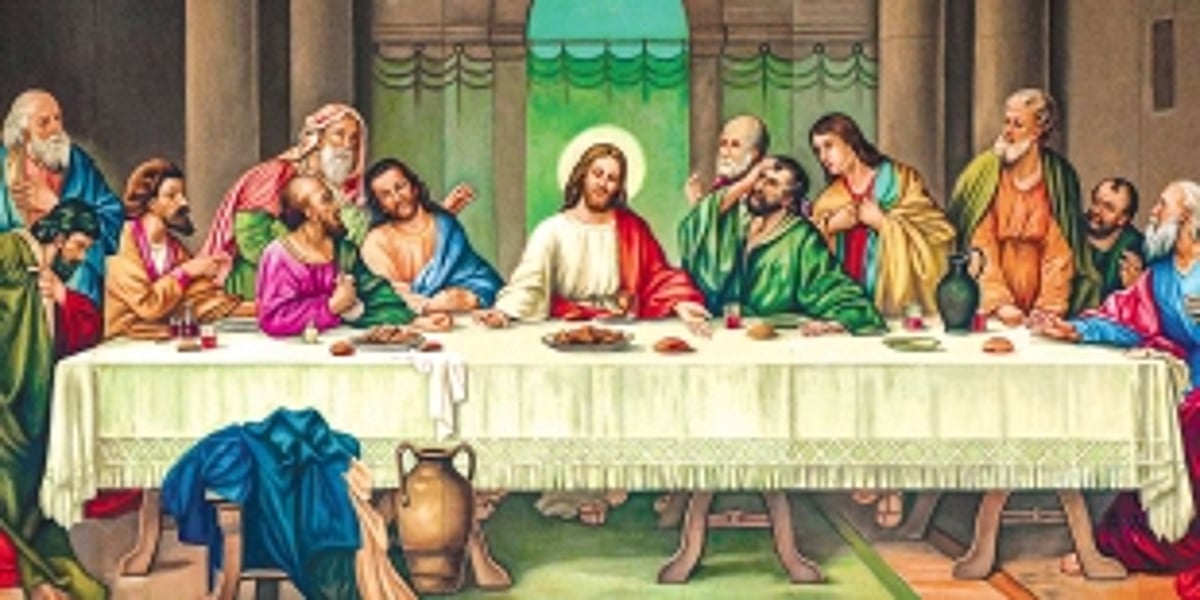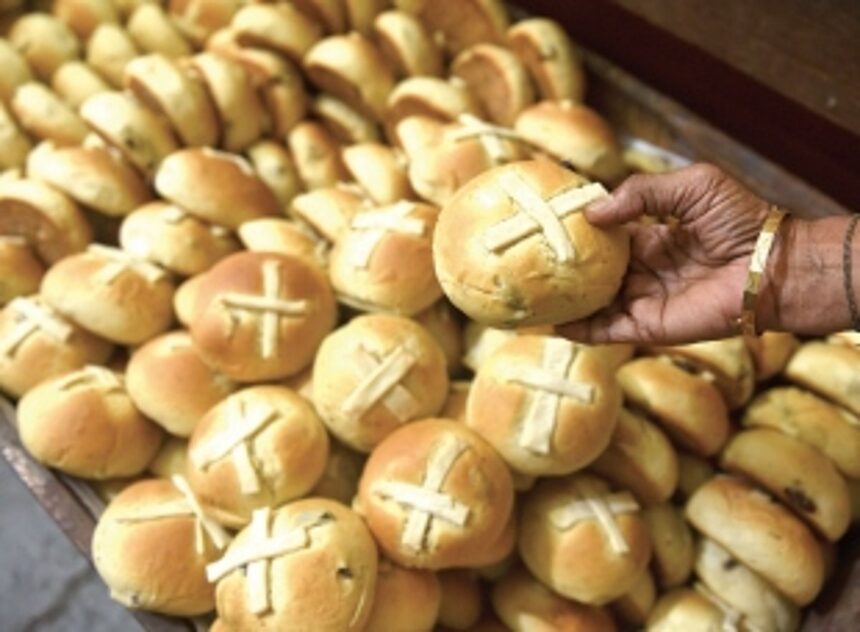
When Lord Jesus Christ broke bread at the Passover feast among his 12 disciples, He celebrated the institution of the Holy Eucharist and the institution of the consecrated. The humble hunger satisfying bread was honoured to satisfy the soul. The hot cross bun is now given to devotees signifying this important moment in the church. The Hot Cross Bun is not only a meal to break the fast but also an emotion towards the Holy Week and a preparation for redemption.
Gletta Mascarenhas, owner of Confeitaria 31 De Janeiro, Panjim, enjoys the buzz around the bakery during the last days of Lent. Even though it is very hectic for her to meet and talk to her customers, she cherishes the moments that she spends rolling the dough into neat balls to bake in the kiln. Each bun is decorated with a cross made from flour paste, which represents the Cross on which Christ died. “The spices in hot cross buns are said to represent the spices that were used to embalm Christ after his death. In Goa, cinnamon and raisins are used for hot cross buns and we have been following the recipe since the inception of the bakery,” says Gletta.
Over two days, Gletta will be catering to the churches in Caranzalem, Bambolim, Miramar, Porvorim and Panjim and will be baking nearly 4000 hot cross buns. “Our Lady of Rosary Church, Caranzalem has ordered for a 1000 hot cross buns which means that almost every family will be present with the bun. Some churches have ordered for a double bun which will be given to the parishioners who are taking the place of the 12 Apostles. These buns are all handmade and since they have to be freshly made for the occasion, they are made on the spot. The members of the different parishes come at their own convenience to take the buns right on time for the evening service,” adds Gletta, who will get to preparing the traditional Easter Eggs from Saturday onwards at the bakery.
Bond Braganza, a noted musician and singer, also runs Apsara Pastries and Snacks in Olaulim, for the past 15 years. “We get orders from the chapels in Quitla and Olaulim and other neighbouring villages. The minimum number that is usually ordered is 100 hot cross buns by mostly individuals. The chapels require much more depending on the faithful in their church. Each family is presented by one hot cross bun after the serve. We usually start getting orders almost a week before Holy Week and some even at the last minute. It has to be served fresh. Some people also follow the tradition of consuming only hot cross buns on Maundy Thursday, Good Friday and Holy Saturday as they observe their fast for Lent. The bun is also sweet with tutti frutti and currants,” says Bond.
In Curchorem, the hot cross buns are distributed only among the 12 parishioners who are selected as the 12 Disciples. “The hot cross buns is presented as the bread broken at Jesus’s Last Supper. The trend of hot cross buns is to replace the humble bread with commercialisation to sell buns with a cross. The symbol of the Cross is very important as it is the suffering of Jesus Christ,” says Fr Vital Miranda, parish priest of Guardian Angel Church, Curchorem.
Monica Braganza from Braganza Stores in Panjim receives orders a few days prior to Maundy Thursday. “This year, we will be catering to Our Lady of Grace Church, Bicholim and Clergy Home, Porvorim. There are many individuals who also order without informing which church requires the buns. There are many who order in bulk to offer in their wards or among their neighbours. While we make a thousand buns on Wednesday, there will be much more on Thursday to cater to customers who pick it up from the counter,” says Monica.
Fr Milchester Furtado is the parish priest of St Francis Xavier Church, Pirna, which is considered as the smallest parish in Goa. Around 120 parishioners live in the village itself and 150 hot cross buns is sufficient for the people. “The distribution of hot cross buns in parishes depends on feasibility. The number of parishioners, the ordering of buns, the distribution and even finance are some of the factors that have to be taken into consideration. The hot cross bun is a symbol of the bread that was broken by Jesus and given to his disciples. Earlier, symbolically only 12 members especially, male elders of the parish, were selected to represent the 12 Apostles at the altar. Later, the parishes started selected members of different sections of the church in different age groups and even women as the 12 Apostles. As the church became more aware, it grew more inclusive,” says Fr Milchester, headmaster of St Anthony High School, Monte De Guirim.
On the other hand, the parish of Our Lady of Rosary Church, Navelim is the largest parish in the Archdiocese of Goa and Daman. Parish priest, Fr Gabriel Coutinho says, “The church consists of nearly 7,000 parishioners and for the Mass of the Lord’s Supper, we are expecting at least 5,000 devotees. As it is not possible to distribute hot cross buns to a member of each family at the church, we give the buns only to the 12 representing the Apostles at the altar. This year, we have selected 12 members, men and women, who are Class 4 employees who help us in the church and the educational institutes.”