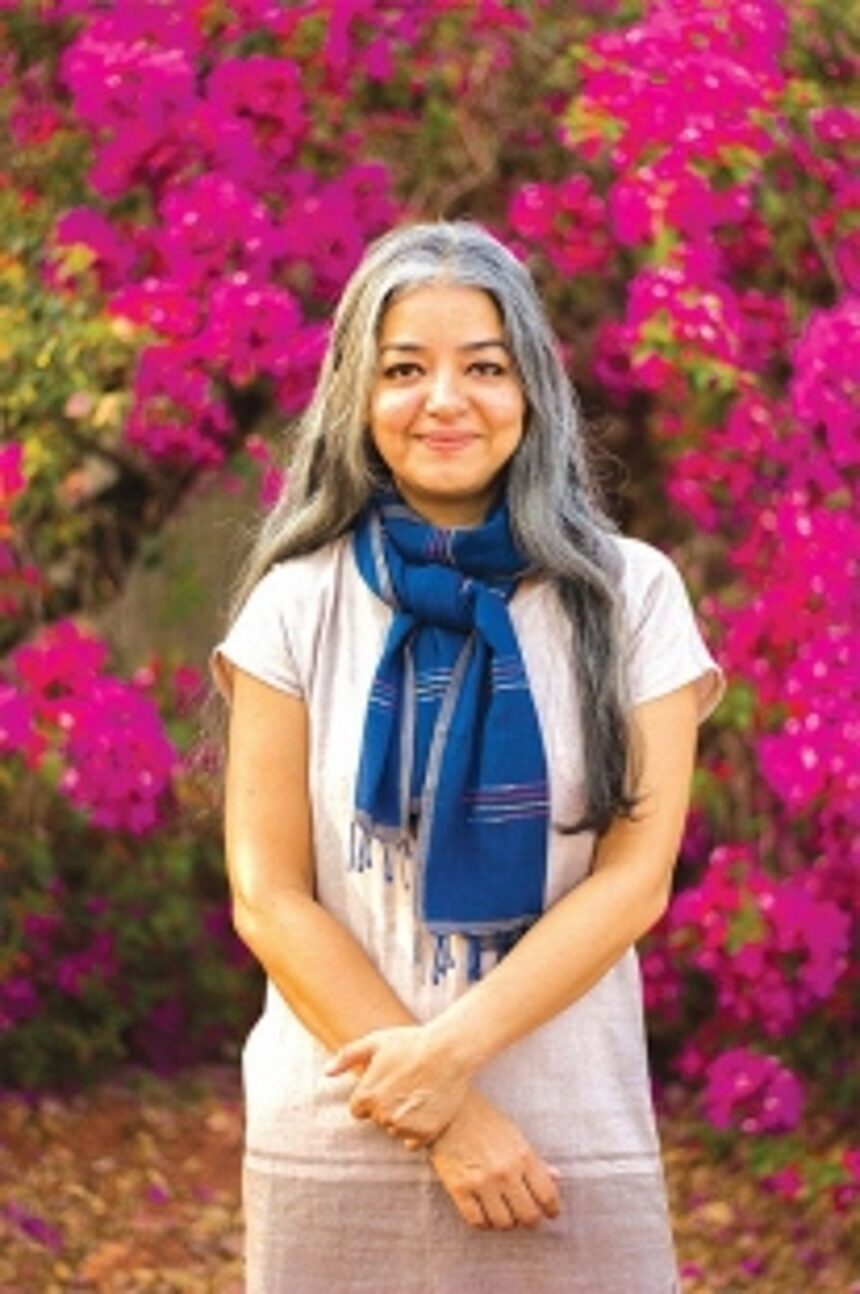
A meeting with the legendary designer late Wendell Rodricks in Mumbai brought her to Goa
eventually. Poonam Pandit has made the sunshine state her home since. For
almost the entirety of the last decade after that meeting, where Wendell loved
Pandit’s weaving portfolio, she has been working closely with Goa’s last known
surviving family that practises traditional Goan weaving. “I was invited to be
in Goa for a few months and find out whatever I could about Goan handloom
weaving. As soon as I landed, like a happy child I rode the length and breadth
of Goa several times on an Activa trying to find whatever I could about the
Gowda Sari. The natural beauty of the state was like an eyewash for my smoked
out Delhi eyes,” says Pandit, now a resident of Siolim.
A Textile Design specialist from NIFT, Pandit lived and worked
in Delhi for thirteen years. She was associated with furnishing and garment
export organisations, educational institutions, artisan groups and fashion
designers. Goa was meant to be a short term project although in her heart she
wanted it to last for a much longer time.
“During my research, I found Goa had a flourishing handloom
weaving industry that waned over a period of time due to the influx of cheaper
power loom fabrics and competition from modern clothing styles. I met old
weavers who told me stories from their hay days when they had workshops with
multitudes of looms making many different styles of weaves for draped
traditional clothing and fabrics. Those beautifully crafted looms were torn
apart to be sold for firewood and the weavers were forced to leave their
occupation and take up other work,” laments Pandit.
“Then one fortunate day, I came across Kaka who was running two
old but operational looms in the village of Palyem. He was on the verge of
shutting the looms due to lack of demand. Kaka liked the respect I showed
towards his craftsmanship and gauged my knowledge of weaving and design and
agreed to make a collection together for Wendell Rodricks.”
Pandit worked with Baburao Babaji Tilve aka ‘Kaka’ as a team for
over a year. She was happy to be in the midst of Kaka’s family home and that of
other weavers as she soaked in their lifestyle, culture and the traditions of
village life while working on saris for Rodricks that would be showcased on a
much larger canvas around the globe.
The ‘Kunbi Tribe Collection’ showcased at WILFW won plenty of
accolades for Rodricks and the team. Once the project got over, Pandit did not
have the heart to stop working with the weavers and leave Goa. She continued
with her interest in weaving and stayed in touch with Kaka and his family. She
kept at it slowly and steadily and in 2011, she created her label Kalakar.
Kaka has been weaving since the 1950s and has passed on his
skills to the next regeneration who have been invigorated with the interest and
involvement that Pandit has put in. Their mastery of the craft and drive for perfection
is evident in the flawless weaves they create. The distinctive designs of
Kalakar are a result of their interest in experimenting and creating new
patterns.
Pandit says she was warned by many to not get so involved with a
dying craft that had little scope for revival. “But I followed my heart,” she
says. “The work gave me a meaningful purpose to remain in the place (Goa) I had
grown to love. With hard work and devotion, now 10 years down the line, the
warp beams are still rolling, the weavers encouraged sons have taken up the
harnesses and the fabric lives on. With the introduction of contemporary
designs and a new product range the weaves got a new lease of life and are now
sold at some of the best boutique stores in different parts of Goa and UK.”
What keeps her going? She goes on a point by point monologue
that is breathless:
“My long term association with the local weaver’s family;
working with an indigenous craft of the place I love to live in; my love for
handloom weaving and design; the sense of purpose to keep a meaningful practice
alive; the appreciation for my work and good sales from exhibitions and some of
the best boutique stores in Goa; being able to create a market for local
craft/produce and selling it locally; doing something meaningful; keeping the
craft alive; my way of giving back to the place that I love so much… For me,
it has been the most liberating place to be living as a progressive single
independent woman.”
The
path ahead is showing positive signs and Pandit can sense a stronger revival.
She is now working on a line of clothing with the artisans. Her work is
available online on Etsy and more of her story on kalakar.design.