Navy, though they are what we think of first. On cruise ships especially, there
are all sorts of occupations available. Keith Antao works on the Disney Fantasy
cruiseliner as a musician and is normally at sea for 4-5 months at a stretch
before getting a three month vacation.
“For a seafarer, this
job is fantastic and there’s absolutely nothing to complain about. The only
disadvantage, for me, is that after getting married and having kids, you have
to be away from your family for long periods of time,” says Keith Antao, who is
currently at work and floating over the water of the Bahamas. The ship holds an
average of 55 different nationalities, around 4000 passengers and 2,500 crew
members with luxury facilities.
Keith expresses his
only dissatisfaction as being unable to see his family more often which is
unavoidable in his line of work. “I’ve always wanted to pursue music and was
very fortunate to get this job. You get to travel for free and all your
earnings go into your savings.”
Getting a job on
board is not easy but not impossible either. The applications are available
online and most people can get the jobs through agencies which are also
available in Goa. Musicians are required to send in a demo with their
application if they wish to join, though there aren’t many openings.
Joel Anthony Fernandes, a piano man who
works with Keith Antao often, gives his own views about this. At 34, he has
been working on ships for 15 years now. “By
the time all my friends and colleagues
were starting their careers, I was already on board,” he says.
“I love my job. The
joy and content to hear an “encore”, the sound of claps, cheering or even the
eye contact of the guests gives me a boost!,” he adds.
The requirements for
the job are many, including being a live performer and not using backing tracks
in the performances. Having a great dedication to his job, Joel is living to
the fullest. “To those who also want to perform, I’d say: the stage is yours.
But with dedication, knowledge in music of all genres, performing live every
day and learning something new,” he says. While on the job, he had been all
over the world and is currently moving down to Australia.
Wanting to see the
world is a common reason for becoming a sailor. Ravi D’Gama from Cuncolim
currently also works on a cruiseliner and is part of the bar department. He
began working on board back in 2007 which now makes it a total of 16 years that
he has been it this line of work. Like Keith, his favourite part of the job is
being able to travel but he dislikes the inability to see his family more
often. He says, “I’ve travelled to more than 60 different countries and 110
different cities to be precise.” As a piece of advice for aspiring seafarers,
he adds, “You have to be determined to work, have to be mentally fit as you are
going to be away from your family and trust me, we work a lot.”
On-deck
responsibilities largely differ though and the requirements for different types
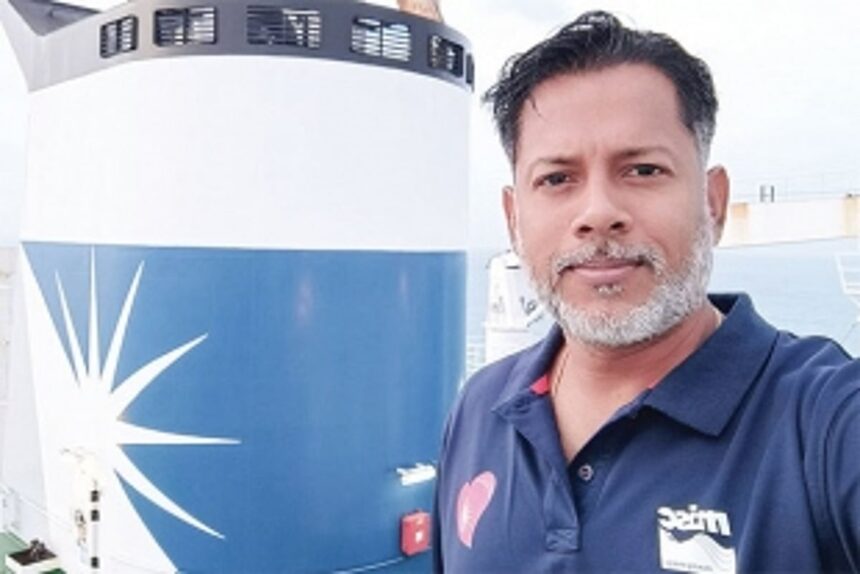
of sailors vary. Working as the captain on an oil tanker, Savio Amaral frequents many places around the
world, including the Persian Gulf and the US, which stretches his journey up to
fifty days away from home. Originally from Dona Paula, the 46 year-old joined
as a deck cadet at the age of 18. At the time, there was a demand for cadets as
not many were properly trained. As the profession comes more into the limelight
so, too, does the decision to become a seaman increase among the younger
generations.
The perks of being on
the ship are many. Rent on land can be cutthroat and finding a decent place to
live for a good price isn’t easy anywhere, including Goa. Adding to that,
having to take care of your environment, personal needs and family, the cost of
living is sometimes too much. This is where the convenience of being out on the
ocean comes in. However, it’s not as easy to join now as it once used to be.
“Everybody wants to
join so they’ve increased the regulations. Your qualifications have to be
higher now and we select only the cream, not everyone,” he explains. “Back
then, it was quite easy to get in because there was no training required. Many
people joined because someone they knew also joined. Now it’s become a very
serious sort of business.”
Ultimately, no job is
completely perfect. There will always be a few downsides. Though, he generally
has no complaints about his job, there are times when the lack of an official
doctor are concerning. For the elderly, who are at a greater risk of health
problems, the situation is less than ideal. To combat this, sailors are trained
every five years in medical care and are able to resolve most medical
emergencies by themselves.
“Except in the worst
case scenarios where someone is seriously injured,” says Savio. “We’ll divert
the vessel to the nearest coast and a chopper will be flown there.” As a senior
crew member, Savio has three months vacation after three months of work.
Currently on vacation, he is set to return to the ship in a month or so. He
also encourages younger people to join if they wish to.
The time that
seafarers go out to sea is never uniform. They could be gone for months on end
at a time and returning home after a certain period is not always guaranteed.
Shubu Mehta is one such man who had worked on a barge for a period of 15 years
before returning to Goa for good. Shubu began his work in the chef’s cabin in
1990, where he would regularly be out at sea for two months at a time—the
shortest being for around a week and the longest for about half a year.
“I began to work
there to save money. Food and lodging were provided and my salary was Rs 45,000
per month,” Shubu says. He adds that he loved to travel and wanted to see the
world back then. “At the time I was not married and I used to call my parents
so being away from home didn’t affect me.”
His job was often
erratic and he would be told to go to ship out of the blue many times. As a
result, he had flown by chopper (helicopter) several times to get to his ship.
Shubu remarks that life on the ship was very suitable for him due to a fixed
system and set of rules. Having left the life on the sea back in 2005, he
expresses his hope that younger generations that have joined the life on ship
will be able to save more money.