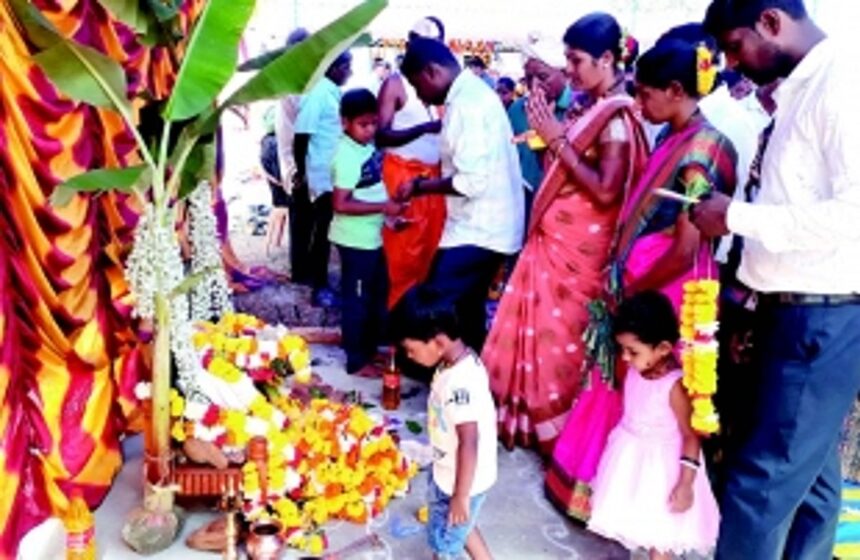
The Dhangar community residing at Bhoot Khamb, Keri, in Ponda celebrated the installation day of Jay Bhoot Khamb, (Pole of Spirit) shrine dedicated to Rakhandar, the protector of the place. The village youths got a much-needed performing stage that was their demand for a very long time. Hundreds of devotees from the villages of Keri, Betki and Savoi Verem offered prayers at this small shrine, Devli on the occasion.
Situated a stone’s throw away from the famous Shitole lake (a monsoon delight) along the road that leads to Ponda, the community of shepherds and residents of nearby villages who venerate the folk deity congregated to seek blessings and in thanksgiving for the fulfillment of their wishes. This year, a young couple from the community, Vithal Navso Kolekar and his wife Vanita who performed the Pooja were the hosts for the ceremony. The rituals were conducted by Balchandra Shripad Abhisheki, a priest at Shree Laximi Narayan temple. Abhisheki stated, “Devotees have faith in the deity as a large number of people who transit along this route regularly
offer prayers.”
Janu Kolekar, secretary of the Devasthan committee informed, “The Protector of the village, also known as Vatevailo is offered a bamboo basket by a childless couple in the hope of blessing for a child. The basket signifies a cradle for a child.”
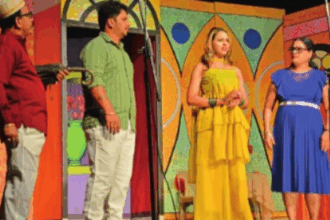
An added attraction for this community was the inauguration of a performing stage. With the construction of a stage, the youths will get an opportunity to showcase their talent, acknowledged Sandhya Kharat from Mashem, Canacona, who was visiting her aunt at Bhoot Khamb. Sandhya, who has a master’s degree in sociology and pursuing her BEd said, “The stage will provide the right platform for local youths in performing art and culture and also take away their stage fear. As compared to other communities in Goa, these tribal youths don’t get the right exposure and opportunities to show their talent and this new facility will surely boost their confidence.”
The celebration not only brought the Dhangar families together but also people across different communities who paid their obeisance to the Rakhandar, a more common instance in recent times of acceptance.