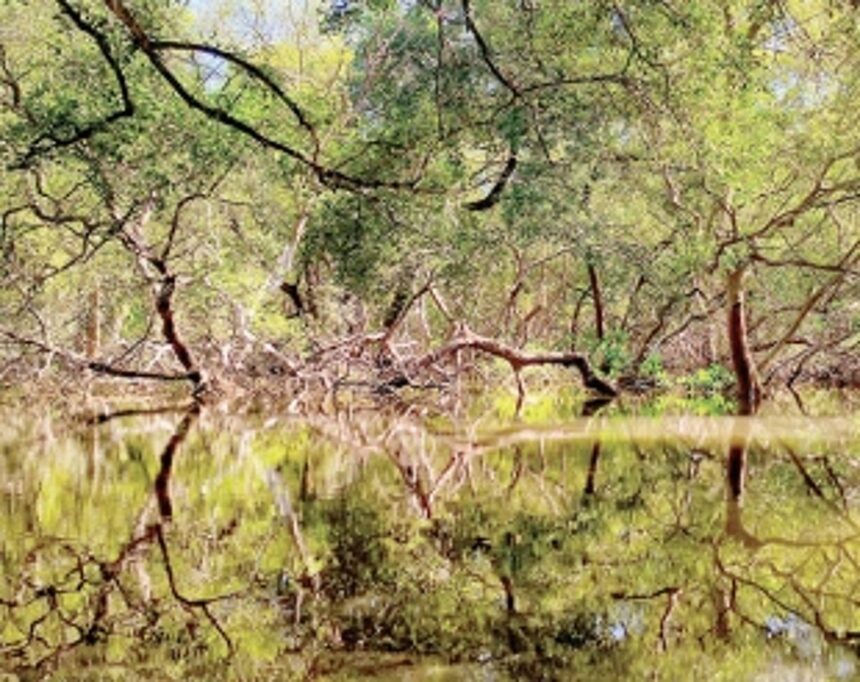
World Wetlands Day is celebrated annually today to raise
awareness about the importance of wetlands and their conservation. Wetlands are
transitional areas between terrestrial and aquatic ecosystems where the water
is almost close to the surface or the land is partly submerged in water.
A broad definition of wetlands includes freshwater and
marine and coastal ecosystems such as all lakes and rivers, underground
aquifers, swamps and marshes, wet grasslands, peatlands, oases, estuaries,
deltas and tidal flats, mangroves and other coastal areas, coral reefs, and all
human-made sites such as fishponds, rice paddies, reservoirs, and saltpans.
These include marshes, swamps, flood plains, bogs, peat lands, shallow ponds,
or even tidal marshes. Wetlands can be broadly distinguished into saline and
freshwater wetlands based on their composition. They are unique and valuable
ecosystems that play a vital role in sustaining life on Earth as they are
beneficial to both humans and the environment. These wetlands ensure water
purification, flood control, soil erosion prevention, and a secured habitat for
a wide range of plants and animals.
Sanjeev Sardesai, one of the explorers of Goa defines it as
“Goa has one of the richest heritage in every aspect, especially for the birds,
and the immigrant species of birds.” He also added, “The tourists are in their
zone, which makes it hard for them to notice the culture and nature of Goa, and
appreciate the beauty of it. “ One of his favorite wetlands include Bondvol
Lake or Bondava Lake. Arturo D’Souza, an activist and the Chairperson of the
Biodiversity of Management Committee, Santa Cruz stated, “It is more of having
a status for the wetlands.”
World Wetlands Day was established in 1971 to commemorate
the signing of the Ramsar Convention on Wetlands, an international treaty
providing a framework for the conservation and sustainable use of wetlands.
Each year, a theme for World Wetlands Day is chosen to highlight and reflect
the role of wetlands and their significance in our society. The theme for this
year’s World Wetlands Day is ‘It’s Time for Wetlands Restoration,’ which
focuses on the urgent need to prioritize wetland restoration. Events like bird
watching, guided walks, and educational talks are organized all over the globe,
giving them a platform for their creativity, and talents while celebrating the
wetlands, their habitat, and their significance.
India is blessed with water resources diversifying its
inland and coastal wetlands. The wetlands of India are distributed from the
Trans-Himalayan zone to the Terai region of the Himalayan foothills, to the
Gangetic plains extended to the flood-plains of Brahmaputra, and the swamps of
Northeastern India including the saline expanses of Gujarat and Rajasthan.
Nestled between the pristine Western Ghats and the Arabian
sea, Goa is gifted with unparalleled natural beauty. Wetlands are important
ecosystems that sustain fish, aquatic flora, and fauna as they also channel
time for groundwater to recharge. The wetlands of Goa have also drawn the
attention of the tourists towards them making them refreshing for the eyes.
There are forty-two wetlands identified by the Goa State Biodiversity Board
(GSBB). Having the wetland officially identified ensures special secured
protection to the area, prohibition of dumping garbage and waste along with
prohibited construction and regulated activities involving farming and
fisheries.
The national ‘Save Wetlands’ campaign will be launched on
February 4 from Goa by the Union Environment Minister of India, Bhupender
Yadav. The World Wetlands Day for this year would be celebrated at the Nanda
Lake in Curchorem, Goa’s first and only Ramsar site. It will be organized by
the environment ministry and the Goa State Biodiversity Board (GSBB) while
being associated with the Union Environment Ministry. Cottombi Lake, Pilerne
Lake, Toyyar Lake, Sarzora Lake, Dashi Lake, and Bondvol Lake will be unveiled
as the officially identified wetlands of Goa.
One of the most famous bird-watching hotspots in Goa, the
Carambolim wetland, is considered an Important Bird and Bio-diversity area
(IBBA) according to Birdlife international. The lake, the adjoining fields, and
the mangroves of the Cumbharjua canal provide excellent habitats for a good
diversity of bird species. This area is one of the largest wetlands in Goa. The
variety of habitats in this area serve as feeding grounds for numerous species
of birds that migrate down to Goa to escape the extreme cold in the north.
Great Hornbill, Mountain Imperial Pigeon, Blue-bearded Bee-eater, Vernal
Hanging Parrots, Sunbirds & Flycatchers, Crested Treeswifts, along with
Grey-fronted Green Pigeons, Chestnut-headed Bee-eater and White-bellied
Woodpecker are few of the immigrant species of birds found near these wetlands.