Goa is a place where cultures and customs have endured for countless years while maintaining their core values. Our ancestors are to be praised for preserving them and making them shine. History tells us about the various empires that ruled Goa and how they shaped our culture and identity. There are some traditions that have been passionately maintained over time. Ganesh Chaturthi is once such festival that dates back to the ages and has been celebrated by Goans with passion and faith. Ganesh Chaturthi or Chavath in Konkani is one of the rare occasions that bring large Goan families together.
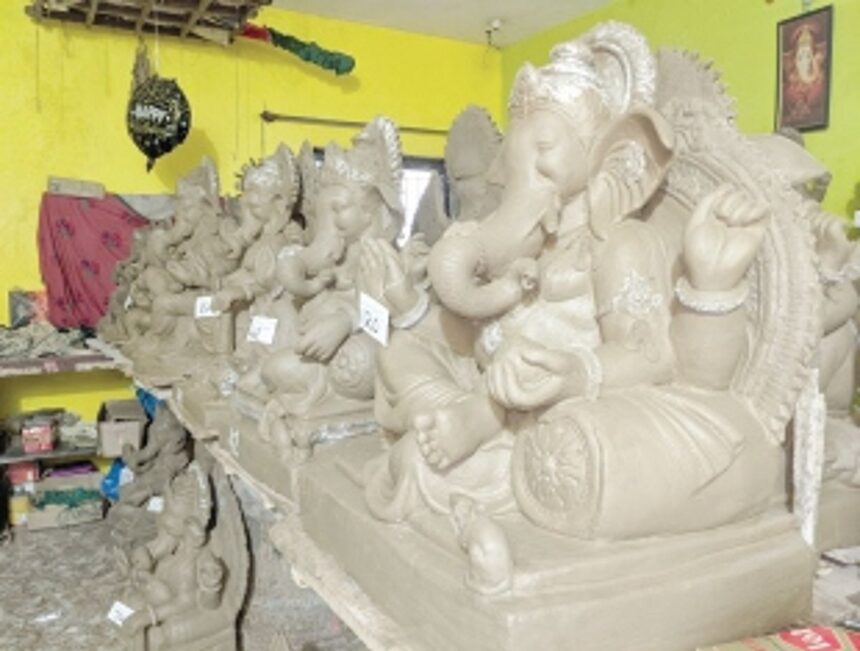
The festival commences with every family bringing home a Ganesh idol for worship. The idols are usually purchased from the ‘Ganapati Chitra Shala’ situated in respective locations. As per the age-old tradition, every family follows tradition by getting the clay idol from the same Chitra Shala, patronised by their ancestors. In current times, the art of clay Ganapati idol-making is gradually declining, and promoting this seasonal Goan cottage industry is the need of the hour. These enterprising individuals who have been passionately driving the Ganapati Chitra Shala in the state are struggling to make ends meet due to factors such as procurement of clay, rising prices of raw materials, the import of figurines from Kolhapur and other parts of Maharashtra. These are said to be biodegradable, but many allege the use of PoP (Plaster of Paris) or PoP mixed with Shadu Mati (baked clay).
Mangaldas Ramesh Shetkar, a 48-year-old sculptor from Mayem, says his whole family has been involved with in idol-making for generations. He learnt the art from his grandfather, by observing him work and would help after school. “In those days people who could not afford a Ganesh Idol would barter with rice paddy,” he recalls. The work begins from May right up to the festival begins – either in August or September. Shetkar adds that the cost of raw materials rises by 25 percent every year and it’s difficult to keep up with mass produced idols made of Plaster of Paris. He says, “People prefer Plaster of Paris because it’s light in weight and has a better finish than traditional clay idols, the colour of PoP idols looks more attractive as it does not absorb paint like clay idols do.” He says the government should be stricter to prevent the sale of PoP idols. As per the sacred scripture, Shetkar says a Ganesh idol has to made of earth and then returned back to the earth as it’s blessed.
The idols are either fashioned out of available moulds or completely handmade. The time taken to produce a moulded air-dried clay idol is eight hours and needs constant moving around for the different stages in the process, while a fully handmade idol can take upto eight days to complete. Craftsmen have also raised issues they are facing due to acute shortage of clay. A truckload of clay costs Rs 15,000, including transportation charges and is available at only three locations in the state. Another sculptor from Mulgao, Mahil Rajendra Morajkar, aged 24, says he’s grandfather, Vishnu, started the business of making idols more than 70 years ago. Now run by Rajendra, his father, and Sandeep, his uncle, he says the skill is passed down through generations and learnt by observing from a young age.
Prabhakar Shet Shirodkar, a 92-year-old artisan from Pomburpa, has been in the business from childhood. He recalls in the past children from the village would help in their free time but now finding labour is become nearly impossible as people have migrated to other places and the youth have taken up better employment opportunities. “It’s just everyone in the family doing their best to continue the tradition,” he says.
The meagre subsidy of Rs 100 per idol, provided by the state government and implemented through The Goa Handicrafts Rural and Small Scale Industries Development Corporation (GHRSSIDC), does little to make up for the rising costs of labour, clay and other raw materials. Artisans can hike prices by only Rs 100 to Rs 200 as the Plaster of Paris idols give bigger margins. They say the ideal subsidy amount should be increased by at least Rs 200 and should be provided before work starts latest by April-May, instead of September.
Plaster of Paris is not soluble, and ends up clogging the earth and waterways. Pollutants consumed by fish invariably make their way to the humans who consume it. Tests conducted show that these idols remain intact for several months while still in water. The government has to encourage this seasonal Goan cottage industry using non-baked clay. The responsibility of keeping this tradition alive for generations to come lies with the youth, and the government should support their efforts by setting up formal training centres and making other necessary arrangements.