The hills and the slopes, the fields and rivers continued
and “stretched in a never ending line” (lines from Wordsworth’s, “I wandered as
lonely as a cloud”). This was one of yours truly’s break free monsoon rides, in
a Goa which is searching for the rains, which like a bad network keeps
buffering but not quite downloading.
But the drive though old Goa, through the Banastari junction
and then to Farmagudi and inwards into the cavernous recesses of the temple
villages of Nagueshi, Kavlem and skirting Undir, was a superfast real Goa
connect, a bridge to seal a gap in my wanderings.
The temple town is content with itself. Nor is it in compete
mode. It has never quite been in the throes of expansion feeding off and fed by
brick and mortar. The temple town has been untouched, caressed by the charm of
its villages – each in pause mode – refusing to press the play button of Goa’s
march into the madness of modernity.
The plan was to wander with a purpose. Meet families whose generations
have been engaged in making Ganesh idols, with a colleague. (See accompanying
story on this page). In these homes, there’s an effervescent concert on
perpetual display a month and held before Chaturthi.
Let’s call this the Temple town symphony. Working with mud
and clay, fathers, sons and their never dying spirit, across generations, make
up to 150 idols, using up almost all available spaces at home. Young Kedar
Naik, in Nagueshi, is in his twenties. An Art school education culminated in
the pursuit of the finest art project of his life, creating and sculpting the
Lord. He draws inspiration from his gurus from his earlier generations Umanath
and Vasanth Naik.
From Nageshi, and actually behind it, we crossed Ramnathi
and into Betalwado in Kavlem to go to the home of the Palkars. Here too generations
were at work, to make idols of sarvajanik
mandals who have received idols from this very home for generations. A
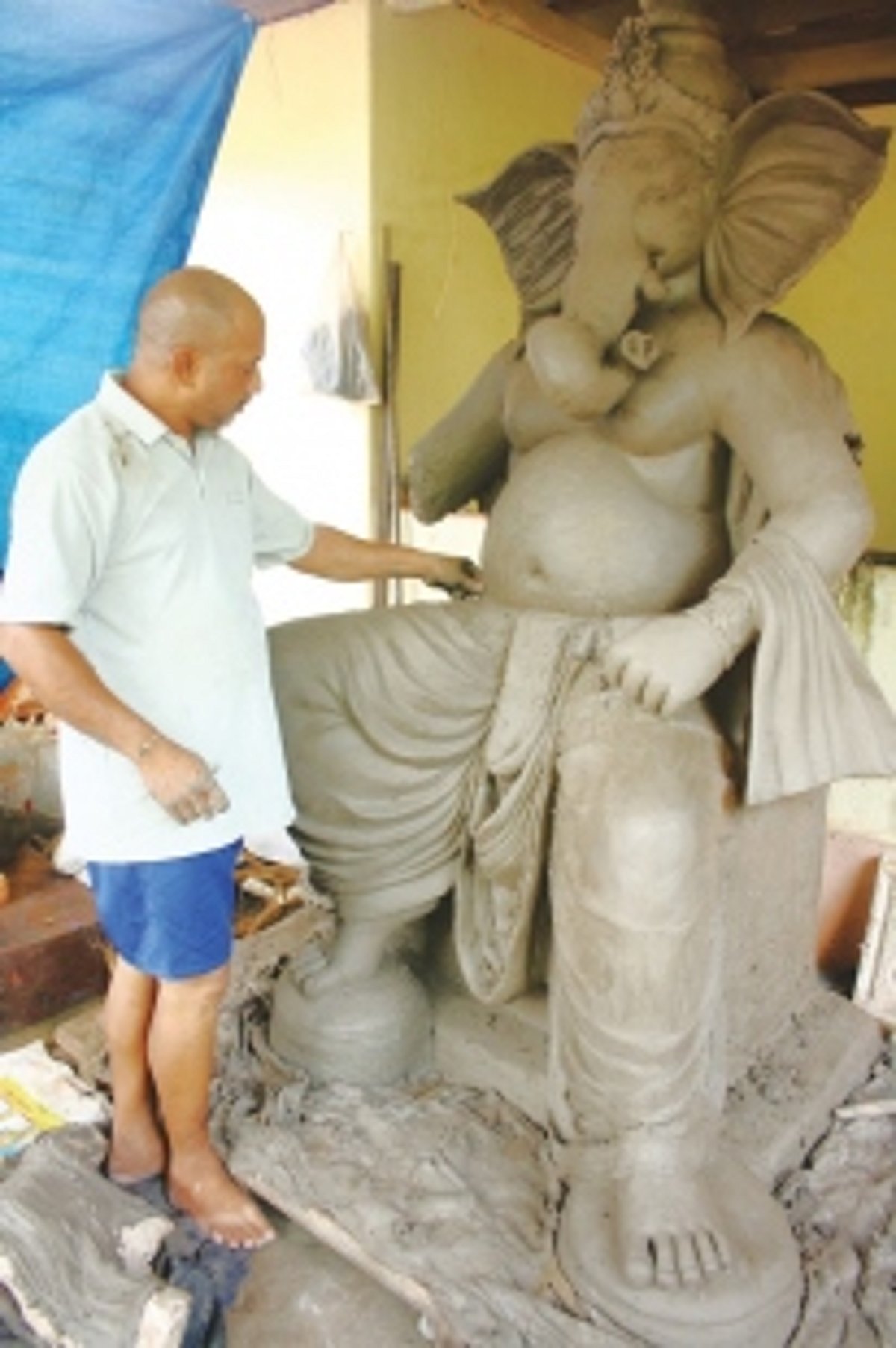
little away from the rows of half finished idols, there was big one in the
making. From the feet, the seat of reverence, the idol is made, down to top. It
had reached the stage of the lovable Lords bulging belly and was awaiting the
top half to be completed. Seeing the idols at this stage, actually enhanced the
reverence and a deeper understanding of why these families build their lives,
their universe and their existence around creating idols.
And as you would have almost naturally expected, the languid
afternoon, in the sanctum sanctum-sanctorum of the temple town, in the land of
Bhausaheb Bandodkar, was beseeching us to have a meal at one of the many home
restaurants, where the food is fresh and outstanding. Barely a few hundred
metres from the Sanathan Sanstha ashram at Ramnathi , on the road from the
Kavlem Panchayat to Undir, and less than five minutes from Nagueshi, is a
village eatery, simply known as Sadu’s. The late Sadanand, aka Sadu was a part
of the family of the Kerkars, who set up and run Sadu’s. It does have an
official name, Mahesh Bar and Restaurant, but Dheeraj Kerkar is just fine with
his place called Sadu’s. There’s a tiny balcao of sorts, on which there are
tables through which you enter the front space of Sadu’s. On most afternoons,
the village locals sit and drink, along with the lunch regulars. He and the
ageing senior Vasudev Kerkar, his dad, run the place in the name of the late
Sadu, who was the uncle of Dheeraj.
Let’s cut to the chase. The special thali arrived with a
neat mix of fish and veggies. Simple, wholesome Goan food cooked the “hindu” way.
Three things stood out – the chilly chicken, (ordered outside of the thali)
which was slightly sweetened but added to the taste, the freshness of the
prawns and perhaps the best of them all, the prawn hooman. Technically the hooman
is a curry, but the reality is that the thick hooman is a fuel of the spirit. It boosts you. Curries should be as
thick and flavourful and soaked in Goan fat rice.
The restaurant has a picture of Dayanand Bandodkar on the
main counter and a credit/debit card machine, a sign that Sadu’s, while never leaving
its traditional ways, is ready to embrace the new ways of doing business. Big
daddy Vasudev Kerkar is still involved in the day to day running of Sadu’s
while Dheeraj sees that he doesn’t miss out on the freshest fish and vegetables
in the Ponda market each day.
There is very little to do after a Sadu’s lunch but sleep,
but reality did bite and the long drive to Panjim happened in place of planned wanderings
across the interiors of Ponda taluka. But we will be back. Once you bite into a
slice of the taluka, you are in it for the long haul.