The
world has been turned upside down. Old rules don’t matter anymore. The virus
has ensured that. The meaning of the word education has changed. It usually
means the process of receiving or giving systematic instruction, especially at
a school or university. Now of course, that is not possible. Classes cannot be
conducted in the school. Now of course the dynamics have been changed. Classes
are conducted online with students sitting at home and the teacher at hers.
It’s all very different and rather impersonal. This is now the mode of
instruction with schools around the world, India and Goa too. But in Goa, there
is another problem. Access to the internet is easy if you are staying in the
cities but for a villager it is an entirely different matter. This
paper reported on a family in Netravali who had decided to offer their land for
the installation of a telephone tower in the area to improve access to the
digital world. Accessing the internet in Goa in its remote parts can be a
frustrating affair. Maria
Miranda of the Govt school in Morpilla which is a remote corner of Goa said
they were using the online platform to instruct students in the senior classes.
Younger students in the lower classes were given worksheets to ensure they were
not exposed to a mobile phone at a very young age. However, when it came to
students in the senior classes, lectures for an hour were conducted every week.
However, since this was a remote part, it was difficult for many students to
come online. She said “ We expect to have fifty students in each class
but we usually get around 35 to 40 of them at first and even then, for them to
be online for the entire time is difficult because the telephony service might
just go on the blink and there is nothing we can do. It keeps coming on and
going off. The strength of the signal is just not good enough”. She said
many were managing by coming together and sitting with one smart phone and
attending class. Mari said “They are all first-generation students and they are
motivated to learn. But these are the problems they face”. Deepika
Tambat another teacher from a school in Pernem admitted that they were
conducting classes online but connectivity was problem. Many students she said
could not attend the one hour session online because the net connection was
poor. She said they would end up attending around thirty-five minutes of a
one-hour class which was very frustrating. She said the government was aware
and were trying new approaches but it would still require access to the
internet. It was she said a big problem. Tilak
Raj Dua, Director General of Tower and Infrastructure Providers Association
(TAIPA) said around 188 panchayats in the state were opposing the installation
of towers. He said “ Last year we had a joint representation made by Cell
Operators Association of India (COAI) and Tower and Infrastructure Providers
Association (TAIPA) to Chief Secretary of Goa, it has requested Govt of Goa to
formulate uniform telecom infrastructure policy for the state of Goa aligned
with Indian Telegraph Right of Way Rules”. That policy has not been formulated
as yet. Another
communication executive of a national mobile service company who did not want
to come on record said that there were instances when company employees were
manhandled by people in the village. He went on to say the situation
would improve only if a policy was implemented by the state government. Social
activists on the ground however have something else to say. Rajendra Kerkar,
environmentalist said online education was the need of the hour but it could
not move ahead without a plan. He said “If we install a tower it will affect
the environment without a doubt. I strongly believe in the rural areas the
problem is twofold. Electricity and connectivity are problems. Today’s
technology hampers the environment. One has to look at alternative approaches
to ensure connectivity and protect the environment.” When
asked how he would solve this problem he suggested one ought to look at the
approach taken by Kerala where education was being imparted via television. He
said “Everyone has a television even in the villages. We all remember the UGC
classes telecast in the afternoons. It was very helpful. The state government
should ensure that Doordarshan in Goa, Goa University and the Art and Culture
department combine together to ensure this becomes reality. This
is possibly an approach that could help people living in the villages. Thought
is required on all fronts to ensure the youth of Goa are not on the back foot
due to the absence of adequate infrastructure.
Towers= Mobile connectivity = Internet= Online classes
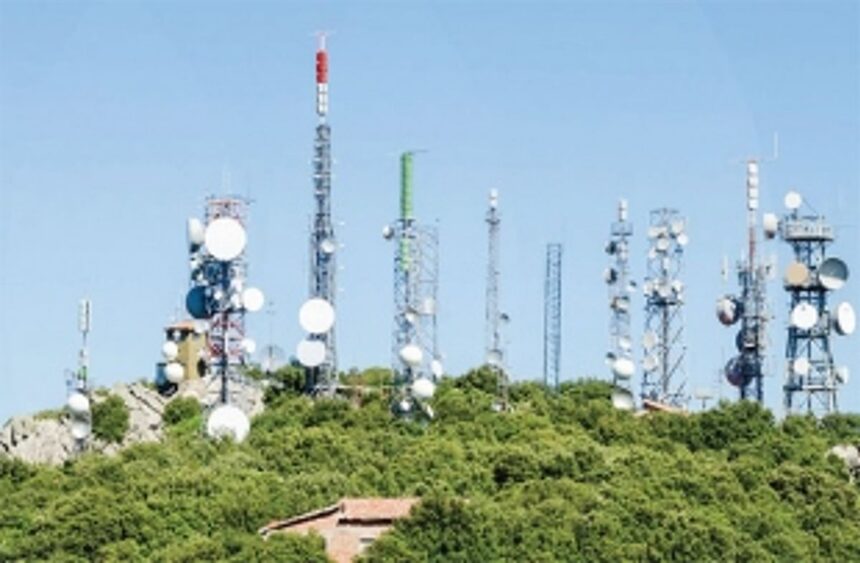
The absence of telephony towers in the state has made the availability of the internet a problem which comes into sharp focus when classes are being conducted online and many students are unable to access it due to the difficulties associated with accessing the net in the remote parts of the state