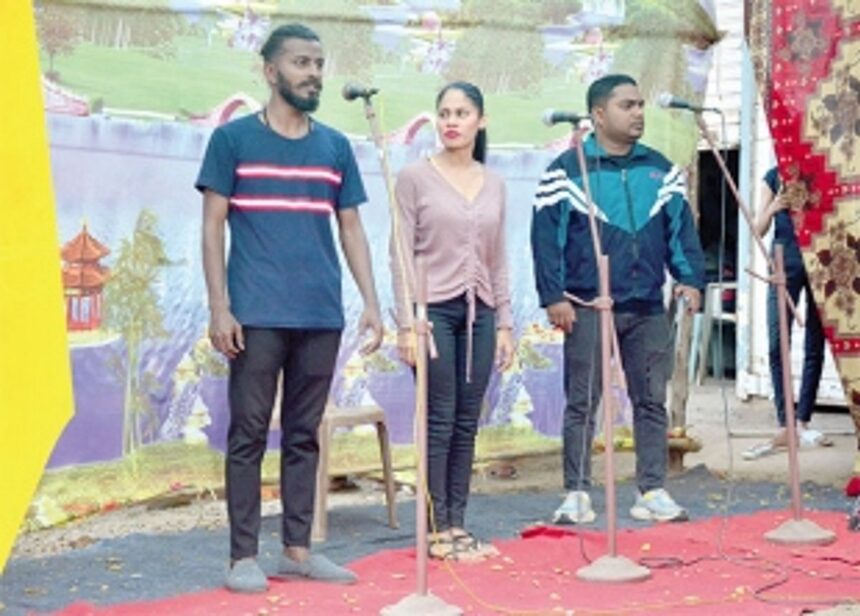
as they are popularly known, are staged in several villages in Salcete taluka
during the three-day Carnival festival. It is an age-old traditional art form
brought in by the forefathers and this ancestral culture continues till date.
There are
shows mounting to five each day of each director and by the end of the
three-day Carnival festival, some of those ‘fell’ directors end up with 15 or
more shows of their folk plays at different places.
This ancestral art form kicked off years
ago when three folk plays would be penned and staged at nook and corners of
various villages and people, young and old, would simply flock to watch them
with much zeal and enthusiasm. Those folk plays of half hour duration each can
be seen mostly in the South and the art has not found much takers in North Goa.
During those
earlier days, there would be only blowing instruments with drums set being played
during the presentation of ‘Zomnivhele Fell’ in the villages. But now,
electronic instruments which include keyboard and guitar have made its entry
and the originality is lost.
The uniqueness of this traditional art is
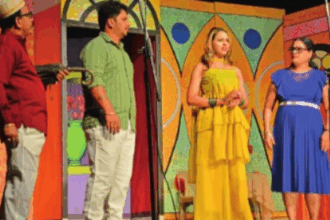
that the ‘Zomnivhele Fell’ are to be presented on the ground or flat platform
instead of the stage and the audience watch them either by squatting on the
floor or by standing. But lately when the Tiatr Academy of Goa (TAG) organized
the ‘Zomnivhele Fell’ competition at Azad Maidan in Panjim, it was brought from
the ground to the stage, thus destroying the distinctiveness of the folk plays.
Apart from entertainment through play,
cantos and comedy, ‘fell’ directors have a message in each of the folk plays so
that the audience can carry food for thought back home. There’s no stage or a
concrete platform for the presentation, but all plays are enacted on the ground
with the band playing on either side, much to the amusement of the audience.
Luis Azavedo from Curtorim has been
promoting this traditional art for the past ten years. This year, after the
break due to the pandemic, he is all set to present three of his folk plays to
the audience in the South.
“Apart from the opening song in every
play, there are 16 cantos in three of my folk plays,” Luis shares, “and in
order to participate in the TAG’s ‘fell’ competition, eight cantos are penned
in one folk play.” “Shows have already been booked well in advance and there
will be all the three plays will be staged at five different venues each day.
The first presentation will begin at 9 am and due to sound restrictions imposed
by the government, it will conclude at 10pm,” he mentioned.
Some of the places where Luis will be
moving with his 10-member troupe and band (trumpet, keyboard, bass and drums)
with his three folk plays include Maina-Curtorim, Gogol, Orlim, Cavelossim,
Assolna, Palolem, Consua and Rachol. He said that 15 shows have already been
booked by various organizers and more may follow shortly.
As a director of ‘fell’, Silva de Benaulim
has been penning and staging his folk plays for the past six years and pleased
with the presentation and performance, the organisers have been booking his
shows well in advance.
Each day, Silva de Benaulim will be
taking his three folk plays at five different locations and by the end of
three-day Carnival festival, he would be completing 45 presentations in various
villages in Salcete taluka. Regarding his cast, he says that there are nine
artistes (four females and five males) and the band comprises of one blowing
instrument, keyboard and drums.
When asked about taking the initiative of
moving towards the North with his folk plays, Silva de Benaulim says that
someone should take the lead of inviting them. “If five different venues are
provided to stage the folk plays, then one day we could make a trip to the
North and entertain the crowd there as well,” he asserted.
Xavier de Maina, another director of
‘Zomnivhele Fell’ has been promoting this age-old theatre art for the past 20
years. He kicked off in the year 2000 and after a short break continued with
his passion.
Apart from his regular ten artistes,
Xavier de Maina has ample support from his wife, Priscila and two daughters.
This year, he would be staging his three folk plays at 18 venues in the South.
Most of the ‘Zomnivhele Fell’ directors
carry a three-piece band comprising of one blowing instrument, keyboard and
drums, depending on the budget. But Xavier de Maina feels proud to announce a
full band for his presentation which includes a trumpet, saxophone, keyboard,
bass and drums.
“And each of my folk plays will provide
eight cantos in between the presentation,” Xavier de Maina reveals, “so the
audience will have 24 cantos in total to their listening pleasure.” “The crowd
that assembles to watch the plays at different venues not only wish to enjoy
the play and comedy, but also desire to listen to a variety of cantos in the
plays. So we are providing what the audience expects from us,” he adds.
For the past 10 years, Anthony Rodrigues
popularly known as ‘Star Man’, have been organizing the three-day Carnival
festival by staging folk plays of three different directors at his residence in
Agassaim, near the Zuari bridge. And he has been able to draw crowds from his
village and neighbouring village as well.
Anthony knows that ‘Zomnivhele Fell’ are
enjoyed only by people from the Salcete taluka and the lovers of ‘fell’ in
North Goa are deprived of such a unique entertainment. So he gave it a try by
inviting some of those directors in the North and he has tasted success in his
venture.
Apart from him, there’s
nobody else who takes the initiative of inviting some of those ‘fell’ directors
from the south to the north and help audience enjoy the traditional art form of
yester years. The lovers of ‘fell’ from the north get an opportunity to enjoy
such entertainment only when the TAG organizes ‘Zomnivhele Fell’ competition
annually in Panjim city.