Imagine waking up to drink your cup of tea in your balcao and you find a stranger posing with your
money plants. Or opening your doors and find tourists busy taking a selfie.
These are instances that actually happen in Fontainhas.
One distinguished gentleman living in a
very popular home with blue walls in Fontainhas, once opened his living room
door, only to see a couple of tourists who were leaning against his front door
taking selfies, stumbling into this living room. Welcome home, did he say?
Well, not quite
Cities like Prague and Venice are drowning
with tourists. In Goa, it’s a tad different. While there is a tourist slump in
general, the steady flow of domestic tourists to some villages/beaches and laid
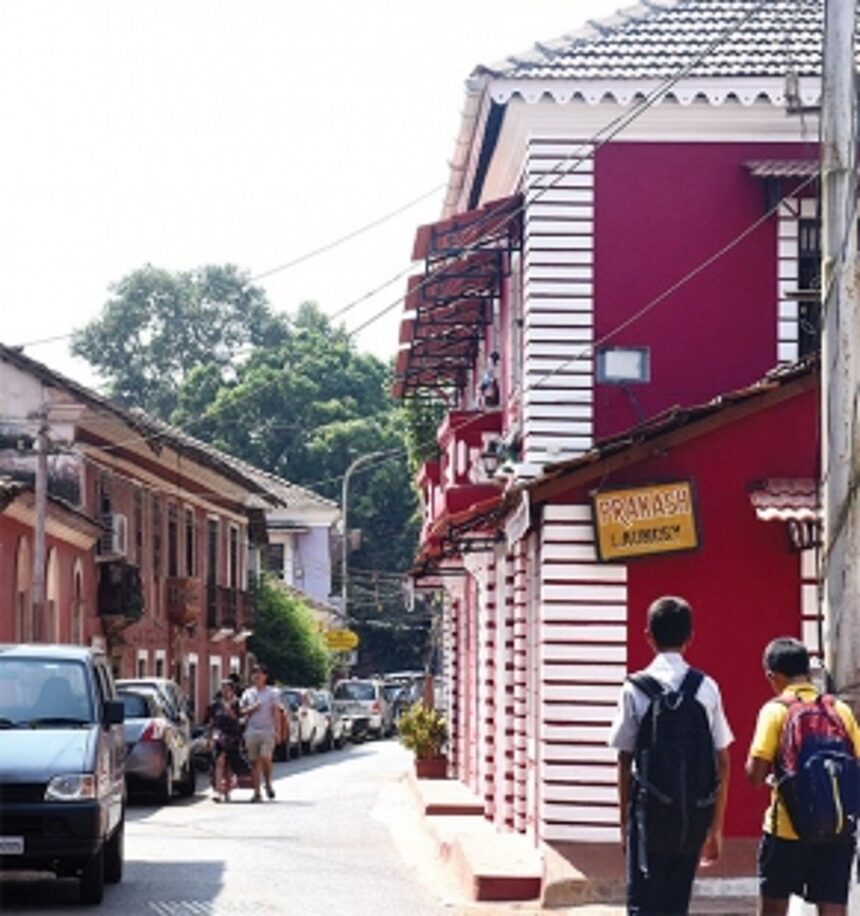
back spots like Panjim’s Latin quarter, Fontainhas, continues. And Fontainhas
being almost purely residential, with even the restaurants run from people’s
homes, tourists are literally in your face and often on your doorstep or even
peering through your window, from the narrow lane outside.
Jovito Lopez, is a veteran journalist and
a resident of Fontainhas who is involved in the restoration of St Sebastian
Chapel. He told Café, “There are four key areas. These structures date back to
the Portuguese era and it requires extensive maintenance. The restoration and
renovation has to be done the way it has been and the government is not aiding
with any subsidies. Tourists are brought in to the area where people have been
living for generations. Secondly, residents need parking for their own vehicles
with a minimum of at least two vehicles. Some people who work around the area
also park their vehicles here and sometimes block the entrances.”
He further adds that food establishments and restoration also
attract a lot of people to the vicinity. “It’s very difficult to find parking
because some restaurants are in the by-`lanes of Fontainhas and the main roads
are blocked with those vehicles. There are also tourist aimed videos which many
watch and come searching for a wishing well or rainbow steps or St Sebastian’s
garden which earlier didn’t exist. Many people take obscene positions in front
of the chapel to click photographs. Some climb up on walls or into verendahs
for the perfect photo. There is no privacy for the residents,” says Jovito.
Ramchandra Salgaonkar conducts walking tours in Fontainhas with
locals as well as tourists who are interested in learning the history of the
Latin Quarters. “There are two types of tourists that visit. One is the
genuinely interested tourist. These people are interested to understand the
local culture. They care for the local environment. Their behaviour is very
good and they do not disturb the locals. The second type are tourists who just
flock to a destination and tend to create nuisance. The locala have to be an
inclusive part of the tourism activity. Just greeting and giving respect to the
local, makes a huge impact,” says Ramchandra.
Specifying his clientele that he caters and how he operates,
Ramchandra adds, “When I conduct the walking tour, I ensure two things, I keep
the group size less than 15 people and while giving an introduction, I tell my
guest that it’s a residential area and we need to respect that and our decibel
levels need to be under control.”
Dr Sushila Fonseca is a noted author and a resident of
Fontainhas. She however feels that tourists who visit are fine.“The tourists
that visit Fontainhas are a decent lot. They have excitement to see the place
and it is usually people who are interested in the history and architecture of
this part of Panjim. They visit in the decent hours of the day and are
generally quite polite,” she says
Meanwhile, musician Alex Fernandes has seen Candolim grow from a
sleepy village to the bustling center of activities which mostly brings in the
wrong crowd. “They drink beers or hard drinks and throw their bottles on the
road. They get drunk late night and shout out loud sometimes. There is some
nuisance every day. Some tourists park their vehicles right in front of my
house which makes it difficult for us to take out our own vehicles. Foreigners
are very decent and they are well disciplined but domestic tourists create
problems,” says Alex.
Yolanda D’Souza, a world renowned artist is a resident of
Calangute and feels that everyone deserves to enjoy themselves on a holiday but
rules should be mandatory. “Tourism issues are no longer restricted to
Calangute, it is now faced all over Goa. There are occasions when I have seen a
stone turned into a makeshift table for drinks at the corner of a street. A
tourist acting weird has become a way of life. I don’t like to differentiate
between who should come or not come to Goa because everyone deserves a good
time on a holiday but there should be proper policing to change this attitude
towards Goa,” says Yolanda.
It’s
therefore for all stakeholders, to welcome tourists warmly but also sensitise
them gently and if needed firmly, that the privacy and peace of local residents
in ‘tourist’ areas is paramount. The world over, including in Prague and in
Venice, locals are frustrated and are expressing their disgust. Let that stage
not come to Goa.