Goa never tires of its journeys. And in each winding road
there are stories. The travels for this column have mainly been about people
and their inspirations, about lives, of laughter, of traditions and quirks, of
Goa served as it is. And from several villages emerge stories of hope.
Next week, when the sun sets over the Carambolim lake,
between Pilar and Carambolim, there will be a revolution brewing at the
panchayat hall, a revolution without slogans and protests, without accusations
and allegations, without remorse and anger. And above all, without adults.

It will be the most unique gram sabha programme in the
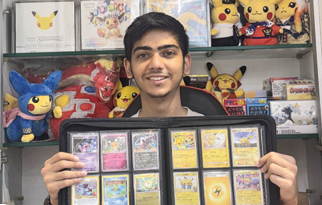
history of Goa, when 16 year old Diksha Nayak takes center stage in a play to
drive home the urgent need for clean water in her village. Diksha and eight
others have been practicing hard for what they believe will be an Oscar winning
performance. And the accolades they will get will be priceless. They will be
the first children ambassadors and stakeholders in the development of their
village, sending their message through theatre. Their play is called “Where has
the clean water gone?”
They will be drama queens and kings in the truest sense,
demanding attention, on issues like clean toilets, water, roads, access to
schools and proper school buses, issues which adults were supposed to have
dealt with and failed miserably.
But this didn’t come easy. When the Mitsuko trust, which
focuses on enabling children to enable themselves started work in Carambolim,
teachers in the two local schools were skeptical. Even headmasters suddenly
slotted games and special projects to prevent the children from meeting members
of their trust. Slowly barriers began to fall. Children were gathered to form a
‘bal gram sabha’ which would meet and discuss on issues concerning them. And
very strangely, but not quite, many of the issues which adults would think were
theirs, worried children too.
Gradually Diksha Naik and her tribe grew to about 40 who
encouraged themselves and others. They started taking ownership of this change.
They met, planned meetings, took minutes and made presentations. And not a
single one of them is above 18. But sometimes the medium is as strong as the
message and theatre was chosen as a powerful communication tool.
This is where other angels stepped in. Men and women, hugely
successful, trained and educated, some abroad, and very well respected in their
walks of life – and most importantly, Goa settlers, drew inspiration what these
kids were doing and stepped in.
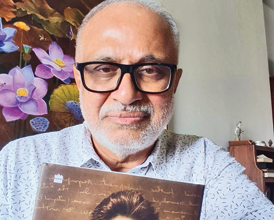
In Arundhati Chattopadhayaya, the children found the best
possible Director and conductor. Chattopadhayaya is from the Marathi Theatre
group Aniket and has acted in experimental plays. She moved to New York City in
1974 where she began teaching and performing dance and acting in Broadway
theatre productions. Later she began documentary and feature filmmaking and is
now settled in Goa. When she learnt of this initiative, she decided to work
with these children.
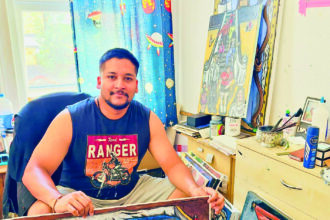
Photographer and Artist Alok Johri has worked on the
graphics of this play. Johri left the glamour of advertising, the flashlights
and the big cities to move to Goa to paint. And that’s where he believed his
creative explosion really happened. He too decided to help out.
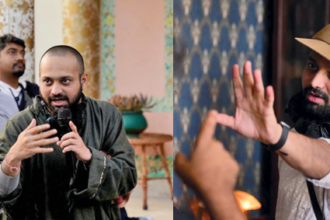
Ramdas Gadekar’s world is set. It revolves around set
design, painting and allied creative work. And he has created the most
innovative sets for this play in the panchayat hall. He took over the drab
walls and painted them so beautifully that these walls will be the backdrop of
the play.
The world has indeed come to these children of Carambolim
because they had the courage to take on the world. This has been one of the most moving positive
stories to emerge from the Goan hinterland in a long long time. A story where
words like ‘outsiders’ are kept out and replaced by words like giving, sharing,
helping and creating. And above all fighting, not each other, but together for
their village, making it and their world a better place.
What if, in every village turn there was a story like this –
a story where a Diksha Naik could meet a
Arundhati Chattopadhayaya and every village could have someone like Shayamalee
Roy, the spirit behind Mitsuko, so that they can dream of revolutions without
politics. And the biggest revolution where we truly believe that everyone who
loves Goa is a Goan.