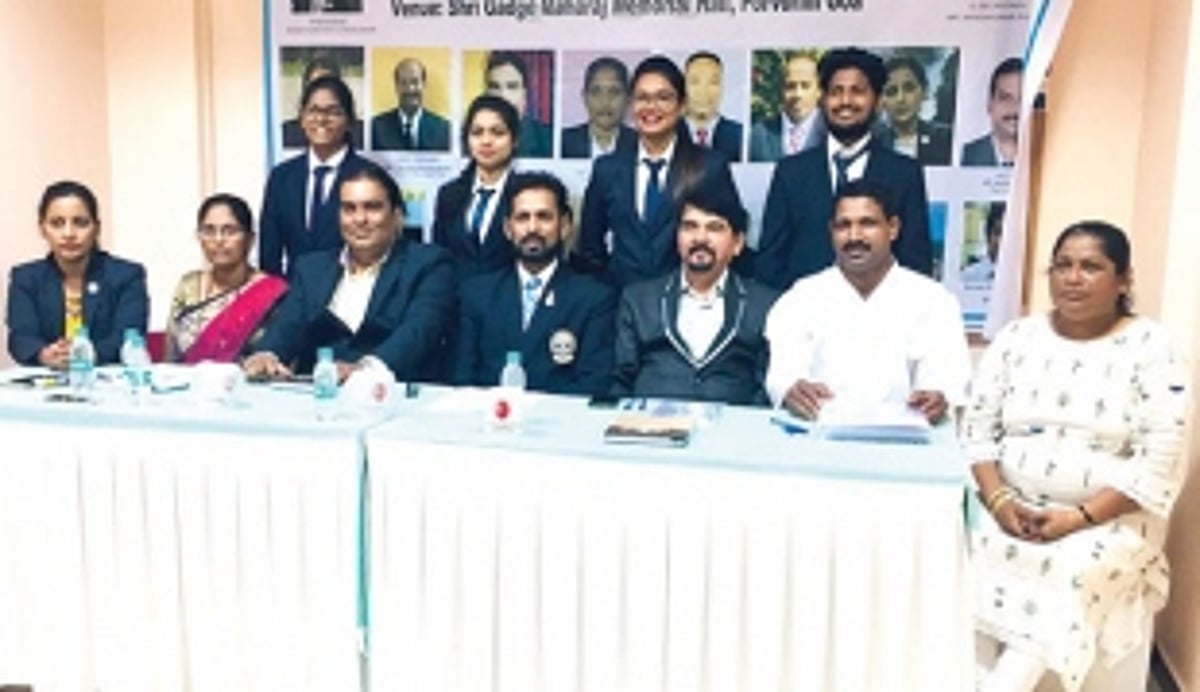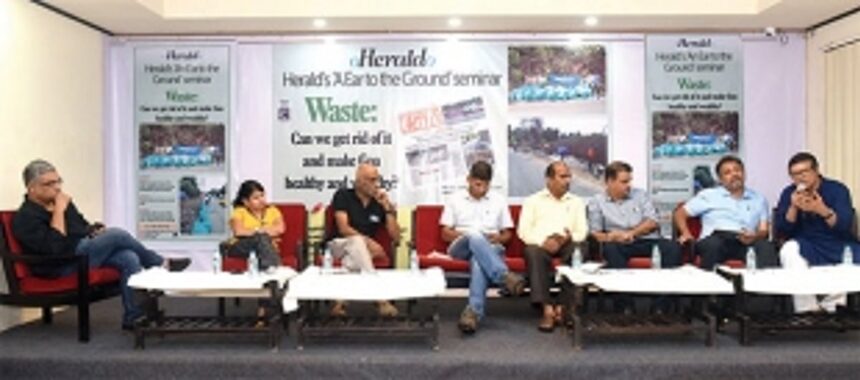
Given below is a synopsis the discussion on the first subtopic held at the venue:
Failure to segregate: the bane of the waste management crisis and Lessons to be
learnt
Segregation is common
senseClinton Vaz began the
conversation by saying that people have to realise it isn’t about the law, but
it is common sense to segregate. “It makes sense to segregate waste; there are
so many things that you can do if you segregate. You don’t have to think about
it, it should happen naturally. I believe that if you educate people in the
right way, they will automatically segregate waste,” described Clinton.
Likewise, Richard Dias went back couple of generations ago
saying that waste was not a big problem at that time. “It is the kind of
material that have come in being today that are creating such waste problems.
No one can say that they don’t know that they are supposed to segregate waste.
It is human nature, it hasn’t occurred to us that this is a problem.” he
stated.
Spiritual Warfare against GarbageEleuterio Carneiro, who has simply done
wonders in bringing about awareness and solutions in the Navelim panchayat,
spoke about how there are black spots that exist where garbage is often dumped.
“We clean and next day again there is garbage at the same black spot,” he said.
He wanted to find out why garbage comes back to the same places and did a
research that led to a little religious side. “In my childhood, I remember my
ancestors saying, ‘Baba, that place is not good. Don’t go there after sunset;
there are ghosts. That place is demon infested and all…’, but actually if you
go to see, those are the places that have turned into black spots. After the
research, it occurred to me that just like we say Holy Spirit is a clean spirit
and evil spirit is a dirty spirit, these dirty spirits prefer dirty places to
dwell,” he explains. These black spots (dirty garbage polluted areas where
demons dwell) needed to be blessed. Eleuterio found out that this could be done
through the help of Saint Benedict, the priest who used to drive away demons
when he was alive. “If you bless that medal of St Benedict and bury it at a
particular place that one is suspicious of, it drives away these demons,” he
said. He proudly says that in his Navelim all these black spots have
disappeared. “This is a warfare that I am doing spiritually,” he added. To that
note everyone concluded that if Goa doesn’t find any other ways to solve the
waste issues, this would ultimately be the last and only option left.
Recycle and Reuse,
and people’s emotional behaviour towards waste
After a long conversation with Eleuterio, Samruddh Desai in
reference to waste recycle and reuse clearly stated, “Items that have no use
are waste. Nature hasn’t created any waste. If you have the mindset that
everything can be recycled and reused, we will be heading in the right
direction.
He explained that for us Goans, the emotional incentive is
higher than the financial incentive, which is why people have lost faith today
in the ultimate treatment solutions provided to them by authorities. For
example, a person who segregates at home with two bin system or three bin
system, goes out of his/her gate and sees the municipal vehicle mixing all the
waste together… then all the emotional incentive or the habit of a person
separating the waste at home is lost. At that particular moment he/ she don’t
find it necessary and attractive to segregate the garbage anymore. He ended
with saying how everyone in Goa goes on about the wet and dry waste but ignores
the other micro waste like sanitary napkins and diapers.
Adding to the point on the behavioural patterns of people
regarding the segregation of garbage, Ravi Shankar, the CEO of Drishti Marine,
which cleans Goa’s beaches and provides life guards for beach safety said, “In
Indian culture, we think that waste is dirty. It’s untouchable. I think we
should have people having love for the waste that they are creating themselves.
Maybe that could help change the perspective of ‘waste is dirty’ and they might
touch the waste to segregate it.” He also said that segregation becomes
difficult when there are uncategorised bins available at many public places.
Share the knowledge
and find practical solutionsAmitava
Bhattacharya, the FOuncder of Bnaglanatak.com stressed over the point of
collective learning and sharing of knowledge. He gave the example of Imtiaz
Ali, the one who made Bhopal and Indore into clean cities. In these two places,
he explained how in all the petrol pumps there are provisions where people come
with dry waste and they get ‘Incentives’ like bags, watches… and all these
things are actually made out of the recycled dry waste. The recycled dry waste
was also used for making roads. To an important point on garbage related
issues, he brought in the topic of waste collectors and where they come from.
The waste collectors are usually the migrated population from weaker sections
of society
What happened to
human rights?In addition to
Amitava’s waste collectors’ topic, Richard Dias focused on what segregation
really is. “When you talk about segregation, we talk about some person
segregating someone else’s trash. Many organisations walked the streets and
beaches cleaning other people’s trash. Just because we have the opportunity in
India where we have the lower economic class collecting, cleaning, willingly
doing this act, does it give us a right to abuse them? What happened to human
rights? We talk about abolishing the caste and class system, but is this the
abolishing of the caste system?” He firmly said that segregation does not mean
‘I will chuck! Somebody else will segregate’.
Segregation is easy when you avoid
creating garbage in little waysMaria Victor’s Make it Happen conducts local and heritage walks;
she spoke about how her organisation is careful about not littering and
practises it starting from little ways. She gives an example of her safari
trip, where at the checkpoint they made sure there wasn’t anything plastic in
the bags. They gave brown paper bags even for snacks. “These are the little
things we are looking at that can be practised in Goa. Goa has so many wildlife
areas, waterfalls and such places where we can implement these rules,” she
said. She also wondered and questioned whether this could be practised at the
beaches, keeping in mind that the coastline is open to all.
A solution for diaper waste, which goes
everywhere and doesn’t get segregated Clinton Vaz commented that in urban areas, the option of
composting is not as easy in a village. When the organic waste cannot be
composted, it goes in the same bag with the other waste and thus, we have the
missed garbage. He also said that the waste that is most difficult to treat is
the slaughter waste, medical waste, diapers and sanitary pads. To that, Richard
Dias replied saying he has a solution for Diaper waste. “One generation ago, we
used cloth nappies. Diapers were really for the privileged class. And then
suddenly they said ‘oh you can use it while travelling which is fantastic’. I
agree, it gives one some amount of convenience, but we are using it like a
plastic bag,” he said. Richard emphasised on how young mothers need to be
educated that while the kids are at home, make it a habit to use cloth nappies.
This would take away 80% of our problem.
The Sonsoddo DisasterAfter a discussion on the segregation and solutions to it, the
panel broke into a wide discussion on the Sonsoddo waste dump crisis in Margao.
Eleuterio Carneiro clearly pointed out that the cause of Sonsoddo was the
problem created by the waste generator, The citizens and the Margao Municipal
Council, since without segregation they disposed garbage to the municipality.
Richard Dias who had visited Sonsoddo several times to understand the real
cause of the problem realised that the technology selected was inappropriate
for the treatment. Even at the initial set up stage of technology, they knew
they were going to get mixed waste. Maybe the understanding of the entrepreneur
that invested in the treatment plant was different, because it was invested
eight to ten years ago. Maybe at that time it was the best technology that was
available.
ELEUTERIO ANASTASIO
CARNEIRO: Holy
Spirit is a clean spirit and evil spirit is a dirty spirit; these dirty spirits
prefer dirty places to dwell, these are the places where garbage keeps on
getting dumped and collected.
AMITAVA BHATTACHARYA: Many shopkeepers, stakeholders, locals are joining hands and
coming forward to clean, this is indeed a very positive sign. I heard that in
Anjuna the Panchayat distributed 7000 bins to people on August 15. This
influences people.
MARIA VICTOR: During treks, picnics and all, we often
say ‘carry your own garbage back’, but that has never really worked out since
it isn’t in our culture.
Ravi Shankar: In Indian culture we think that waste is
dirty; I think we should have people having love for the waste that they are
creating themselves, only then they will segregate.
Clinton Vaz: You don’t have to think about segregating
waste, it should happen naturally. I believe that if you educate people in the
right way, they will automatically segregate waste.
Richard Dias: Ask this question to yourself, ‘If my kids
were told to put their hand in the bin, would you be willing to let them?’
Segregation is not ‘I will chuck! Somebody else will segregate.’ Don’t take
advantage of the waste collectors.
Samruddh
Desai: What
I have experienced in the last four years is that if you appeal to people’s
emotional sense, it might work. People have lost faith today in the ultimate
treatment solutions provided to them.