Congress on the Mat
The government has been stuttering at every turn and cuts a sorry figure in the Assembly, says ERVELL E MENEZES
The current monsoon session of the Goa Assembly is proving to be a torrid time for the ruling Congress, thanks to a concerted effort by the Opposition to take them to task for their countless acts of omission and commission. They were not helped one bit by the absence of Home Minister Ravi Naik, who was said to be admitted to the Breach Candy Hospital in Mumbai. It is a ‘sickness’ he contracted when things got hot, especially the police-drug mafia issue, where the Central Bureau of Investigation (CBI) is yet to be called in. He is, as a wag quipped, “in hospital for an overdose of cocaine”.
So, the rest of the Congress, led by a dithering, bumbling Chief Minister Digambar Kamat had to make the best of a bad situation. The Opposition walked out twice before going down to the Well of the House demanding a CBI inquiry. Opposition leader Manohar Parrikar had marshalled his facts well, and took on Kamat blow for blow. He said that many Congress MLAs, too, were in favour of a CBI probe, mentioning Victoria ‘Mummy’ Fernandes, Angelo Fernandes and Dayanand Narvekar by name. What is most interesting is that not one of the three refuted Parrikar’s claim.
Farming also came to the fore, and Narvekar asked Kamat what was being done for the small farmer with less than two hectares of land. The Chief Minister had announced a financial assistance of Rs50,000 for farmers with two hectares of land, but till date no material benefit has accrued. It’s the same case with the horticultural policy announced a year ago. Narvekar also attacked the weak attempts to control price rise.
Mining is another perennial problem, and it probably got more attention after the goings-on in adjoining Karnataka. The Monitoring Committee, constituted in October to look into ‘illegal mining’, is said to be an eyewash. Activist Seby Rodrigues says that the Ministry of Environment and Forests (MoEF) easily manipulates clearances by allowing mining companies to choose private outfits to carry out the Environment Impact Assessment (EIA) study. The Chief Minister’s proximity to the mining lobby is an open secret.
Then, there is the issue of the 4/6 laning of National Highway 17, and the Opposition demanded a House Committee be set up for it, claiming that Central Authority officers coming to Goa were probably misguiding locals about the width of the road. Actually, the government was found stuttering at almost every turn, and the ruling party cut a sorry figure, as not fit enough to be in power.
Even so, it does not give the United Goans Democratic Party (UGDP) leader Adv Anacleto Viegas the right to say: “We will not join the corrupt Congress.” Is the UGDP without sin, to cast the first stone? Corruption is common to all Goan political parties. Some call the UGDP a trading establishment that survives by selling its MLAs at the time of government formation. Its stalwarts, Viegas and his ‘saddu’ Adv Radharao Gracias (both lawyers, they are married to two sisters), are its two-man army.
It is a shame that they still have the ‘Two Leaves’ symbol that marked the Opinion Poll victory of the anti-mergerists, way back in 1967. The current party is not even a shadow of the original United Goans Party (UGP), which along with the Maharashtrawadi Gomantak Party (MGP) dominated Goa’s politics after Liberation.
But after the Congress established itself in Goa, and years later the Bharatiya Janata Party (BJP), the other parties became also-rans. Off and on, new parties were floated, trying to project a regional angle. So we had the Goa Congress in 1982, courtesy Dr Wilfred de Souza, then the Rajiv Congress in 1998 and, finally, the National Congress Party (NCP), before bowing out; a good doctor who became a bad politician. Parrikar seems to have taken him as his mentor.
But coming back to the UGDP and its claim to transparency, it all started in the 1994 election, when Churchill Alemao used the ‘Two Leaves’ symbol to cash in on the anti-Congress sentiment prevailing in South Goa. The UGDP won three seats in what was perceived to be a Congress stronghold. In 1996, Churchill became the UGDP South Goa MP, defeating Eduardo Faleiro. But in the next election, in 1998, he lost to Francisco Sardinha and, soon after, abandoned the UGDP to rejoin the Congress. In the 2007 election, he launched a Save Goa Front but won only two seats. This outfit was then ‘merged’ into the Congress, so he could get the coveted PWD portfolio, which he still holds. But he seems all at sea over the 4/6 laning of the highway.
In 1998, Dr Willy pulled the rug from under Pratapsingh Rane’s feet to become Chief Minister, for a few fateful months. When his government fell in turn, the UGDP members en masse joined the Congress in the now famous or notorious (depending on which side you are) ‘Midnight Meet’ (Whatever happened to integrity, Mr Viegas?). This knocked the wind out of the sails of the UGDP, and all that was left was their glorious symbol, Two Leaves, to remind them of their salad days.
That was when they resorted to recruiting men with money, who could not get into any party. So in 2002 it was men with aliases like Atanasio ‘Babush’ Monserrate, Francisco ‘Mickky’ Pacheco and, later on, hang-dog activist-turned-politician Mathany Saldanha, who soon became a Parrikar ‘chamcha’. Of course Monserrate and Pacheco were known upstarts/goons and soon proved it. But Saldanha, once accustomed to being power, was loath to relinquish it. What a fall for the one-time Ramponkar leader!
The UGDP, however, became a party that would wake up only at the time of elections. It is so mercenary that it is believed to have hawked the ‘Two Leaves’ symbol to a group of defectors in Jharkhand that were looking for a recognised party; any party, to get an identity.
No wonder, today we have a Goa without any political will or credibility, which makes a mockery of democracy in a small state. It’s only money power that works, and the current Congress with all its cracks, manages to chug on.
Oh yes, I missed an important point. Among the plethora of revelations that came up during the Monsoon session, perhaps the most astounding one is that 1,423 committees have been set up by the government since July 2007, and 774 of them did not met even once! This fact could make it to the Guinness Book of Records. And it would probably please Digambar Kamat; he has a fetish for firsts.
++++
Living close to nature
By Marc de Souza
During the monsoon, I seize the chance to write about the countryside. Goa has to be seen through its villages, where religious fervour, singing and dancing, the yelling of children, even dogs barking their acclaim, some flirtation, also frustration and depression fuse into the pleasant alchemy of harmony, peace and serenity. Perhaps, the slowing down of peace and the people knowing to take it easy and enjoy God given day, we are taken as sossegado.
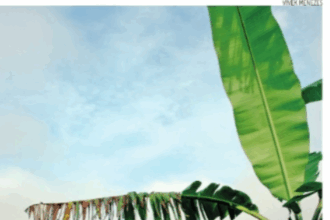
These days, the greenery is a treat to the eyes, the palm and other tall trees clap their hands and make music of their own. What about the tumbling brooks and wee waterfalls? Their music is better than any orchestra! Everything shouts how splendid it is out in the village. Insects and grasshoppers scramble about. There is the constant buzz and ring of insects. Between cloudbursts, you even hear the barking of jackals, the howling of hyenas and the croaking of frogs. Nature gets clothed in pristine beauty. Truly, every season has a reason.
If you keep your eyes and ears open, there is so much to see and do. Everyone has to figure out what is restful and relaxing. For some, it is anywhere there is a good combination of water to fish and land to explore, ponder over the woods of life which oxidize this otherwise smelly and rusty earth. Where the rising sun can be seen in all its glory; the sun rises smilingly, signalling the start of another day, serenaded by the singing of birds. There is no cause for fear, but there is ample cause for awe.
The scent of freshly turned earth infuses your body with joy. Men ploughing new earth, and women with their bottoms up transplanting the paddy seedlings as the slanting rain lashes against the back of their wicker hoods. Here nobody is in a hurry, and they all know an old secret that we lost – the secret of how to be happy with little.
My memory takes me years back, when I was sent for two nights to guard a pumpkin patch when I must have been 14. At dawn, I arose from my rickety bed held up by four strong wooden poles in the field. In the east, the morning star was shining brightly. A cool breeze was blowing. Being amid all this natural beauty, I felt God was hauntingly calling me into His presence.
What artificial lives we have to live in cities. Because real estate prices have skyrocketed, owning even a modest flat has become an impossible dream for many. They must settle for pigeon holes in an apartment block. Contact with nature is restricted to a bulbul or a parrot in a cage and a few plants putting up a brave fight against pollution on the balcony, while changing seasons are marked only by the sales at shopping centres.
To think of it deeper, after Creation’s first moment, the universe was simpler. In fact, a mere dot comprising perhaps only one kind of force and one kind of particle. Now it has many kinds of forces, scores of different particles and contains everything from stars and galaxies to fishes, elephants, trees and lilies.
I strongly feel there is something that is beyond human beings, an indescribable feeling or something that we pursue, knowingly or unknowingly, throughout our lives. In every epoch, humanity has had its specific way of seeking it. That is probably how it will always be.